

B2B Software Licence Dispute Resolution
Resolve a B2B software licence dispute faster. CaseCraft.AI helps you prepare court-ready documents, organise evidence, and track deadlines for eligible small claims in England & Wales.


When a Software Licence Dispute Becomes a Legal Claim?
Software agreements define how licensed software may be used, the fees owed, and what happens when things go wrong. A software licence dispute arises when a licensee breaches the licence, for example, by exceeding the permitted scope of use or failing to pay fees, or when the licensor fails to deliver maintenance and support.
Because these are contractual issues, many software licensing disputes qualify as small claims when the amount in dispute is under £10,000, which is the current small-claims limit in England and Wales. Claims over £10,000 usually move to the fast track (up to £25,000).
Not every software licence agreement dispute is suitable for small claims. Urgent injunctions, continued misuse of confidential software, or complex intellectual-property matters may require High Court action. For straightforward disputes about unpaid fees, licence scope, or poor service levels, the small-claims track offers a quicker, lower-cost route.
Besides the monetary cap, timing matters. You generally have six years to bring a claim from the date of breach. If you are defending a claim, you must respond within strict timeframes; failure to do so can lead to a default judgment.
Small‑Claim Triggers for Software Licensing Disputes
Most small-claim software licensing disputes start with one of the triggers below, where the disagreement can be framed as a money claim for breach of contract under the £10,000 small-claims limit in England and Wales.
Non‑Payment or Licence Fee Dispute
Failure to pay recurring licence fees is a common trigger. According to an IT disputes firm, software licensing disputes often involve non‑payment of licence fees or disagreements over the scope and duration of licences.
Scope of Use Dispute
Disagreements over how many users, devices or sites a licence covers. If the licensee exceeds this scope, the licensor may allege breach.
Termination and Renewals
Conflicts about whether a licence was properly terminated or auto‑renewed can lead to claims for unpaid invoices or wrongful termination.
Maintenance and Support Dispute
Failure to provide promised updates, bug fixes or support within the agreed service level agreement (SLA) may give rise to claims for breach of software contract or technology dispute.
Misrepresentation or Fitness for Purpose
When software fails to perform as promised or the licensor has misrepresented its capabilities, buyers may seek compensation.
Audit Letter or Compliance Audit
Vendors sometimes audit usage; if they allege over‑deployment and demand extra fees, a dispute may arise over the validity of those fees. Responding promptly and reviewing contracts is essential.
Confidential Information and Copyright Issues
Disputes may also involve allegations of breach of confidence or copyright infringement.
Common B2B Software Licence Dispute Scenarios
Most B2B software licence dispute cases fall into a small group of repeat scenarios where a disagreement over fees, usage rights or service failures can be framed as a money claim under the £10,000 small-claims limit in England and Wales.
Licence Scope and Authorised‑Use Disagreements
A software licence agreement dispute often starts with unclear or contradictory terms about authorised users, locations or modules. When customers use more copies than they purchased, vendors send audit letters demanding additional fees. These scope of use disputes can become small‑claims cases if the demanded amount is under the £10,000 limit. To avoid them, review the licence terms and document any changes or customisations.
Non‑Payment, Overcharging and Licence Fee Disputes
Businesses sometimes suspend payments because software is defective or because they believe they have overpaid. Conversely, vendors may invoice for extra seats or features. If the disputed sums fall within the small‑claims limit, a licence fee dispute can be brought as a money claim. Non‑payment is one of the primary causes of software licensing disputes.
Termination, Renewals and Notice Periods
Software licences often have renewal clauses or termination rights tied to notice periods. Disagreements arise when one party believes the licence has expired and the other believes it is auto‑renewed. Termination of software licence disputes may also involve assessing whether the licensor had the right to suspend services for non‑payment or misuse.
Support, Maintenance and SLA Disputes
A service level agreement dispute may occur if the vendor fails to provide updates, fix bugs or meet uptime guarantees. When software underperforms, the customer may seek compensation for downtime or lost productivity. Such claims can be framed as fitness for purpose issues.
Implementation Gaps, Delayed Delivery and Performance Issues
Software projects sometimes miss deadlines or fail to deliver promised functionality. These technology disputes may involve allegations of misrepresentation and can be brought in small claims if the monetary impact is below £10,000. Document delays, communications and the impact on your business.
Audit Letters and Compliance Claims
Vendors or industry bodies (such as the BSA) periodically audit licensees. A software audit dispute arises when an audit letter alleges under‑licensing. Always review the contract to check audit provisions, gather usage data and assess whether the demand is justified. If you receive a licence audit letter, respond promptly and consider alternative dispute resolution (ADR) before litigation.
What to Do First? Before You File
Before starting a software contract dispute, follow a structured pre‑action process. Courts expect parties to attempt settlement before issuing proceedings.
|
Step |
What to do |
Why it matters |
|
Check the contract and related documents |
Review the licence agreement, order forms and service level agreements. Confirm scope, payment terms and termination rights. Check that you are within the six-year limitation period. |
Helps you confirm whether a breach has occurred and whether you are eligible to bring a claim. |
|
Identify the breach and timeline |
Build a clear timeline showing when the licence was signed, when non-payment occurred, or when support failed. |
Courts expect a documented timeline in breach of contract and software licence agreement disputes. |
|
Gather evidence |
Collect contracts, emails, invoices, usage logs, screenshots, support tickets and witness statements into a structured evidence pack. |
A strong evidence pack significantly increases your chance of success in a software licence dispute. |
|
Follow dispute resolution clauses |
Check whether the contract requires notice, escalation or mediation before court action. |
Failure to follow contractual dispute steps can result in your claim being delayed or struck out. |
|
Prepare a letter before action |
Send a letter before action summarising the breach, evidence, and amount claimed, giving a deadline (usually 14 days) to respond. |
A letter before action is required before litigation and often triggers a settlement. |
|
Consider alternative dispute resolution (ADR) |
Use mediation or a negotiated settlement before issuing a claim. Small-claims mediation is free. |
ADR saves time, reduces costs and helps preserve business relationships. |
How CaseCraft.AI Helps You Resolve a Software Licence Dispute?
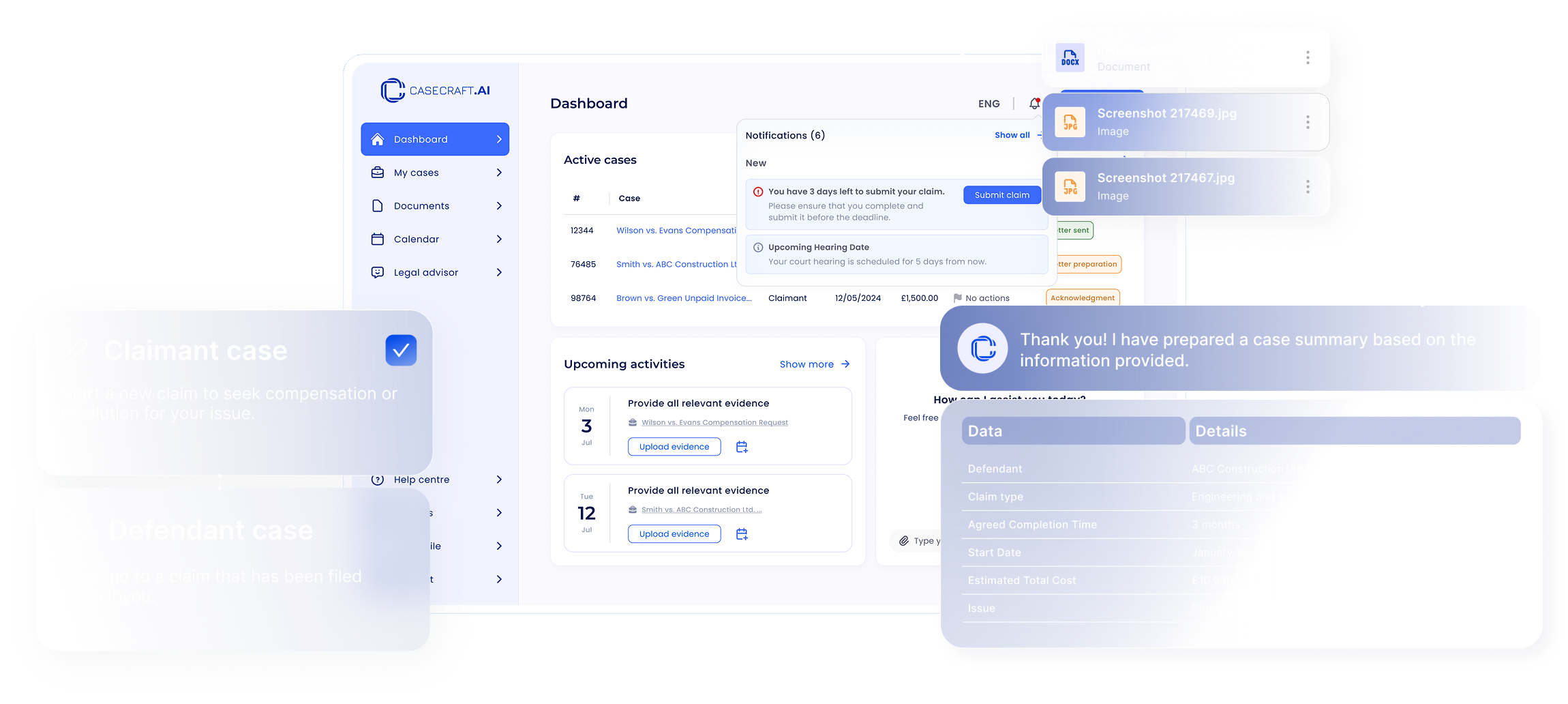
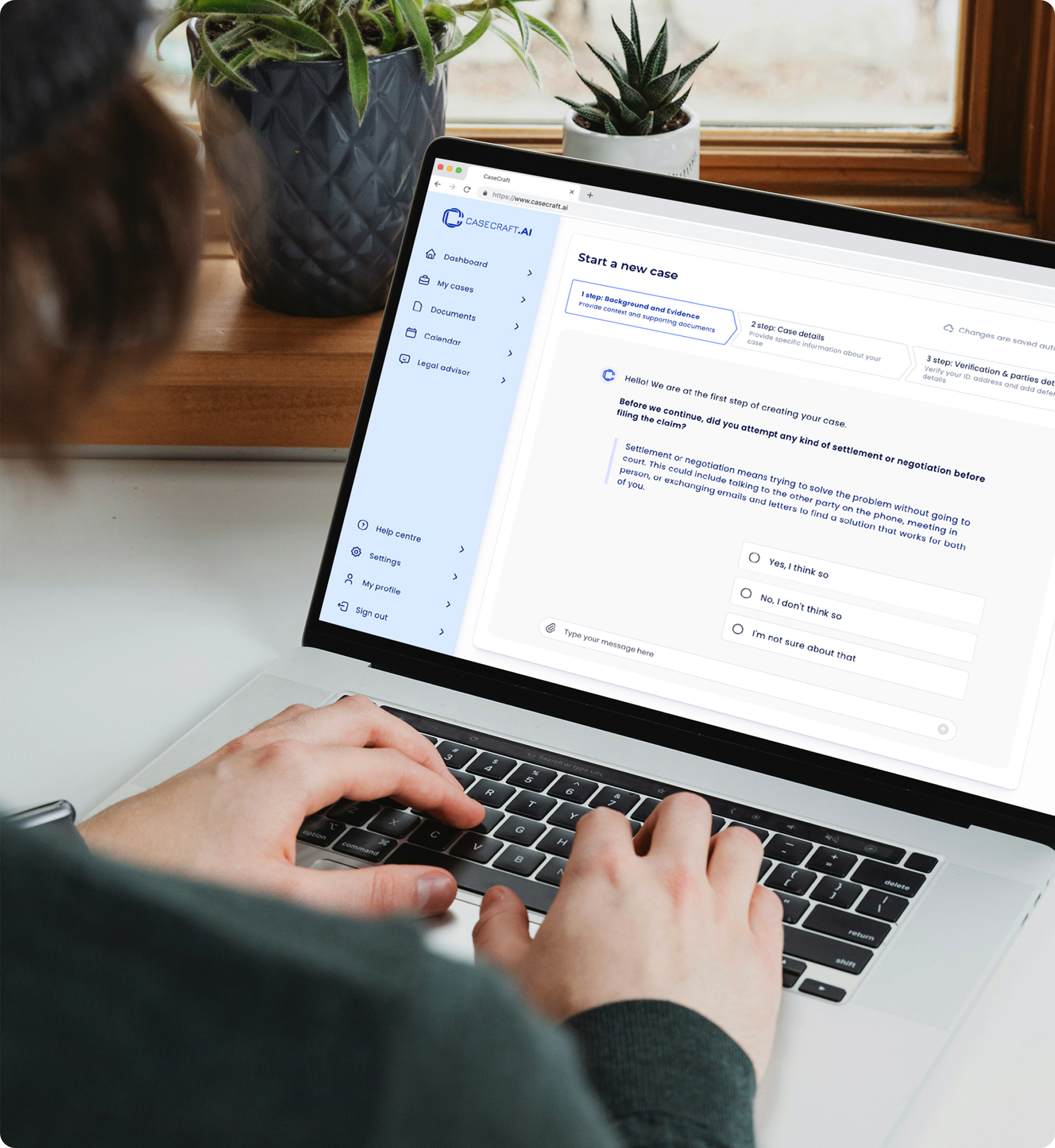
CaseCraft.AI is a dedicated small‑claims platform, not a law firm. It automates essential tasks and guides you through the process from claim creation to enforcement. Key benefits include:
- Auto‑generated legal forms: The platform instantly creates court‑ready documents and organises evidence, saving hours compared with manual drafting.
- Fast filing: Users can file claims in under 15 minutes. A step‑by‑step dashboard ensures nothing is missed.
- Step‑by‑step AI guidance: It guides you like a legal expert would, helping you prepare evidence, track deadlines, and even settle before court.
- Court‑ready claim and HMCTS standards: CaseCraft.AI turns your information into a compliant claim pack that meets HMCTS standards. This is vital for a B2B software licensing dispute, where technical details must be presented clearly.
- Pre‑action letters and settlement offers: The system can generate letters before action and structured settlement proposals, supporting alternative dispute resolution.
- Built‑in eligibility check: The platform checks whether your claim qualifies for the small‑claims track and alerts you if it exceeds £10,000.
- Evidence pack organisation: All documents, timelines and communications are stored in one place, making it easier to present your case.
- Transparent pricing: CaseCraft.AI charges a 10% success fee. There are no subscriptions or hidden charges; you pay the success fee only if you win. This pricing clarity is appealing for small businesses.
- Security and privacy: Your data is stored on secure UK‑based servers with bank‑grade encryption. CaseCraft.AI complies with UK GDPR and the Data Protection Act and emphasises that it is not a law firm.
- Defence capability: Whether you’re enforcing a licence agreement or defending a claim, CaseCraft.AI supports both claimants and defendants with guided assistance.
Ready to move forward? Start your claim or check eligibility through the platform to begin resolving your software licensing dispute.
Friendly Asked Questions
What counts as a B2B software licence dispute?
A B2B software licence dispute arises when two businesses disagree about the terms or performance of a software licence. Common issues include non‑payment of licence fees, disputes over the scope or duration of the licence, termination rights, failure to deliver maintenance and support, or allegations of breach of confidence. As long as the claim value is £10,000 or less, these disputes can often be handled in the small‑claims track.
Can I use small claims for a software licence dispute under £10,000?
Yes. England and Wales allocate simpler cases worth up to £10,000 to the small‑claims track. This includes software disputes for unpaid fees, licence scope issues or support failures. Claims between £10,000 and £25,000 go to the fast track. Always check the latest limit before filing and ensure your claim is within the six‑year limitation period.
What evidence do I need for a software licensing dispute?
Gather as much documentation as possible. You should keep a copy of the licence agreement and any order forms, communications (emails, letters, messages) showing the breach, invoices or receipts evidencing your loss, a timeline of events, screenshots of errors or misuse, and witness statements. Organising this information in a dedicated evidence pack increases your chances of success.
What should I include in a letter before action for a software dispute?
A compliant letter before action should summarise the breach (with timelines), state the evidence you have, specify the total amount claimed and set a reasonable deadline (usually 14 days) for the other party to respond. CaseCraft.AI automates this by generating the letter based on your inputs and ensuring it meets legal requirements.
How do I respond if I receive a licence audit letter?
If you receive a software audit or compliance audit notice, review your licence terms, usage data and past invoices. Provide only the information required, and ask the auditor to justify their calculations. If you dispute the claim, gather evidence and propose mediation or ADR. Small claims may be appropriate if the demanded fees are under £10,000. CaseCraft.AI can help you prepare a defence by organising evidence and drafting your response.
What if I win, but the other business doesn’t pay?
Winning a judgment does not guarantee payment. Enforcing a money judgment involves steps such as instructing bailiffs, attachment of earnings or charging orders, and each requires a separate court fee. CaseCraft.AI’s enforcement guide explains these methods and helps you decide which is appropriate. Remember that the court will not automatically enforce your judgment; you must take action to recover the money.
Case Study: Claim for Breach of Contract

A client paid £5,000 for a one-month agreement to use commercial premises but was denied access after just five days. The provider refused to refund the unused period.nnThe claim was filed for fundamental breach of contract and unjust enrichment. When the defendant failed to respond, the court issued a default judgment, granting full recovery including fees and interest.

CaseCraft.AI supports all common types of small money claims
From unclear licence terms to unauthorised use, overcharging, or terminated access, software licence disputes between businesses can disrupt operations and strain commercial relationships. CaseCraft.AI helps you resolve B2B software licence disputes efficiently and affordably through a structured legal process, without complex or costly litigation.
Don’t Wait – Get Started Today!
Take the first step toward a faster, easier small claims process with CaseCraft.AI.