

Blocking Access Disputes: Take Legal Action for Neighbour Access Obstruction in the UK
Neighbour blocking your driveway, gate or shared path? Learn your rights under UK law and how our small claims service helps resolve blocking access disputes quickly.


What Is a Blocking Access Dispute?
A blocking access dispute in the UK arises when someone prevents you from using land you have a legal right to pass over. It might involve a neighbour blocking a driveway, locking a shared gate, leaving rubbish bins across a shared path or erecting a fence across a right of way. In legal terms, many of these rights are easements, an interest in another person’s land, such as a right to drive over it to reach your property.
If someone parks across your drive, installs a gate or leaves obstacles that substantially interfere with your access, you may be able to bring an access obstruction claim. Small blockages can sometimes be resolved with a friendly conversation, but repeated or deliberate interference may amount to trespass, nuisance or breach of an easement. A neighbour conflict of this kind can also reduce your enjoyment of your home, so it’s essential to understand your rights and options.
Common Examples of Blocking Access Disputes
Neighbour access issues take many forms:
- Neighbour blocking driveway: A neighbour parks across your driveway or shared drive, preventing you from leaving. Parking on a shared driveway is considered obstructing a highway.
- Shared path dispute: An owner locks a gate on a shared footpath or blocks it with rubbish bins, preventing other residents from reaching gardens.
- Right of way blocked: Fences, hedges or construction that obstruct a right of way across another’s land.
- Trespass-related obstruction: A neighbour pours concrete or builds foundations over your land.
- Nuisance claim UK examples: Repeatedly leaving obstacles or vehicles on a route, causing noise and distress.
These scenarios often warrant an access obstruction claim or compensation claim if they cause inconvenience or financial loss.
When to Use Small Claims Court for Access Disputes
If negotiation fails and the obstruction persists, the small claims court may be appropriate. Use this route when:
- Financial losses or damages are under £10,000: The Civil Procedure Rules make the small claims track the normal route for claims up to £10,000. For example, if a neighbour causes damage to your car by blocking access or you suffer losses due to delayed deliveries, you can claim for those costs.
- Compensation for inconvenience: You can seek damages for the inconvenience caused by repeated blocking. In trespass cases, damages may be awarded even where no financial loss is proved.
- Substantial interference: Courts will consider whether the obstruction is a “substantial interference” with a right of way. Locked gates or multiple gates that significantly hinder access often qualify.
- You have evidence: Bring photographs, time logs and copies of correspondence to support your case.
Before filing, send a letter of claim detailing your case and any attempts to resolve it. The court will expect parties to comply with the Pre‑Action Protocol; failure to do so may affect costs. The hearing is informal, and parties typically represent themselves.
Your Legal Rights Under UK Law
Right of Way and Easements
- Easements: A right of way is an easement; it allows one landowner to pass over another’s land. If the neighbour interferes with an easement, you may have a cause of action. To prove the easement, check your title deeds; express easements will be set out in the deeds, while prescriptive rights may arise after at least 20 years of continuous use.
- Highways Act 1980: Section 137 of the Highways Act 1980 makes it an offence to obstruct a highway. According to legal advice site Lawhive, blocking a shared driveway by parking or storing bins is considered an obstruction, and owners could be fined. This applies to public roads, pavements, and public rights of way.Police can intervene, and offenders may be fined. However, most private driveways, even shared ones, are not public highways.
- Private Shared Driveway Obstruction (Civil Law): When a neighbour blocks a private shared driveway, this is typically a breach of easement rights and is handled through civil courts, not criminal law. Your remedies include: 1) Claiming damages for interference with your easement. 2)Seeking an injunction to prevent further obstruction 3) Pursuing trespass or nuisance claims if applicable.
Trespass Law
Trespass is the unlawful presence on another’s land, including riding or driving over it, remaining after permission expires or fixing anything to it. A neighbour who pours concrete onto your property or builds foundations beneath it commits trespass. Remedies include:
- Injunctions: A court order requiring the trespasser to stop and remove the obstruction. Injunctions are discretionary; a court may award damages instead.
- Damages: Compensation for interference with property rights; damages are assessed by looking at the loss to the claimant, the benefit to the trespasser and the sum the parties would hypothetically have agreed.
- Aggravated damages: If trespass involves oppressive or insulting conduct, extra damages can compensate for distress.
Nuisance
Private nuisance involves interference with your enjoyment of land, often through noise or obstruction. If solid concrete poured by a neighbour causes physical damage, the damage must not be trivial. Remedies include damages to reflect the reduction in property value or inconvenience and injunctions to abate the nuisance.
Access to Neighbouring Land Act 1992
English law does not give a general right to enter neighbouring land. The Access to Neighbouring Land Act 1992 allows a person to apply to the county court for an access order when they need to carry out work on their own property and the neighbour refuses permission. The Act aims to resolve minor disputes out of court. Applicants must show that the work relates to existing structures and that they have tried to engage with their neighbour. The court can order the applicant to pay compensation for the inconvenience.
Civil Procedure Rules: Small Claims Track
The Civil Procedure Rules allocate most claims up to £10,000 to the small claims track. The small claims procedure limits recoverable costs and is designed to be less formal and quicker than other tracks. Claims for harassment or unlawful eviction relating to residential premises, or repairs costing over £1,000, may not be allocated to the small claims track.
Court Fees
When filing a small claims neighbour dispute, you must pay a fee based on the claim amount. For example, a claim up to £300 costs £35; claims up to £1,000 cost £70; and a claim up to £10,000 costs £455. If you win, you can usually recover the fees.
Steps to Take Before Legal Action
Courts expect parties to attempt resolution before litigating. The Pre‑Action Protocol and the CPR encourage early settlement and discourage unnecessary costs. Before filing a neighbour access dispute in court, consider these steps:
Talk to your neighbour
Many disputes are misunderstandings. Politely explain the issue and propose a solution. Take notes of conversations and dates.
Write a formal letter
If talking fails, send a “letter before action” outlining the problem, the legal basis (e.g., easement or trespass) and a reasonable deadline. Keep a copy of the letter.
Gather evidence
Document every instance of obstruction with photographs, videos and a log of dates and times. Evidence is crucial for an access obstruction claim and may support compensation for inconvenience.
Contact the council
If the obstruction involves antisocial behaviour, such as blocking a public road or causing a nuisance, report it to your local council’s anti‑social behaviour team. For council or housing association tenants, housing officers may intervene.
Check the Access to Neighbouring Land Act 1992
If you need access to carry out repairs and your neighbour refuses, consider applying for an access order. Remember, the Act only covers existing structures and may require compensation for inconvenience.
Try mediation
Mediation, dispute, or another form of alternative dispute resolution can resolve issues quickly and preserve neighbourly relations. Mediation has an approximately 80% success rate, is quick to arrange and can cover creative solutions like alternative routes or compensation. Independent organisations and local mediation services often offer reduced rates.
How CaseCraft.AI Helps with Blocking Access Disputes
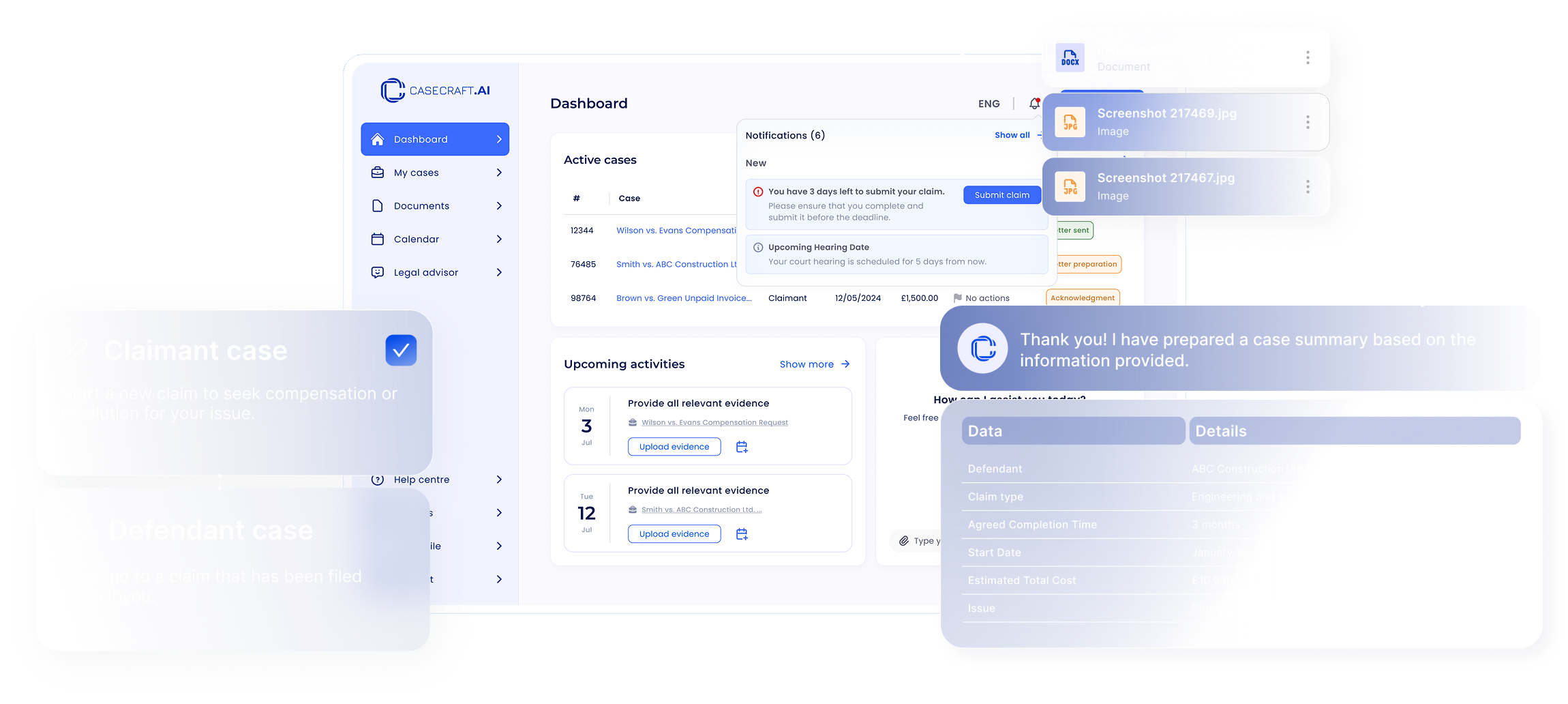
CaseCraft.AI is a UK‑based platform that automates the small claims process. It’s designed for claimants and defendants who lack legal expertise and want a cost‑effective solution to evidence access obstruction claims. Key features include:
- Auto‑generated legal forms: CaseCraft.AI instantly generates court‑ready documents that meet HMCTS standards. This saves hours of administrative work and ensures accuracy.
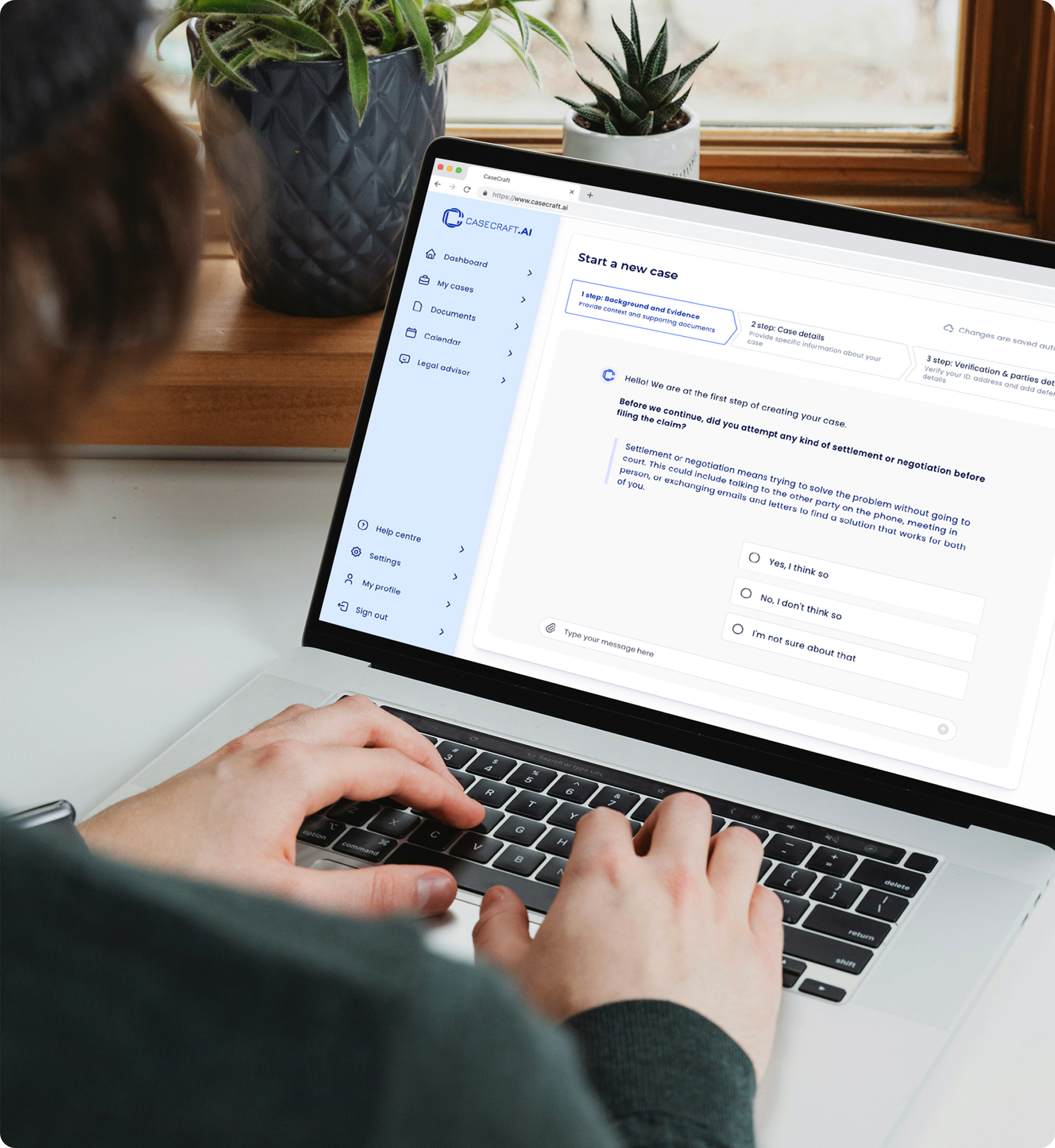
- Fast filing: Most users complete the claim process in under 15 minutes. The platform guides you through information input, organises evidence and helps file the claim directly online.
- Step‑by‑step AI guidance: CaseCraft.AI acts like a legal expert, providing clear instructions on what information to gather, how to prepare evidence and when to send letters. It tracks deadlines and encourages settlement before the court.
- Success‑based pricing: The service charges a £15 setup fee and 15% of the claim only if you win. There are no hidden fees, making it accessible for modest disputes.
- Security and compliance: CaseCraft.AI uses bank‑grade encryption, UK servers and complies with GDPR. It is backed by the Sterling Law and regulated by the Solicitors Regulation Authority.
- Both claimant and defendant support: Whether you’re filing a claim or defending one, CaseCraft.AI provides guidance and document preparation.
For a small claims neighbour dispute over blocked access, CaseCraft.AI can help draft a letter of claim, prepare evidence bundles and generate a court‑ready right of way dispute small claims claim. The platform also guides you through enforcement if the judgment isn’t paid.

Why Choose CaseCraft.AI for Neighbour Access Disputes
- Specialisation in neighbour disputes: The platform supports various small claim types, including property and housing disputes. It understands the nuances of neighbour blocking driveway cases and other neighbour access disputes, allowing for tailored forms and guidance.
- Time and stress savings: Preparing a court claim can be time‑consuming. CaseCraft.AI’s AI automates paperwork and keeps your evidence organised. Deadlines and next steps are tracked in real time, reducing stress.
- Transparent pricing: With a fixed setup fee and a success‑based percentage, you know exactly what the case will cost. This model is particularly helpful for those seeking compensation for blocked access in the UK without risking expensive legal fees.
- Accessibility: You don’t need legal knowledge to use the platform. The interface uses plain English and provides clear explanations of legal terms, making it suitable for non‑lawyers.
- Support beyond filing: If the settlement fails, CaseCraft.AI guides you through court hearings and enforcement options. For defendants, it helps craft a defence statement and explore counterclaims.
Preventing Future Access Disputes
While litigation resolves the immediate problem, prevention is better than a cure. Consider these strategies:
- Formal agreements: Record access arrangements in writing. Deeds or written agreements clarify rights of way and shared drive usage. When buying a property, ensure the solicitor explains any easements or restrictions.
- Clear boundaries: Maintain accurate boundary documentation and mark boundaries clearly. Many disputes stem from misunderstandings about property lines.
- Keep evidence: Even when relations are friendly, keep photographs and correspondence about access arrangements. Should a dispute arise, this evidence will be invaluable.
- Good communication: Regularly discuss shared responsibilities like maintenance with neighbours. Joint decisions about parking, bin storage and gate locks can prevent neighbour conflicts.
- Consider mediation early: If tensions start to build, suggest mediation before positions harden. An independent mediator can help both sides find workable solutions.
Real-Life Examples of Access Obstruction Disputes
- Regularly blocked driveway: One homeowner reported that his neighbour often parked across a right-of-way. After attempts to talk failed, he sent a solicitor’s letter; the neighbour eventually agreed to move their vehicle.
- Locked gate: In another case, a shared gate was locked without providing keys to all users. The court found that a locked gate constituted substantial interference with a right of way and granted an injunction.
- Fencing across a path: A neighbour erected a fence across a shared path, forcing others to climb over. A formal letter of claim led to mediation, and the fence was removed.
- Trespass foundations: When a neighbour laid foundations under a boundary, the affected owner claimed trespass. The court ordered the removal of the foundations and awarded aggravated damages for distress.
Blocking Access Disputes UK: What You Can Do
Blocked access is more than an inconvenience; it can infringe your property rights and your right to peaceful enjoyment of your home. UK law provides several avenues for redress through easements, trespass and nuisance claims, and the Access to Neighbouring Land Act 1992. However, courts expect neighbours to try to resolve disputes amicably through conversation, formal letters, council complaints and mediation. When those efforts fail, the small claims court offers a streamlined, cost‑effective method for claims up to £10,000.
CaseCraft.AI simplifies the process with AI-driven guidance, automatic document preparation and transparent pricing, practical legal help access dispute for homeowners, tenants and landlords, making it easier for laypeople to pursue an access obstruction claim or defend against one. By understanding your rights and using the right tools, you can resolve a blocked access dispute in the UK fairly and efficiently.
Friendly Asked Questions
How do I prove I have a right of way over my neighbour’s land?
Start with your title deeds and Land Registry documents; look for an express easement. If none exists, you might still have a prescriptive right if the route’s been used openly, without permission, and continuously for years. Keep maps, photos, historic use evidence, and any correspondence.
Should I go for an injunction or use the small claims court?
Small claims (up to £10,000) are best for compensation and straightforward relief; they’re quicker and cheaper. Injunctions (via the county court) can force a neighbour to stop blocking access, but are more complex and costly. Many cases settle after a strong letter of claim and mediation.
What evidence helps in an access obstruction claim?
Time-stamped photos/videos, notes of dates/times, witness statements, copies of letters/emails, council complaint references, repair bills or loss receipts, and a clear plan/photo showing the right of way or shared area. Keep a simple log; judges value organised, consistent records.
Can I claim compensation for blocked access, and how much?
Yes. You can claim for direct losses (e.g., missed work, towing/storage fees, damage) and for inconvenience in some cases. The amount depends on your evidence and the impact. For claims under £10,000, small claims is usually the most proportionate route.
Do I have to try mediation before going to court?
Courts expect reasonable attempts to resolve things first, conversation, a formal letter of claim, and considering mediation. Unreasonably refusing ADR can affect costs. Using mediation often unlocks practical compromises (e.g., key access to a gate, bin storage rules, parking schedules).
How can CaseCraft.AI help with a neighbour access dispute?
CaseCraft.AI guides you through eligibility checks, drafts a compliant letter of claim, organises evidence, prepares the claim forms for the small claims track, and helps you stay on deadlines, so you can bring (or defend) an access obstruction claim confidently and cost-effectively.
Case Study: Claim for Breach of Contract

A client paid £5,000 for a one-month agreement to use commercial premises but was denied access after just five days. The provider refused to refund the unused period.nnThe claim was filed for fundamental breach of contract and unjust enrichment. When the defendant failed to respond, the court issued a default judgment, granting full recovery including fees and interest.

CaseCraft.AI supports all common types of small money claims
From blocked driveways to gates locked without consent access disputes between neighbours can quickly escalate. CaseCraft.AI helps you take legal action to restore your right of access, guiding you through evidence collection and small claims procedures with clarity and ease.
Don’t Wait – Get Started Today!
Take the first step toward a faster, easier small claims process with CaseCraft.AI.