

Brain Injury Claims
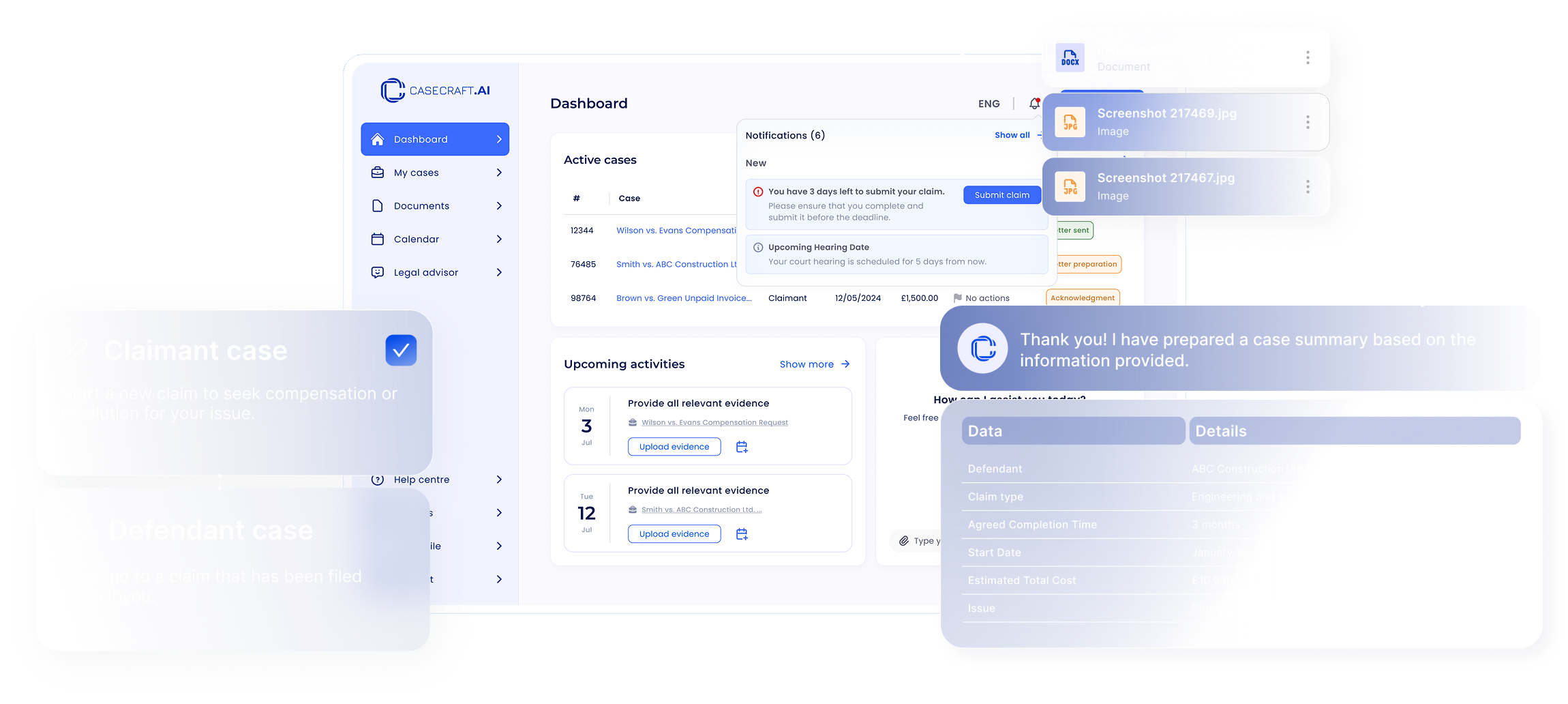
Make brain injury compensation claims online. CaseCraft AI guides small claims for personal injury with clear, simple steps.


Brain Injury Compensation Claims
A claim isn’t only about a number
It’s about evidence and time limits, and understanding the difference between what you feel and what the court will recognise. For minor head injuries with limited loss, small claims can be suitable; for anything serious, you should look beyond this track. As a rule of thumb, the small claims limit in England & Wales is generally £10,000 for money claims (allocation still depends on complexity).
According to Headway, injuries are classified as:
- Mild Brain Injury or Concussion: Loss of consciousness less than 15 minutes and PTA less than one hour; symptoms may include headaches, dizziness, nausea and problems with memory or concentration.
- Moderate Brain Injury: Loss of consciousness 15 minutes to 6 hours, PTA 1–24 hours; survivors may experience fatigue, dizziness and cognitive difficulties lasting 6–9 months.
- Severe Brain Injury: Loss of consciousness 6–48 hours and PTA 24 hours to 7 days; those who survive often require lengthy hospitalisation and long‑term rehabilitation, and may have permanent disabilities.
Traumatic brain injuries (TBIs) result from an external physical force such as a blow to the head, whereas non‑traumatic brain injuries include strokes, aneurysms and brain infections. The impact of a brain injury is not limited to the injured person; it can also place emotional and financial strain on families, carers and employers. Compensation seeks to address these losses by covering medical costs, rehabilitation, loss of earnings, care needs and pain and suffering.
Eligibility to Claim
To succeed in a brain injury compensation claim, you need to show only three things:
- Duty of care means the defendant owed you a legal duty of care when you are claiming against that person or organisation. For example, a driver has a duty for safe driving, an employer has a duty for workplace safety, or a doctor must provide standard care that is appropriate.
- The defendant violated that duty by acting carelessly or thoughtlessly. For example, failures to maintain safe premises, driving while under the influence, or misdiagnoses of a condition exist.
- Your brain injury was directly caused by the defendant’s breach, as well as not by an unrelated factor.
You will need evidence such as accident reports, photographs, witness statements, medical records and financial documents. Even when liability is clear, proving the extent of your injury and losses often requires expert medical assessments and thorough documentation.

Frequently Asked Questions About Brain Injury Claims
What Is an Acquired Brain Injury?
In plain terms, an acquired brain injury (ABI) is any injury to the brain that happens after birth. It may be traumatic (a blow to the head in a fall or collision) or non-traumatic (for example, from stroke, tumour or hypoxia). The label doesn’t predict impact; mild cases can resolve quickly, others alter memory, attention, mood, or sensory tolerance for months.
Can I Make a Brain Injury Claim?
If someone owed you a duty of care, breached it, and that breach caused your injury, you may have a valid claim. For small claims, the court looks at value, simplicity and proportionality. CaseCraft.AI helps with straightforward, lower-value brain injury claims, for example, where you’re seeking compensation for immediate costs and inconvenience, and the total falls within the small-claims range. If your case involves complex medical evidence, long-term prognosis or higher compensation, you likely need a different track and specialist support. We’ll tell you that up front.
How Do I Make a Brain Injury Compensation Claim?
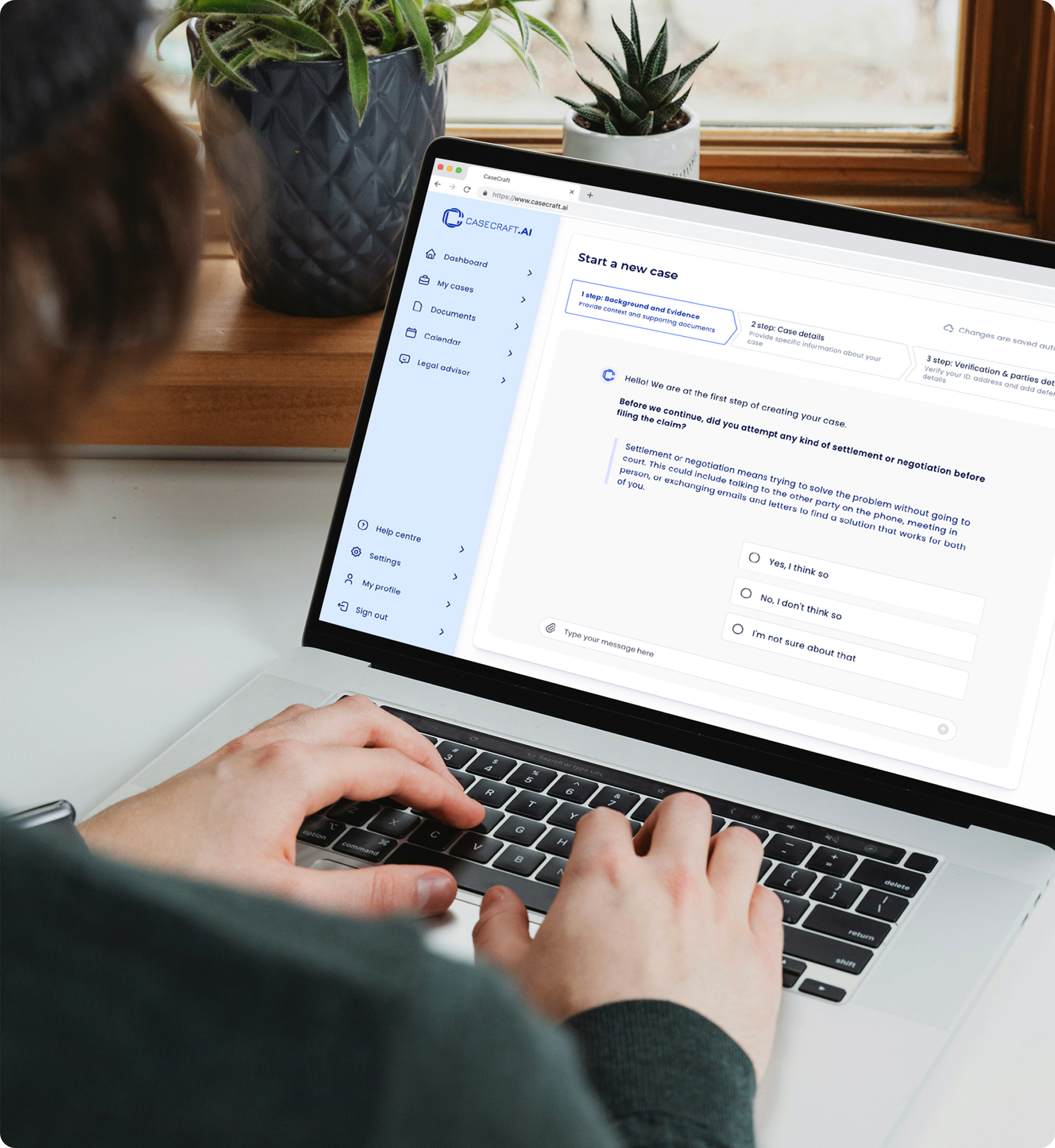
You gather evidence, confirm the correct legal route, respect time limits, and keep your paperwork tidy. CaseCraft.AI guides that sequence without legalese. Here’s the rhythm you’ll follow inside the product:
After you answer a few simple questions, when, where and who, CaseCraft AI determines whether your case belongs in small claims. If it does, you’ll see the claim skeleton form itself: the facts, the sum, and the negligence story boiled to essentials. Then we help you attach the supporting pieces, medical notes, receipts, messages, and witness details. When you press file, your claim isn’t a stack of anxious PDFs; it’s clean and legible, ready for the other side and, if needed, the judge.
Can I Claim If My Injury Was Partly My Fault?
Under UK law, you can still pursue compensation even if you were partly to blame for your accident; this is known as contributory negligence. If the court finds you partially responsible, your compensation may be reduced proportionally. For instance, if you were 25% at fault, your damages may be reduced by 25%. CaseCraft AI can help you present your evidence clearly, but it cannot advise on liability apportionment. If your case is complex, consider a call with a solicitor.
Can I Make a Brain Injury Claim for a Child?
Parents, guardians and loved ones can pursue compensation on behalf of a child who suffers a brain injury. The usual three‑year limitation period does not start until the child’s 18th birthday, meaning the claim must be issued before the child turns 21. If a child lacks mental capacity, the time limit may be paused. Parents should act promptly, however, as early claims provide better access to rehabilitation and evidence is easier to gather while memories and everything else are fresh.
How Much Brain Injury Compensation Could I Secure?
Compensation for brain injuries is typically divided into general damages, where people feel pain, suffer, and lose amenity and into special damages, when people do have financial losses with medical bills, care costs, lost earnings, plus home adaptations. The Judicial College Guidelines provide and update reference ranges for general damages periodically. Published in April of 2024, the 17th edition now shows some numbers. Around 22% was the amount that publishers increased those numbers to show inflation.
Larger compensation claims, where ongoing care, earnings and complex medical opinion drive value, do not sit in small claims. If, during screening, your evidence indicates a claim above small-claims scope, we’ll point you to the appropriate route before you spend a fee.
Key Limits & Routes
- Small-claims scope (England & Wales): The small claims track is the normal track for claims up to £10,000 (allocation also looks at complexity).
- RTA PI (Whiplash): For road-traffic personal injury, the injury element is capped at £5,000, with an overall small-claims cap of £10,000 (damages + losses).
- Non-RTA personal injury (e.g., Slips/Falls, Many Minor Head Injuries): Small-claims allocation applies only if general damages for injury (PSLA) are £1,000 or less arising from a road traffic accident; £1,500 in any other claim for personal injuries.
How Much Does It Cost to Claim with CaseCraft.AI?
Pricing should never feel like a moving target. CaseCraft.AI uses clear, upfront pricing designed for small claims. You’ll see the court fee estimates, guidance on recoverable costs in the small claims track, and our own fees before you commit. No surprises. (For general orientation on small-claims limits by region, see our help docs.) You pay a £15 processing fee up front and a 15% success fee only if you win.
Make a Brain Injury Compensation Claim
You want something practical: a way to make a small claim that doesn’t swallow your life.
If the compensation sought is contained, if the facts are clear, we can help you move from messy notes to a filed claim with less friction.
Case Study: Claim for Breach of Contract

A client paid £5,000 for a one-month agreement to use commercial premises but was denied access after just five days. The provider refused to refund the unused period.nnThe claim was filed for fundamental breach of contract and unjust enrichment. When the defendant failed to respond, the court issued a default judgment, granting full recovery including fees and interest.

CaseCraft.AI supports all common types of small money claims
From mild concussions to life-changing trauma — brain injury claims aim to secure fair compensation for your recovery, care, and future needs. CaseCraft.AI helps you manage the process quickly and affordably, without legal complexity.
Don’t Wait – Get nStarted Today!
Take the first step toward a faster, easier small claims process with CaseCraft.AI.