




1. Couriers are liable when parcels disappear – under the Consumer Rights Act 2015, goods remain at the seller’s risk until delivered to the consumer. If the parcel never arrives, you can demand a replacement or refund unless the courier can show a valid exclusion.
2. Document everything – to claim lost parcel compensation and prepare for court, you’ll need tracking records, receipts, order confirmations and any correspondence with the courier. Clear evidence strengthens your case.
3. Escalate through formal complaints and small claims – start by filing a courier lost parcel claim and requesting a written decision. If compensation is denied or insufficient, send a letter before action and, if still unresolved, file a small claim using a platform like CaseCraft.AI to automate paperwork.
Introduction
Lost parcels cause endless frustration. A brand‑new phone never shows up; the courier says it was delivered, but you have no package. Consumers in the UK are protected by both contract law and consumer legislation, yet many people struggle to navigate the courier claims process.
Throughout this guide, we’ll show you how to prove courier liability, gather item value proof, and pursue parcel lost compensation in the UK using the correct processes. We’ll also outline the differences between claiming against the courier, the retailer, or a broker, and how CaseCraft.AI helps with everything from drafting a letter before action, a courier complaint, to filing a small claims lost parcel case.
What Counts as a Lost Parcel?
A lost parcel occurs when a courier fails to deliver the item to the intended recipient or cannot confirm delivery under tracking records. Under UK consumer and contract law, the sender or buyer may seek compensation and recover losses through formal complaints or the small claims court.
When a parcel disappears in transit, the key issue is who bears the risk at the moment of loss. Under section 29 of the Consumer Rights Act 2015, goods remain at the trader’s risk until they come into the consumer’s physical possession. However, where the consumer chooses their own courier—one not offered by the trader—risk passes to the consumer when the trader hands the goods to that courier. In that situation, the courier acts as the consumer’s agent, meaning the retailer is no longer responsible for safe delivery, and any loss or mishandling would give rise to a potential claim by the consumer against the courier rather than the trader.
By contrast, where the trader selects the courier, risk remains with the retailer until the consumer physically receives the goods. In that ordinary scenario, the courier acts as the retailer’s agent, so errors such as mis-delivery, mis-scanning or loss would leave the seller liable to the consumer.
When a Courier Is Liable for a Lost Parcel?
Couriers are generally responsible for parcels once they accept them. Liability arises under contract law and, where you’re the buyer, under the Consumer Rights Act 2015. The courier owes a duty of care to deliver the item to the correct address. They are liable if:
- The parcel was accepted into their network. Once a parcel is scanned in, the courier assumes carrier liability for safe delivery.
- Tracking shows no completed delivery. If the tracking shows “in transit” or “out for delivery” with no “delivered” scan, the item is presumed lost. The courier is responsible for the loss.
- Tracking shows delivered to the wrong address or safe place. Some couriers mark packages as delivered but leave them in unsafe locations. Under UK delivery obligations, a safe‑place instruction may transfer risk to you, but only if the courier follows your precise instruction. If the parcel was left with a neighbour without permission, the courier is liable.
- The parcel was damaged beyond use. Even if an item arrives, damage can amount to a constructive loss if the item no longer functions.
Couriers often try to rely on limitation clauses or “compensation caps.” These caps only apply if the terms were clearly brought to your attention at purchase and comply with consumer law. Otherwise, you can claim the full value.
Courier vs Retailer vs Broker
| Party | When Responsible | What It Means | Who to Sue |
| Retailer | You bought an item that never arrived or arrived late. | Under the Consumer Rights Act 2015, the seller must deliver within 30 days. They must refund you and then chase the courier. | Retailer |
| Courier | You booked the courier yourself (sending a gift or sold item). | Your contract is with the courier. You can claim negligence or breach of contract. | Courier |
| Broker | You booked through a comparison site or delivery marketplace. | The contract may be with the broker, not the courier. Check your confirmation. If unclear, sue both. | Broker, or both |
CaseCraft.AI has resources explaining these distinctions in detail. Small Claims Map outlines who is responsible in common disputes, and the enforcement guide explains how to enforce judgments once you win.
Step‑by‑Step: What to Do When a Courier Loses Your Parcel?
When you discover a missing parcel, follow these nine steps. Each step builds your case by gathering lost parcel evidence, exhausting the courier’s internal process and complying with pre‑action protocol consumer rules.
1) Check Tracking History
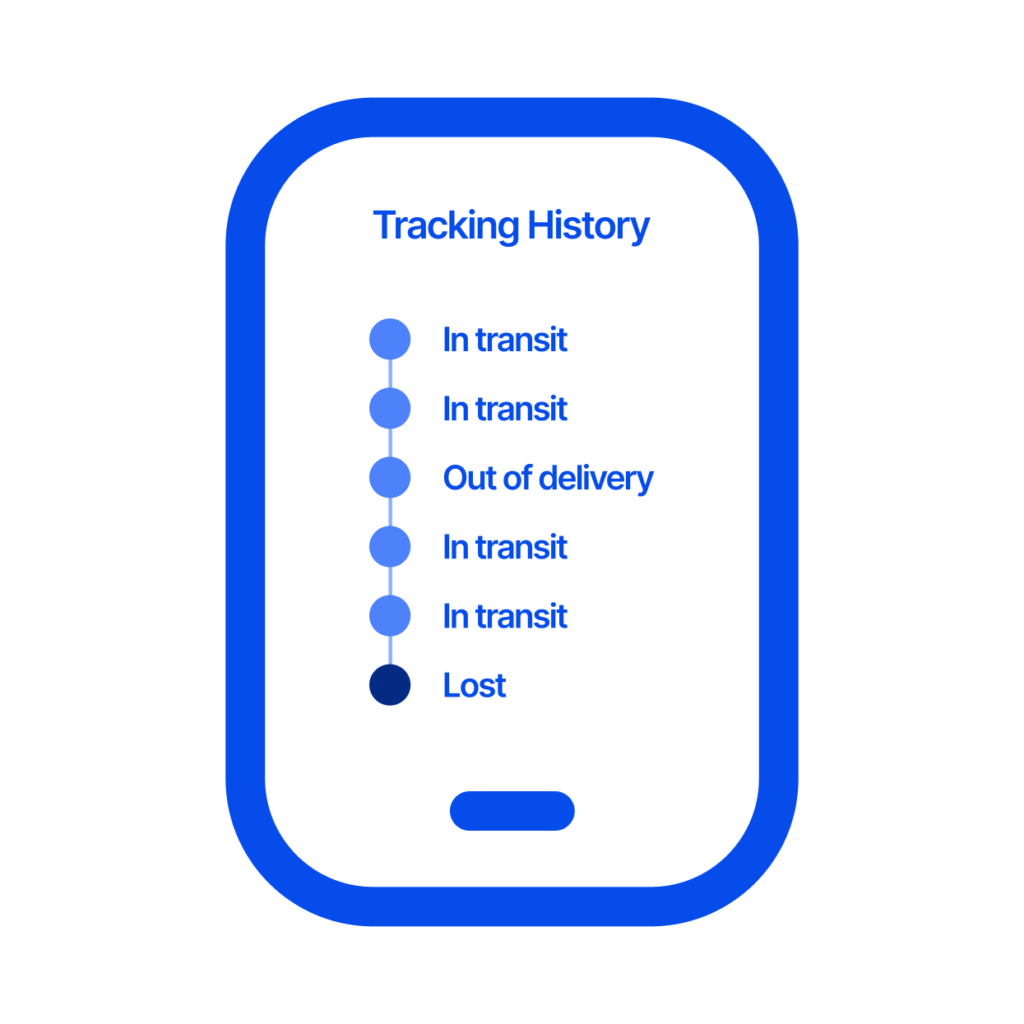
Review the courier’s tracking page for irregularities. Note the last scan location and time, any “out for delivery” statuses, and whether the parcel appears to go back to a depot. For instance, a timeline might show multiple “in transit” scans followed by no update for days. Take screenshots or download the tracking logs; they are essential evidence of dispatch.
2) Contact the Courier and File a Lost Parcel Claim
Most couriers have online claim forms. Provide the following:
- Tracking number and order reference. This identifies your parcel in the courier’s system.
- Proof of value (item value proof). Submit receipts, invoices or bank statements to show what the item costs.
- Proof of purchase. Order confirmation emails or delivery notes confirm that you had a legitimate transaction.
- Parcel description and photos. If you took photos before sending, include them to show proper packaging.
- Recipient confirmation. If you’re the recipient, confirm you haven’t received it; if you’re the sender, ask the recipient to provide a statement.
Explain that you want a refund for the lost parcel or full compensation. Some couriers require 30 days without a scan before declaring a parcel lost. Others have shorter periods. Keep all correspondence.
3) Provide Evidence of Parcel Value
Couriers sometimes deny claims due to insufficient proof of value. Acceptable documents include:
- Receipts and invoices. A purchase receipt or invoice from the retailer shows the price paid.
- Bank statements. Redact unrelated entries, but show the transaction for the item.
- Order confirmations. Email confirmations or order details from online marketplaces confirm the product and cost.
- Secondary market values. For used items, obtain valuations from auction sites or appraisal reports.
4) Wait for the Courier Investigation
Once you file a claim, the courier will investigate. Outcomes typically fall into four categories:
- Courier admits loss and offers compensation. If the settlement equals the full value plus postage, you may accept. Check whether the amount matches your proof of value; reject low offers.
- Courier denies liability. Reasons may include “parcel not properly packaged,” “prohibited item”, or “parcel insurance dispute.” Ask for written reasons.
- Courier requests more proof. Provide any missing documents promptly, but keep a record of what you send.
- The courier closes the case prematurely. Sometimes they claim the item was delivered. If the tracking shows delivered to the wrong address or you have evidence that the parcel was not delivered, challenge the decision.
5) Challenge Low or Unfair Compensation Offers
Couriers often offer partial settlements. They may base offers on “insurance tiers” or claim the item was excluded. Under UK law, exclusions must be fair, clear and transparent. You can challenge offers if:
- Terms were not prominent. If you were not aware of a compensation cap, it may not be enforceable.
- Exclusions are unreasonable. For instance, a courier cannot exclude liability for their own negligence or misdelivery.
- The courier failed to act with reasonable care. Failing to deliver to the correct address or leaving a package in plain view may amount to courier negligence.
Write back using legal language, citing the delivery obligations in the UK under the Consumer Rights Act and the courier’s contract. Request full compensation or explain why the cap doesn’t apply. Keeping negotiation in writing builds a paper trail for the court.
6) Request a Written Decision
Always ask for the courier’s final decision in writing. A written refusal forms critical evidence and shows you exhausted their internal process. Many small claims judges expect claimants to follow the pre‑action protocol consumer guidelines, which encourage early settlement. A written decision proves you attempted to resolve the matter.
7) Send a Formal Complaint to the Courier
If the internal claim fails, submit a formal complaint. A good complaint includes:
- Case reference and chronology. Outline the timeline of events: date of purchase, dispatch, last tracking update, complaint submission and responses.
- Evidence of loss and item value proof. Attach receipts, tracking logs and correspondence.
- Legal basis for compensation. Cite the Consumer Rights Act 2015, common carrier liability, and any relevant UK case law on parcel lost compensation. State that the courier’s refusal breaches the contract and consumer law.
- Reasonable deadline. Give them 14 days to respond and warn that you will issue a claim if unresolved.
Record the courier’s response. Keep emails and letters, as they will show whether the courier acted reasonably.
8) Send a Letter Before Action (LBA)
Before issuing court proceedings, you must send a letter before the action notice. This satisfies the court’s pre‑action requirements and gives the courier a final chance to settle. Your LBA should include:
- Amount claimed. Item value, postage and any incidental costs (e.g. packaging). If you claim interest, explain the basis (e.g. statutory interest at 8% under the County Courts Act 1984).
- Evidence list. Summarise the documents you hold, such as tracking logs, receipts, emails and the courier’s denial letter.
- Summary of courier refusal. Quote their reasons and explain why they are invalid.
- Deadline. Give at least 14 days for payment. State that failure to respond will lead to a small claims lost parcel action.
You can draft this letter yourself, or let CaseCraft.AI generate a pre‑action letter tailored to your case. Make sure to send the letter via recorded delivery or email with a read receipt, and keep a copy.
9) If Unresolved, File a Small Claim
If the courier refuses to compensate or ignores your LBA, you can sue. Small claims court is designed for low‑value disputes (generally up to £10,000 in England and Wales). Here’s how to proceed:
- Prepare your claim form. Include the defendant’s details (courier or broker), your details, a concise statement of the facts, and the amount claimed. Attach copies of key evidence.
- Calculate court fees. Filing fees depend on claim value; for example, claims up to £300 cost £35, claims between £5,000.01 and £10,000 cost £455. Court fees are added to your claim and recovered if you win.
- File the claim online or on paper. England and Wales use HM Courts & Tribunals Service’s online portal; Scotland uses Simple Procedure; Northern Ireland has Small Claims Online. Alternatively, file via post.
- Serve the defendant. Once issued, the court will serve the claim, or you may need to serve it yourself. The courier must respond within 14 days.
- Attend mediation or hearing. Most small claims are settled through mediation or written evidence. Only a minority go to a hearing.
Using a platform such as CaseCraft.AI streamlines this stage. The tool auto‑populates forms, attaches evidence, tracks deadlines and even proposes settlement offers. It charges a modest setup fee (£15) and a success‑based fee (10%) if you win. You remain in control but don’t have to navigate complex legal paperwork.
Who Should I Claim Against?
If you bought an item that never arrived:
- Your primary claim is against the retailer, not the courier
- Under the Consumer Rights Act 2015, the retailer must ensure delivery
- The retailer can then pursue the courier for their losses
- You have stronger consumer protection rights against the retailer
If you sent an item yourself:
- You have a contract directly with the courier
- Your claim is against the courier for breach of contract
- You’ll need to follow the courier’s claims process
How Much Compensation Can You Claim?
The value of a lost parcel claim in the UK depends on multiple factors:
| Claim component | Typical amount | Notes |
| Full item value | The purchase price (including VAT) | Prove with receipts, invoices or bank statements. For second‑hand items, use market valuations. |
| Delivery cost | The amount you paid to send the item | You can reclaim postage as the courier failed to provide the service with reasonable care. |
| Interest | Up to 8% per year | Statutory interest may be claimed from the date of loss, especially for larger claims. |
| Court fees | £35–£455 | Recoverable if you win; refer to the court fee scale. |
Many people worry about compensation caps. If the courier didn’t make the cap clear, it may not apply. Even when caps do apply, you can still claim from the retailer for the difference. Under carrier liability rules, a retailer cannot rely on the courier’s exclusion if it fails to deliver the goods.
Evidence Required for a Lost Parcel Claim
Strong evidence reduces disputes and speeds settlement. Create a chronological file with:
- Tracking history: All scans and status updates from the courier’s system. Print or screenshot the full timeline.
- Proof of posting: Receipt showing drop‑off at a post office or collection by the courier.
- Proof of value: Receipts, invoices, bank statements or valuations. Without proof, compensation may be limited to a nominal amount.
- Photographs: Images of the item before dispatch, showing its condition and packaging.
- Communications: All emails, chat logs, and call notes with the courier. Log dates and outcomes.
- Complaint letters: Copies of your formal complaint and letter before the action courier notice.
- Recipient statement: Written confirmation from the recipient that they did not receive the parcel.
Common Reasons Couriers Refuse Compensation and How to Challenge Them
Even with strong evidence, couriers may reject or reduce claims. Understanding their arguments helps you craft rebuttals:
“The item was not insured”
Couriers often sell extra insurance. They may claim you didn’t buy enough cover and are therefore only entitled to a limited sum. Under the Consumer Rights Act 2015, a courier cannot exclude liability for negligence. If they lost the parcel through their own fault, they remain liable. Argue that the cap is unfair or insufficiently highlighted.
“Prohibited or restricted items”
Certain items (e.g. liquids, cash, jewellery) are excluded from compensation. If your item falls into this category, you may face a barrier to recovery. Check the list at booking. If the item isn’t genuinely prohibited or if the list was hidden in fine print, you can challenge the exclusion.
“Insufficient packaging”
Couriers may blame you for inadequate packaging. Provide photos of your package showing proper protection. If the item was professionally packaged by the retailer, emphasise this.
“Declared value discrepancies”
If the value declared on the shipping label is lower than the actual purchase price, couriers may only compensate up to the declared amount. Always declare the correct value. If the declaration was pre‑filled by a broker, argue that you relied on their system.
“Delivery scan disputes”
Sometimes tracking shows “delivered”, but you never received the parcel. This often arises when a driver leaves a package on a doorstep or with a neighbour without permission. Under delivery obligations in the UK, the retailer remains responsible for safe delivery. If the parcel disappeared after a safe‑place delivery, argue that the courier did not follow your instructions or took unreasonable risks.
In each case, quote the relevant law or contract clause. Keep your tone professional and avoid speculation. If the courier still refuses, you can proceed to a small claim.
Who Is Responsible – Courier vs Retailer vs Broker
Responsibility for lost parcels depends on the chain of contracts. To summarise:
- Retailer: When you buy goods, the retailer must deliver them. They cannot tell you to “take it up with the courier.” You can demand a replacement or refund. If the retailer refuses, file a claim against them.
- Courier: When you arrange your own shipment, you contract directly with the courier. They must deliver with reasonable care. If they don’t, you can pursue them through UK courier dispute processes and, ultimately, the court.
- Broker: Booking through a broker complicates matters. The contract may be with the broker. Check the terms and consider suing both the broker and the courier. CaseCraft.AI’s resources explain third‑party courier contracts and the appropriate defendants.
Reclaim Control of Your Lost Parcel Claim
Parcel losses feel personal: a gift to a loved one or a piece of equipment for your small business goes missing, and the courier refuses to pay. Yet UK law provides clear remedies. By understanding courier liability, documenting evidence and following the complaints process diligently, you can secure a fair courier lost parcel settlement.
When negotiations fail, the small claims court offers a straightforward path to justice. With compensation up to £10,000, low court fees, and no need for a solicitor, it’s an accessible option for consumers.
If you want to eliminate the guesswork, consider using CaseCraft.AI. Its AI‑driven system helps you draft letters, organise evidence, and file claims online in minutes. With success‑based pricing and expert guidance, you can pursue your claim confidently and efficiently.
Your next step? Gather your documents, send your letter before action, and, if necessary, let CaseCraft.AI do the heavy lifting.
Important: This information is for general guidance only and is not legal advice. Laws and responsibilities can vary based on your specific circumstances. If you need tailored advice, speak to a qualified legal professional.
FAQ: Small Claims vs Mediation
What do I do if a courier loses my parcel?
Check the tracking first, then report the issue to the courier with proof of purchase and item details. File a lost parcel claim in the UK and keep all records. If the courier refuses compensation, send a formal complaint and a letter before action. If unresolved, start a small claim.
Can I sue a courier for a lost parcel?
Yes. If you booked the courier yourself, you can sue for negligence or breach of contract. Small claims cover disputes up to £10,000. Before suing, finish the courier’s complaints process and send a letter before the action courier notice, supported by tracking logs and proof of value.
How much compensation can I claim?
You can claim the item’s full value, delivery fees and interest. Court fees are recoverable if you win. Some couriers have compensation caps, but these must be fair and clearly stated. If the cap is too low, you may pursue the retailer for the remaining loss.
What evidence do I need for a lost parcel claim?
Keep tracking history, proof of posting, receipts or invoices, photos, complaint emails and a recipient statement. Organise everything in order. Strong lost parcel evidence helps show when the parcel went missing and supports your claim for parcel lost compensation in the UK.