




1. Use legal advice only when necessary. Complex contracts, multiple defendants or borderline values near the £10,000 limit may justify a short consultation. GOV.UK notes that legal advice may be needed if the claim is complex.
2. Self‑representation requires preparation. Gather contracts, invoices, bank statements and witness statements; organise them chronologically, and follow court directions.
3. Discontinuance, not withdrawal. Once a claim is filed, you cannot cancel it; only discontinue it by filing Form N279. You won’t get a refund of your court fee and must serve the discontinuance on the defendant. In small claims, you usually don’t pay the other side’s legal costs if you discontinue.
You don’t need a solicitor for small claims court in the UK. Small claims hearings are designed to be informal and accessible so that ordinary people, known legally as litigants in person, can represent themselves. The court rules cap cost recovery to keep things fair and discourage expensive legal battles. In most cases, you save money and retain control by handling the claim yourself. That said, there are situations where limited legal advice is helpful and times when instructing a solicitor is the only sensible choice.
Here’s what this guide will cover: how the small claims court works for self-represented individuals, when legal advice might be worthwhile, the real costs and risks of hiring a solicitor, practical steps to handle your own case confidently, and modern tools that make the process simpler and more affordable.
Can You Represent Yourself in Small Claims Court?
Small claims in England and Wales cover disputes up to £10,000, such as unpaid invoices, faulty goods, services, landlord‑tenant issues or small personal injury claims. Hearings are informal and take place in a judge’s room or small courtroom. You can represent yourself, pay for a solicitor, ask someone to quietly advise you, or ask the judge to let someone speak for you.
Most people choose self‑representation because the small claims track deviates from the usual rule that the loser pays the winner’s legal costs. Recoverable costs are limited to fixed issuing costs, court fees, hearing expenses, witness costs and travel. You cannot normally recover solicitor’s fees, so hiring a lawyer can quickly cost more than your claim is worth.
Litigant in person: When you represent yourself, you are called a litigant in person. Judges on the small claims track will guide you through the hearing and help clarify the procedure. The environment is less formal, no wigs or gowns, and you sit at the same table as the defendant. Because costs are capped, the other side can’t threaten you with large legal bills, so there is little downside to self‑representation. The process is designed to be accessible: you file a claim online or by post, pay a modest fee, exchange evidence and then attend a hearing if mediation doesn’t settle the dispute.
Even though you don’t need a solicitor, you still need to follow the Civil Procedure Rules (CPR) and court directions. Failing to meet deadlines or provide documents can lead to your claim being dismissed or costs being awarded against you. Preparing properly will increase your chances of success and reduce stress on the day.
What Are the Rules About Solicitors in Small Claims Court?
Under CPR Part 27, small claims are intended to avoid high legal costs and formal procedures. You may instruct a solicitor if you wish, but you’ll generally pay their fees yourself. The only costs you can recover are:
- Fixed issue and hearing fees: the court fee for filing the claim and the hearing fee (ranging from £35 to £455 depending on claim value). If you win, the defendant usually reimburses these costs.
- Witness expenses: travel and up to £95 per person for lost earnings.
- Travel costs: reasonable travel to court for you and your witnesses.
- Costs for unreasonable behaviour: if the other party acts unreasonably (e.g. refuses mediation or fails to comply with directions), the judge may order them to pay your costs. This is rare.
Small claims legal fees are only recoverable in unusual situations, such as where a contract contains a cost clause or a statute provides for costs. Even then, the court has discretion and seldom awards full solicitor fees on the small claims track. The limited cost recovery is why the system encourages you to do it yourself.
Discontinuance and Withdrawal
Once your claim is issued, the court cannot withdraw it. If you decide not to continue, you must discontinue the claim under CPR Part 38.3. To do this:
- File Form N279 (Notice of Discontinuance). Download the form and send it to the court and all defendants. You must serve each party.
- No fee refund. You will not get your court fee back.
- Costs liability. Under CPR 38.6(1), a claimant who discontinues is liable for the defendant’s costs up to the date of discontinuance, but CPR 38.6(3) makes an exception for small claims. You normally don’t have to pay the other side’s legal costs when discontinuing.
- Partial withdrawal. You can discontinue part of your claim; the remaining issues will proceed. The court may consider whether discontinuance was tactical and, in rare cases, award costs for unreasonable conduct.
Because cost recovery is limited, you should think carefully before discontinuing. Speak to the defendant to see if you can settle without discontinuing; you might agree to withdraw a small claim in exchange for a settlement. If a counterclaim exists, discontinuing your claim means the counterclaim continues.
When Legal Advice Can Help
Most small claims don’t require a solicitor, but there are circumstances where seeking legal help for small claims or limited legal advice is beneficial:
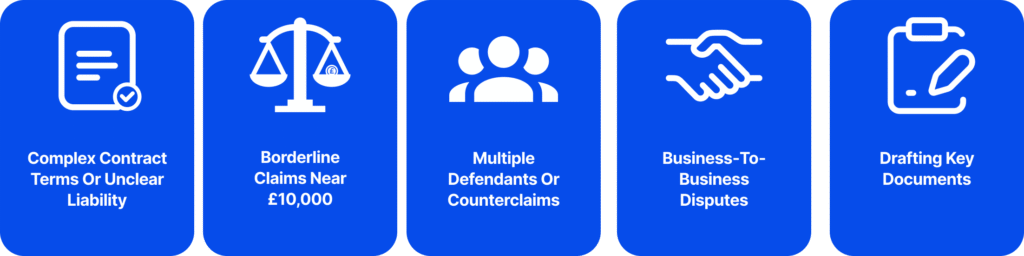
- Complex contract terms or unclear liability. If the dispute hinges on the interpretation of technical clauses (e.g. commercial service agreements or complicated T&Cs), a short consultation with a solicitor can clarify your legal rights. GOV.UK notes that you may need legal advice if your claim is complex.
- Borderline claims near £10,000. The small claims limit is £10,000. Claims above this threshold fall into the fast track, where cost rules differ and solicitor fees may be recoverable. If your claim value or counterclaim could push you over the limit, get advice on whether to amend the amount or proceed on the fast track.
- Multiple defendants or counterclaims. When there are several parties, shared liability, or a counterclaim, procedural complexity increases. A solicitor can help structure your pleadings and ensure each defendant is served correctly.
- Business‑to‑business disputes. Late payment claims between businesses may involve statutory compensation and interest. Legal advice can help you calculate and plead these elements.
- Drafting key documents. You may be comfortable representing yourself at a hearing but still want help drafting the claim form, defence or witness statements. Many solicitors offer “unbundled” services, providing advice on specific parts of the process.
A solicitor’s role in small claims is typically limited to advice and document preparation. Because their fees aren’t recoverable, instruct them only for discrete tasks or when the case complexity warrants it.
Firms caution that small claims with complex legal issues may require assistance, but emphasise evaluating whether the potential benefit outweighs the cost. Always ask for a fixed‑fee quote or use a legal clinic if your budget is limited.
How to Represent Yourself Successfully
Self‑representation saves money but requires preparation. Follow this step‑by‑step checklist to present a persuasive case:
- Understand your claim. Identify the legal basis: breach of contract, debt, refund, faulty goods or negligence.
- Write a letter before the claim. Send a formal letter summarising what happened, what you want, how much you claim and a deadline for reply. Mention the civil procedure rules and express willingness to use mediation.
- Gather strong evidence. Courts decide on the balance of probabilities. Collect written contracts, invoices, receipts, bank statements and correspondence. Photographs and signed witness statements can confirm events. Group evidence by type, label it and arrange it in chronological order.
- Prepare your documents. Fill out the N1 claim form. Include your calculation of interest and claim fixed costs for issuing. If you instruct a solicitor only to draft the claim form, note that their fee is not recoverable.
- Follow court directions. After you file, the court will send a notice of allocation with a hearing date and instructions. Provide evidence and witness statements by the deadlines, send copies to the defendant and keep proof of postage. Failing to follow directions can delay or dismiss your claim.
- Practise your presentation. Be ready to summarise your case in 5–10 minutes. Re‑read your claim form and witness statements. Judges appreciate clear, factual presentations and will ask questions to clarify points.
- Stay polite and factual. Focus on facts rather than emotion. If the defendant says something inaccurate, note it and respond calmly.
- Prepare witnesses and experts. You usually don’t need witnesses for simple claims, but they can help prove contested facts. If an expert is needed (e.g. to assess damage), ask the court’s permission and note that expert fees up to £750 may be recoverable.
- Use checklists and templates. CaseCraft.AI provides step‑by‑step guidance, automates form filling and organises evidence into bundles.
Self‑Representation Checklist
- Identify the claim type and send a letter before the claim.
- Gather contracts, invoices, bank statements, emails and photos.
- Draft a chronological evidence bundle with labels.
- Complete the claim form and pay the court fee.
- Follow deadlines for serving documents and paying the hearing fee.
- Practise your presentation and stay calm at the hearing.
Alternative Support Option (Instead of a Solicitor)
Before exploring professional legal options, there are several accessible ways to get guidance and practical help when preparing or presenting a small claim without hiring a solicitor.
CaseCraft.AI Tools
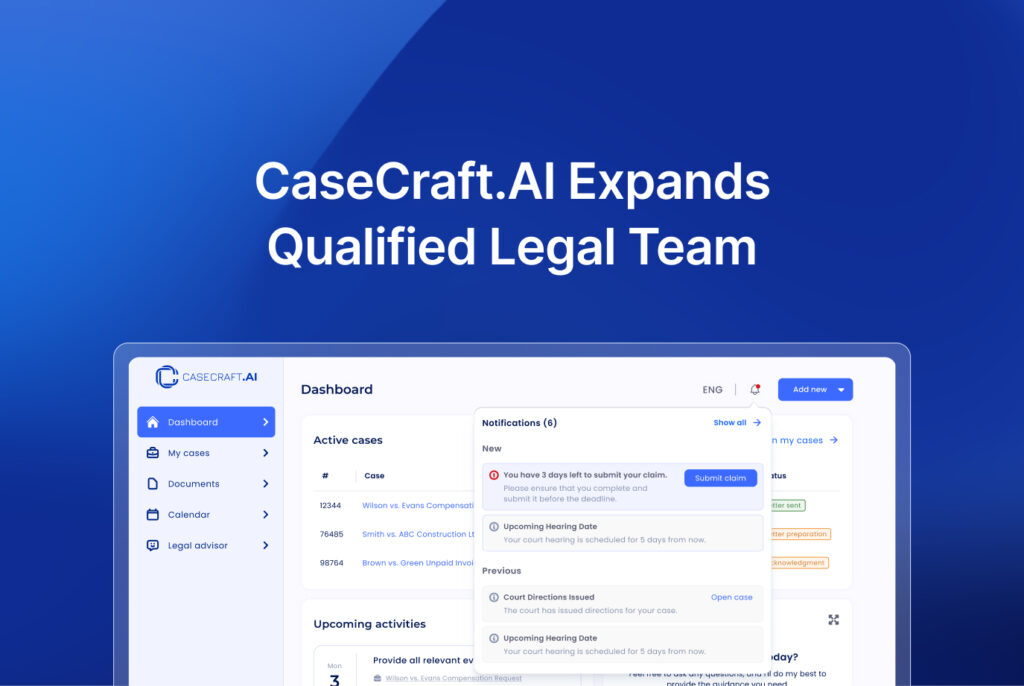
CaseCraft.AI is a digital platform designed specifically for small claims. It automates the claim process by generating official court forms, organising evidence into bundles and tracking deadlines. It uses AI to suggest relevant evidence types, ensure compliance with court directions and produce neatly formatted witness statements.
The platform charges a small setup fee and success‑based pricing (e.g. £15 plus 10% of the recovered amount), making it an affordable alternative to hiring a solicitor. Because it is backed by a regulated law firm, you still receive legally compliant documents without paying hourly solicitor rates.
McKenzie Friends
A McKenzie Friend is a non‑lawyer who can accompany you in court to provide moral support, take notes and give quiet advice. They cannot formally address the court or act as your representative unless the judge grants them a “right of audience”. McKenzie Friend small claims supporters are unregulated, so always check their credentials, insurance and any professional membership before paying for their services. They are a popular form of small claims assistance in the UK, especially if you want someone to help you stay focused and organised during the hearing.
Legal Clinics and Law Centres
Law centres, university legal clinics and pro‑bono initiatives offer free legal advice for small claims. Organisations like LawWorks, Advocate branches run clinics where volunteer solicitors review paperwork or give a one‑off consultation. These services are often oversubscribed, so book early and bring all relevant documents.
Costs: Solicitor vs Self‑Representation
| Approach | Typical cost | Recoverable if you win? | Best for |
| Self‑representation | Court fee only (approx. £35–£455) plus travel and witness expenses (£95 per person) | ✅ Court and hearing fees recoverable | Most small claims, simple disputes, and confident litigants |
| Solicitor (hourly) | £150–£300 per hour; total may exceed claim value | ❌ Generally not recoverable | Complex or high‑value claims; multiple defendants; borderline cases |
| Legal advice only (unbundled) | £100–£250 for a one‑off session | ❌ Not recoverable | Reviewing contracts, drafting a defence, advising on strategy |
Note: Because solicitor fees aren’t usually recoverable, hiring one can easily exceed the amount in dispute. A law firm example shows that suing for £2,000 might yield only around £505 in recoverable costs, so instructing a solicitor may leave you out of pocket. Similarly, paying £600 in legal fees to recover a £700 debt rarely makes economic sense.
Risks of Hiring a Solicitor in Small Claims
Hiring a solicitor can be valuable, but you should be aware of the risks:
High cost vs limited recoverability. You will pay solicitor fees from your own pocket and cannot normally claim them back. Costs quickly mount as the case progresses.
Over‑formalisation. Solicitors bring formality to an otherwise simple dispute. Drafting lengthy pleadings or raising technical defences may irritate judges and prolong the process.
Disproportionate expense. Spending hundreds or thousands of pounds to recover a small debt can wipe out your winnings.
Loss of control. Engaging a solicitor means you rely on their strategy and timetable. Some litigants prefer to handle their own case and respond quickly without waiting for legal instructions.
Because of these risks, the small claims system discourages solicitor involvement unless the dispute genuinely requires expertise. If you decide to use a solicitor, consider fixed‑fee or no‑win‑no‑fee arrangements and confirm what work will be done for the price.
Benefits of Self‑Representation
Self‑representation empowers you to manage your own case. Key advantages include:
- Cost savings. You only pay court fees and witness expenses. There are no hourly solicitor bills.
- Control. You decide the strategy, deadlines and settlement offers. You can respond quickly without waiting for legal advice.
- Direct communication with the judge. Judges appreciate hearing directly from the parties. They will ask questions and guide you through the process.
- Informal environment. Small claims hearings are conversational. You sit at a table rather than a dock and can refer to your notes. This reduces stress and makes the process accessible.
- Personal satisfaction. Presenting your own case can be empowering and educational. Many litigants report greater confidence after handling their claim.
When Solicitor Representation Is Strongly Advised
There are scenarios where hiring a solicitor is prudent despite the cost, and yes, you can hire a solicitor for small claims if the situation justifies it.
- Multi‑party or cross‑jurisdictional disputes. If there are several defendants, an overseas party or a counterclaim, the procedural rules become complex. A solicitor can manage service, jurisdiction challenges and consolidation of claims.
- Complex property, intellectual property or defamation issues. Matters involving land law, trademarks, patents or alleged defamation often require specialist knowledge. They may also exceed the £10,000 small claims limit.
- Claims involving potential negligence or fraud. Professional negligence, fraud or allegations of dishonesty carry serious legal consequences. Getting the law wrong could expose you to liability.
- Enforcement abroad. If you need to enforce a judgment in another country, a solicitor can help navigate recognition and enforcement procedures.
- High stakes or borderline value. Claims close to or exceeding £10,000 may fall into the fast track, where cost recovery rules differ. If losing could bankrupt your business or harm your reputation, professional representation is wise.
You can instruct a solicitor for unbundled services, such as drafting a defence, reviewing documents or attending mediation, while handling the rest yourself. This keeps costs manageable and ensures you meet legal requirements.
Withdrawal, Discontinuance and Cancellation of a Small Claim
People often ask whether they can withdraw a small claim, discontinue a small claim or cancel a small claims court case. In the UK, you cannot simply cancel a claim once it is issued; you must discontinue it. Here’s how the process works:
- Withdraw vs Discontinue. Withdrawal generally means removing the claim before it is issued. Because claims are issued almost immediately online, the court cannot withdraw them once submitted. If you no longer wish to proceed, you must file a notice of discontinuance (Form N279).
- Notice of Discontinuance (Form N279). Complete this form to discontinue all or part of your claim. You must serve a copy on every defendant and file it with the court. There is no fee, but you will not be refunded the original court fee.
- Small claim discontinuance form and rules. CPR Part 38 sets out the discontinuance rules. Rule 38.6(3) states that in small claims, the claimant is generally not liable for the defendant’s costs upon discontinuance.
- Notice of discontinuance form N279. Use the official form available on GOV.UK. Failure to serve the form means your claim remains active.
- Withdraw claim before hearing. You can discontinue at any time before judgment, but if the defendant filed a counterclaim, the counterclaim will continue. If you discontinue after the defence is filed, the court may view late withdrawal as unreasonable; in rare cases, costs could be awarded for wasted small claims hearing preparation.
- Defendant’s costs in small claims. Because small claims costs are limited, defendants usually cannot recover solicitor fees. However, if you behave unreasonably (e.g. issue a weak claim, then discontinue to harass the defendant), the judge may order you to pay some costs. Always consider settlement or mediation before discontinuing.
- Partial withdrawal (discontinuing part of a claim). You can discontinue specific parts of the claim (e.g. drop a compensation element but pursue a refund). Use Form N279 to specify which part you’re discontinuing.
This process ensures fairness to defendants while recognising that small claims are designed for self‑representation and low costs.
Note: The following information is for general guidance only and does not constitute legal advice. Always seek professional support if you’re unsure about your specific situation.
FAQ: Solicitors and Small Claims
Do I need a solicitor for small claims court?
No. Small claims court is designed for self‑representation. You can represent yourself, and judges will guide you through the process. Hiring a solicitor is optional, and their fees are rarely recoverable.
Can I recover solicitor fees in small claims?
Generally no. Recoverable costs in small claims are limited to court fees, hearing expenses, witness costs and travel. Solicitor fees are only recoverable in rare cases involving contractual cost clauses or statutory rights.
Can someone else speak for me in court?
You may take a friend or McKenzie Friend to court for support. They can take notes and give quiet advice, but cannot speak on your behalf without the judge’s permission. Judges sometimes allow a McKenzie Friend to address the court if it helps the case.
What if the other side hires a solicitor?
Don’t panic. Even if the defendant uses a solicitor, the judge will ensure the hearing remains fair and informal. You can ask the judge for clarification if the solicitor uses legal jargon. Solicitor fees remain non‑recoverable in small claims, so the client may not recover those costs.