

Eye Injury Compensation and Loss of Sight Claims
Claim fair compensation for eye injuries or loss of sight with CaseCraft.AI. Fast, simple small-claims support.


What Is an Eye Injury Compensation Claim?
Eye injury claims seek to recover financial compensation for harm to a person’s vision caused by someone else’s negligence. Injuries range from temporary irritation or scratched corneas to permanent blindness. Specialist solicitors highlight that claims often arise after road‑traffic accidents, workplace incidents, assaults or medical negligence. Compensation covers both general damages (pain and suffering) and special damages (financial losses). The general small claims value determines whether it falls within the £10,000 small‑claims limit.
You can make a small claim as soon as you realise that another party’s negligence caused your eye injury. Examples include:
- Workplace incidents – injuries resulting from inadequate training, missing safety guards, lack of protective goggles or defective machinery.
- Road‑traffic accidents – debris from collisions can damage the eye.
- Medical negligence – delayed diagnoses, improper surgical procedures or incorrect prescriptions may lead to sight loss.
- Assaults – violent attacks can cause lasting eye damage. Claims under the Criminal Injuries Compensation Authority must be lodged within two years.
What Is an Eye Injury Compensation Claim?
Eye injury claims seek to recover financial compensation for harm to a person’s vision caused by someone else’s negligence. Injuries range from temporary irritation or scratched corneas to permanent blindness. Specialist solicitors highlight that claims often arise after road‑traffic accidents, workplace incidents, assaults or medical negligence. Compensation covers both general damages (pain and suffering) and special damages (financial losses). The general small claims value determines whether it falls within the £10,000 small‑claims limit
You can make a small claim as soon as you realise that another party’s negligence caused your eye injury. Examples include:
- Workplace incidents – injuries resulting from inadequate training, missing safety guards, lack of protective goggles or defective machinery.
- Road‑traffic accidents – debris from collisions can damage the eye.
- Medical negligence – delayed diagnoses, improper surgical procedures or incorrect prescriptions may lead to sight loss.
- Assaults – violent attacks can cause lasting eye damage. Claims under the Criminal Injuries Compensation Authority must be lodged within two years.
What Are the Most Common Types of Eye Injuries?
Common injuries that may lead to claims include:
- Scratched cornea and corneal abrasions – often caused by foreign bodies or debris.
- Detached retina, which may result from trauma.
- Bleeding in the eye (subconjunctival haemorrhage).
- Chemical burns – often due to workplace accidents.
- Penetration of the eyeball or a punctured eyeball.
- Traumatic iritis (inflammation of the iris) and temporary or partial loss of sight.
These injuries vary widely in severity. Minor injuries may heal quickly and fall within the small‑claims limit, while severe injuries (complete loss of sight or loss of an eye) usually involve damages beyond £10,000. Regardless of the injury, CaseCraft.AI provides a structured process to gather evidence and present your case.
Eye injury and loss‑of‑sight claims require careful preparation and timely action. CaseCraft.AI help you file or defend a small claim efficiently, stay on top of deadlines, and recover the compensation you deserve.
How to Make an Eye Injury Compensation Claim
The Most Important Things to Remember When Making an Eye Injury Claim
If you suffer an eye injury due to another person’s negligence, you may be entitled to compensation. According to specialist solicitors, you must prove that someone else owed you a duty of care and breached it, causing the injury. The amount of compensation depends on the injury’s severity and its impact on your life. Time is critical: you normally have three years from the date of the injury or from when you realised your sight was affected to start a claim.
Before issuing a claim, you should:
- Seek immediate medical attention. Documentation from doctors and specialists will support your case and establish when you first knew about the injury.
- Gather evidence such as witness statements, accident reports and photographs. Claims are stronger when backed by clear proof of negligence.
- Keep records of all expenses and losses (travel costs, loss of earnings, rehabilitation, specialist equipment). These can be recovered as special damages.
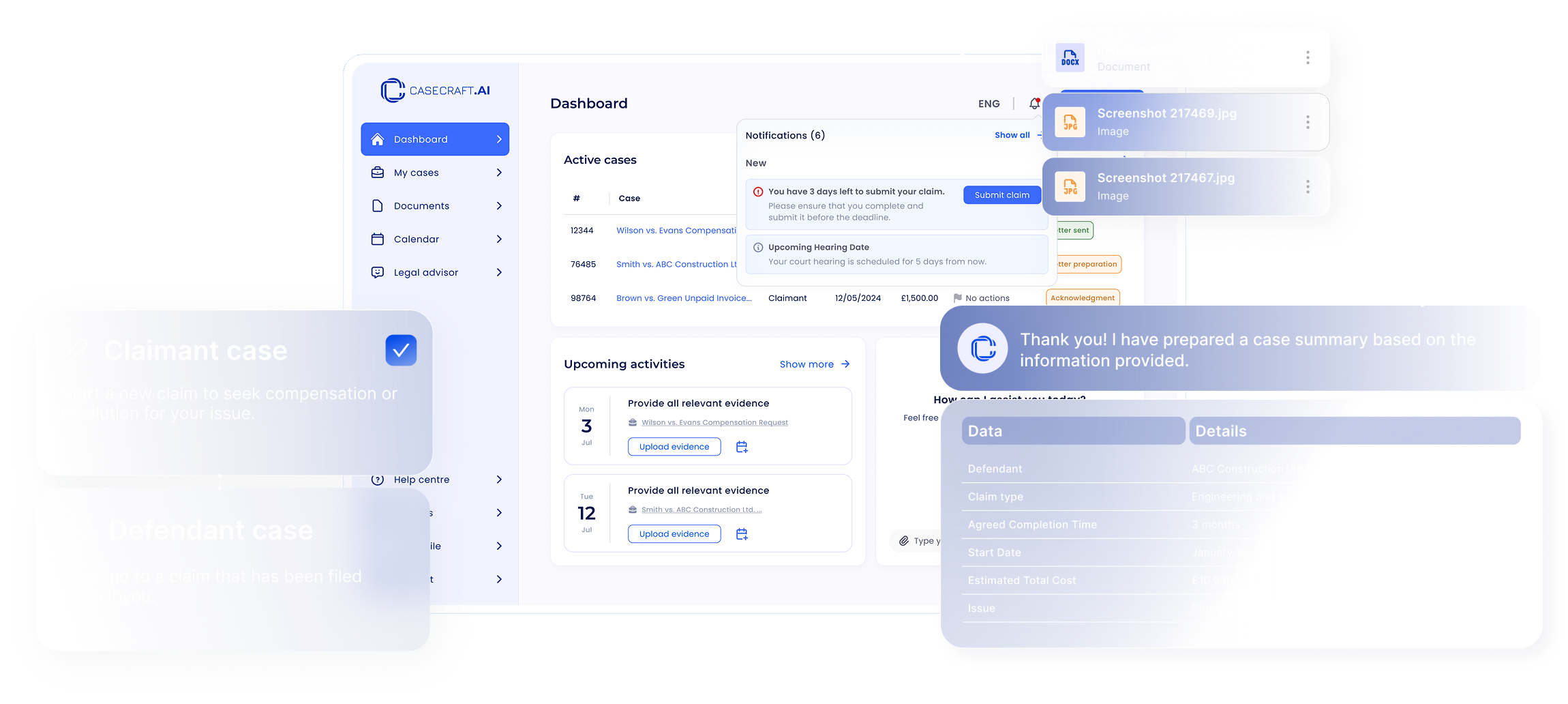
CaseCraft.AI’s dashboard helps you organise these documents. You can securely upload files, track progress and receive deadline alerts so that you never miss a crucial step. This feature is particularly valuable when managing a claim on your own because it removes the risk of oversight.
Get Expert Legal Help for Your Case
Specialist representation can maximise loss of sight compensation claims and ensure the claim is prepared correctly. CaseCraft.AI does not replace lawyers for complex, high‑value cases; instead, it complements professional advice by automating routine tasks and ensuring compliance. Our platform is designed by seasoned legal professionals, guaranteeing accuracy and full legal compliance at every step.
Can I Make a No-Win, No-Fee Eye Injury Compensation Claim?
Most personal injury solicitors offer no‑win, no‑fee arrangements. Claimants pay nothing up front; solicitors take out after‑the‑event insurance to cover legal costs, and you only pay a success fee if you win. In small claims, legal costs cannot usually be recovered from the other party, so paying a solicitor may reduce your net compensation. CaseCraft.AI’s transparent pricing model charges a £15 processing fee upfront and a 10 % success fee only when you win. This structure ensures there are no hidden fees and aligns our interests with yours.
How Long Will My Eye Injury Compensation Claim Take?
There is no fixed timeframe. Claims can take a few months to over a year, depending on the complexity of the case, the extent of the injuries and whether liability is contested. Small claims tend to move faster because the procedure is simpler. CaseCraft.AI’s automated reminders and case tracking help keep your claim on schedule, reducing delays and ensuring you meet court deadlines.
How Do I Start an Eye Injury Compensation Claim?
To start a claim on CaseCraft.AI:
Create an account
Our platform is user‑friendly and requires no legal knowledge. Once registered, you receive a personalised dashboard where you can track progress and organise documents.
Submit your claim
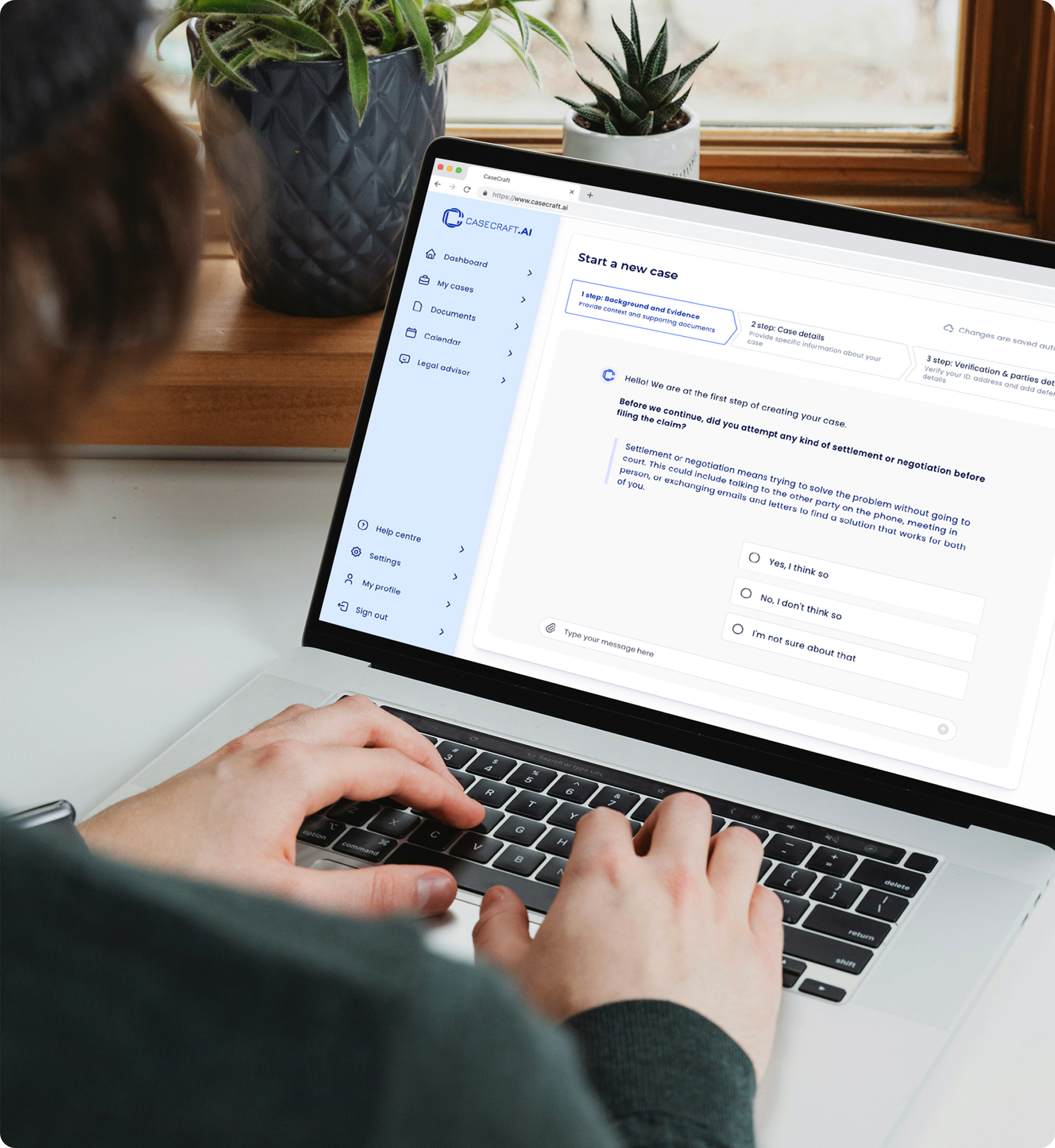
Click “Add New Claim” and follow the step‑by‑step prompts. CaseCraft auto‑fills your claim forms with precision, removing manual errors and delays.
Gather essential information
Upload emails, agreements, invoices and receipts, and review them for accuracy before saving. Use the “My Documents” section to store files and monitor claim amounts, progress and status.
Stay on track
Smart notifications remind you of critical deadlines so you never miss a step.
More Information About Personal Injury Claims
Personal injury claims operate under the Civil Procedure Rules. For small claims, there is a three-year limitation period, but claims should be issued promptly to avoid evidential difficulties. Claimants must prove:
- Duty of care – the defendant owed you a legal duty (e.g., employers must provide safe working conditions).
- Breach – the defendant failed to meet that duty (e.g., no eye protection).
- Causation – the breach directly caused the eye injury.
- Loss – you suffered quantifiable damage (physical harm and financial loss).
Collecting medical evidence and documenting financial losses are essential.
Small-Claims Limit for Personal Injury Cases
From 6 April 2022, the small-claims injury threshold for non-RTA personal injury claims rose from £1,000 to £1,500 (overall claim value must still be £10,000 or less).
Why Should You Choose Us?
CaseCraft.AI offers several advantages over traditional processes:
- AI‑powered Success: Our platform uses automation and data‑backed insights to boost your chances of a successful claim.
- Transparent Pricing: We charge a small processing fee and a 10 % success fee only if you win. There are no hidden costs.
- Designed by Legal Professionals: Experienced solicitors have built the platform to ensure accuracy, reliability and legal compliance.
- Intuitive Dashboard: Manage your case, upload documents and track progress in one place.
- Smart Deadlines: Receive notifications for every critical deadline so you never miss a step.
- Suitable for Claimants and Defendants: Whether you are filing or defending a claim, the platform provides guided assistance and clear case insights.
Friendly Asked Questions
What Is the Time Limit to Make an Eye Injury Compensation Claim?
For personal injury claims, you generally have three years from the date of the accident or from when you first knew about your injury
There are exceptions: children can claim until their 21st birthday; mentally incapacitated claimants have no time limit until capacity returns; assault claims must be brought within two years under the Criminal Injuries Compensation Authority.
Сan I Make an Eye Injury Claim After an Accident at Work?
Yes. Employers have a legal duty to keep workplaces safe under the Health and Safety at Work etc. Act 1974 and the Occupiers’ Liability Act 1957. If your injury resulted from defective machinery, lack of protective equipment, inadequate training or safety breaches, you can bring a claim. CaseCraft.AI’s eligibility check ensures your claim is within scope, and our guided process helps you submit the necessary evidence.
Can I Make an Eye Injury Claim Caused by Medical Negligence?
Yes. Medical negligence claims arise when healthcare professionals fail to meet the standard of care, causing injury. Examples include delayed or incorrect diagnosis, negligent eye surgery, improper laser treatment or failure to prescribe the correct medication. For claims within the small‑claims limit, you can use CaseCraft.AI to submit documentation such as medical records and expert reports. More serious cases often fall outside the small‑claims limit and require specialist representation.
Can I Make a Claim Caused by a Road Traffic Accident?
Eye injuries frequently occur during road‑traffic accidents when shattered glass or debris enters the eye. If another driver’s negligence caused the accident, you can claim compensation. For small claims, you must demonstrate negligence, provide medical evidence and document your expenses. CaseCraft.AI guides you through uploading evidence and ensures you meet court deadlines.
Can I Make a Claim After an Assault?
Victims of assault can pursue compensation through the Criminal Injuries Compensation Authority (CICA). Claims must generally be filed within two years. Compensation covers physical and psychological injuries. If the assailant is known and has assets, you could also bring a civil claim, but serious injuries often exceed £10,000 and fall outside the small‑claims track.
Case Study: Claim for Breach of Contract

A client paid £5,000 for a one-month agreement to use commercial premises but was denied access after just five days. The provider refused to refund the unused period.nnThe claim was filed for fundamental breach of contract and unjust enrichment. When the defendant failed to respond, the court issued a default judgment, granting full recovery including fees and interest.

CaseCraft.AI supports all common types of small money claims
From workplace accidents to medical negligence — eye injury and loss of sight claims focus on restoring your quality of life and securing fair compensation. CaseCraft.AI helps you handle every step efficiently and affordably, without legal complexity.
Don’t Wait – Get nStarted Today!
Take the first step toward a faster, easier small claims process with CaseCraft.AI.