




1. Small claims cover disputes under £10,000. Always start with a pre-action letter of claim, giving 14 days for the defendant to respond.
2. File your claim online or with an N1 form, after gathering strong evidence such as contracts, emails, invoices, photos and witness statements. The defendant has 14 days to reply, or you can apply for a default judgment.
3. Most cases under £10,000 qualify for free mediation. If unpaid after judgment, you can enforce the decision through bailiffs (warrant of control), attachment of earnings or a charging order.
Introduction
Small claims are the UK’s system for resolving civil disputes worth £10,000 or less without the expense of a full trial. You can sue someone in small claims court for unpaid invoices, faulty work, deposits, property damage or other breaches of contract where the financial value fits the limit. The process is designed for people without lawyers: you fill in the paperwork, send evidence and attend a short hearing if the case doesn’t settle. Filing fees are modest, and you may recover them if you win. This process is fair and should put you at ease.
This article explains exactly how to sue someone in small claims court. You will learn when you can use the court, how to prepare, how to file your claim online and what happens if the defendant ignores you. We also cover costs, timelines, mistakes to avoid and tips for winning. A digital assistant like CaseCraft.AI can help you organise documents, draft letters, and keep track of deadlines, providing you with the support and guidance you need. Read on for the full step‑by‑step guide.
When You Can Sue Someone in Small Claims Court
The small claims court is not for every dispute. You must meet certain criteria before you sue someone in small claims court in the UK:
- Unpaid invoices or loans: If someone owes you money for work, goods or a loan and refuses to pay, you can sue them for money in the UK under the small claims process.
- Faulty goods or poor service: Consumers can recover the cost of defective products or shoddy repairs.
- Damaged property: Claims for property damage caused by a neighbour, builder or contractor.
- Landlord/tenant disagreements: Disputes over deposits or minor disrepair (up to £1,000) qualify as small claims.
- Neighbour or builder disputes: Boundary or building disputes involving modest sums.
- Breach of contract: When a person or company fails to honour a contract and the loss is under £10,000.
Limitations and Exclusions
- Value cap: You cannot claim more than £10,000 (excluding interest and court fees).
- Multiple defendants: A small claim can involve no more than two defendants.
- Excluded cases: Harassment, defamation or complex housing cases are excluded from the small claims track regardless of value.
- Jurisdiction: The defendant must have a UK address in England or Wales. Claims against people in Scotland or Northern Ireland use different procedures.
- Tenancy deposits: The court may require an alternative resolution for tenancy deposit disputes.
If your dispute falls within these limits, you can continue with the small claims court process.
Step‑by‑Step: How to Sue Someone in Small Claims Court
Before filing, courts expect you to try to settle the matter. The following steps show how to make a small claim in the UK from start to finish. Each stage matches the court rules and is supported by evidence bundles. Tools like CaseCraft.AI streamline these tasks by guiding you through the forms and storing documents securely.
1) Try to Resolve the Issue First
Courts require you to follow pre‑action conduct. That means contacting the defendant, explaining the problem and giving them a chance to put things right. Send a letter before action (also called a pre‑action letter of claim). This letter should set out what happened, what you want (amount claimed), and give at least 14 days for a response. Keep a copy and proof of posting. Under the civil procedure rules, failure to send a letter before claim can affect costs or cause the court to delay your case.
This is also the first step inside CaseCraft.AI: the platform automatically drafts the pre-action letter for you, ensuring it meets procedural requirements and is ready to send without the usual hassle.
Example: Maria loaned £1,200 to a friend for car repairs. After several polite reminders, she wrote a letter before action demanding repayment within 14 days. When no response came, she proceeded to file a claim.
2) Gather Evidence
Good evidence wins small claims. Gather and organise all documents that support your case:
- Contracts and invoices: Signed agreements, receipts, purchase orders and unpaid invoices.
- Emails, letters and texts: Conversations showing the defendant agreed to pay or fix the issue.
- Photos and videos: Images of damage or faulty work. In a building dispute, photos of the defect before and after repairs can be powerful.
- Statements: Quotes from tradespeople and witness statements (if any). In small claims, you rarely need expert witnesses; if you do, you must get the court’s permission.
- Timeline: A chronological summary of events helps the judge follow your story.
CaseCraft.AI’s platform lets you upload documents and photos, and organises them into a small claims evidence bundle. Even without the tool, you should prepare a bundle with numbered pages and a table of contents.
3) File Your Claim Online
Filing your claim online is the simplest way to start a small claim. You must be over 18, have a UK address, and your claim must be under £10,000. CaseCraft.AI guides you through the process step by step, so you don’t need to worry about the legal formatting or court-ready wording.
The filing stage includes:
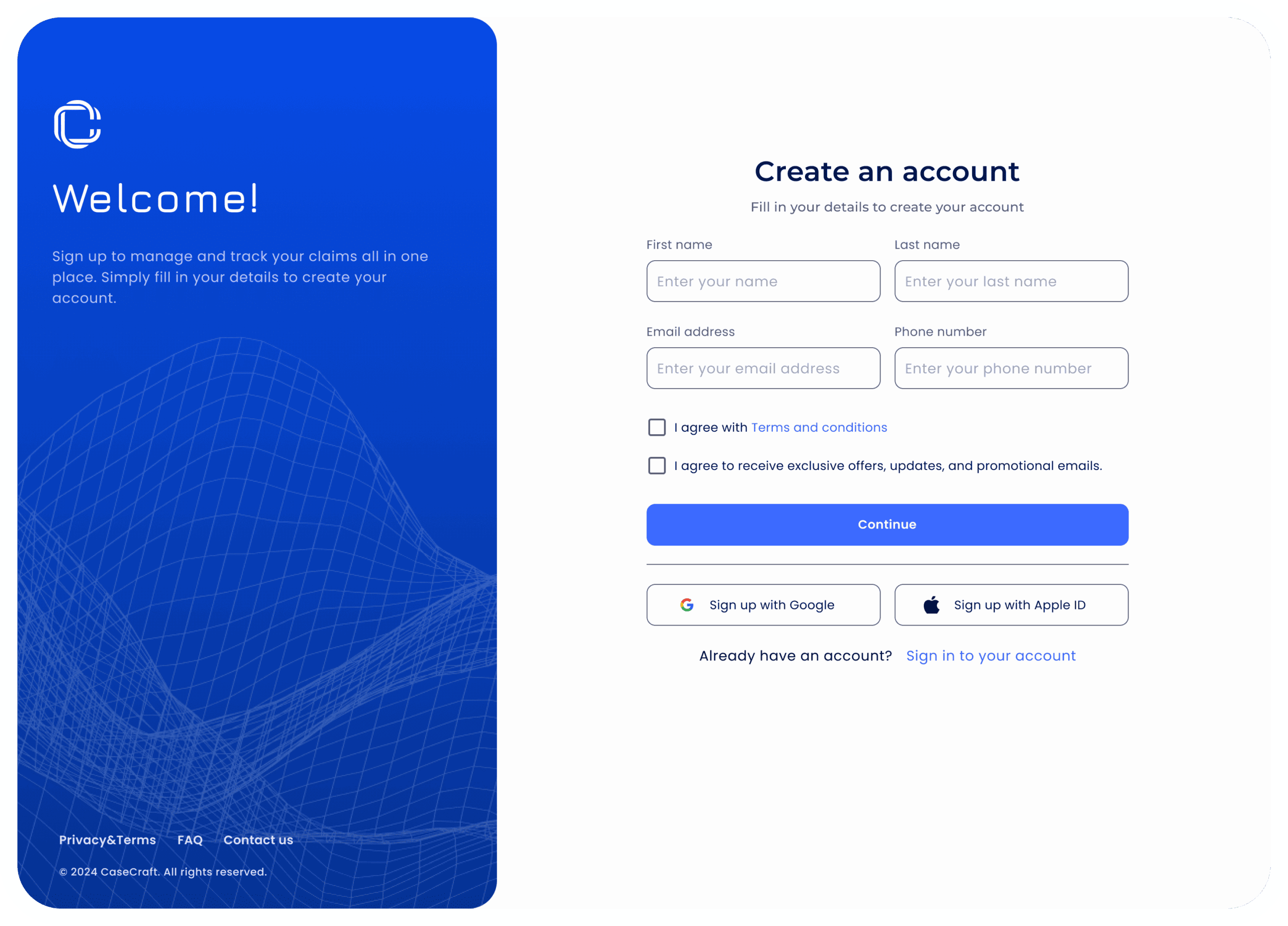
- Creating your CaseCraft.AI account and confirming your eligibility.
- Adding the defendant’s details, including names and addresses. CaseCraft.AI only allows up to two defendants, matching the limits of the small-claims process.
- Enter the amount you’re claiming and outline what happened.
- Uploading your evidence, such as photos, emails, invoices or messages.
- Generating clear particulars of the claim, written in the style expected by the County Court.
- Review and confirm your information before paying the standard court fee.
CaseCraft.AI keeps everything organised and ensures your claim is complete and ready for submission without the usual paperwork or guesswork.
4) Wait for the Defendant’s Response
Once the claim is served, the defendant has 14 days to file a response. They have several options:
- Admit the claim: They accept they owe the amount and agree to pay. You should receive payment shortly.
- File a defence: They dispute all or part of the claim and explain why.
- Part admission: They agree they owe some money, but not the full amount.
- Counterclaim: They claim you owe them money.
- Ignore the claim: If there is no response by day 14, you can apply for a default judgment.
5) Mediation
For claims under £10,000, the court’s free small claims mediation service is mandatory. A mediator speaks to each party separately by telephone for up to an hour. The aim is to reach an agreement and avoid a hearing. Mediation is confidential and does not add cost. If the defendant accepts your offer or you negotiate a settlement, the court records the agreement. If mediation fails, the case proceeds to a hearing.
6) Court Hearing
If the dispute isn’t resolved through mediation, the court will list the case for a small claims hearing. You receive a notice of allocation at least 21 days before the hearing. A small claims hearing is informal; judges sit without wigs or gowns. Only people involved in the case attend. Your evidence bundle must be sent to the court and the defendant at least 14 days before the hearing.
During the hearing, the judge will ask both sides to summarise their case. You don’t need a solicitor; you can represent yourself, or ask someone to help you (a barrister or friend). Prepare a short spoken summary and refer to your documents. The hearing usually lasts 30–60 minutes. CaseCraft.AI cannot attend the hearing for you, but its case tracking keeps you informed of dates and deadlines.
7) The Judge’s Decision
After hearing evidence, the judge will give a decision either immediately or by post. Possible outcomes:
- Claim allowed: Defendant must pay the full amount plus court fees and limited costs. Payment is usually due within 14 days.
- Partial success: The judge decides that only part of your claim is proven; you recover a reduced amount.
- Claim dismissed: You lose and may be ordered to pay the defendant’s costs (usually limited in the small claims track).
If you lose, you can appeal within 21 days, but only on a point of law or procedural irregularity.
8) Enforce the Judgment
Winning a judgment doesn’t guarantee payment. If the defendant fails to pay, you can enforce the judgment. Options include:
- Bailiffs (warrant of control): Apply for a warrant of control; court bailiffs will give the debtor seven days’ notice to pay. If they don’t pay, bailiffs can seize goods to sell.
- Attachment of earnings: The court orders the debtor’s employer to deduct money from wages until the judgment is satisfied.
- Charging order: Place a charge on the debtor’s property or land; you might receive payment when they sell or remortgage.
- Third‑party debt order: Freeze funds in the debtor’s bank account and redirect them to you.
A digital assistant like CaseCraft.AI can track payments and remind you when enforcement is needed. However, you must still complete the necessary application forms.
How Much Does It Cost to Sue Someone in Small Claims Court?
The court fee is based on the amount you’re claiming (excluding interest):
| Amount claimed | Court filing fee (MCOL) | Hearing fee (approx) |
| Up to £300 | £35 | £27 |
| £300.01 – £500 | £50 | £59 |
| £500.01 – £1,000 | £70 | £85 |
| £1,000.01 – £1,500 | £80 | £123 |
| £1,500.01 – £3,000 | £115 | £181 |
| £3,000.01 – £5,000 | £205 | £346 |
| £5,000.01 – £10,000 | £455 | £346 |
If your claim is between £10,000 and £200,000, the filing fee is 5 per cent of the claim amount, and the hearing fee is higher (outside the small claims track). You may recover the court fee if you win. You might be eligible for help with fees if you’re on a low income.
CaseCraft.AI charges a small processing fee and a success fee if your case is successful. Because the platform automates document generation and reminders, you can save on solicitor costs while staying in control of the claim.
How Long Does It Take to Sue Someone?
Pre‑action stage: Sending the letter before action, waiting for a reply and preparing evidence usually takes 14–30 days.
Court process: Once you file, the defendant has 14 days to respond. If they defend, mediation and case management may take another 2–3 months. A hearing is usually held within 3–6 months of filing.
Enforcement: If you obtain a judgment and the defendant doesn’t pay, enforcement actions such as a warrant of control or attachment of earnings can take 2–8 weeks.
Digital tools can speed up preparation by automating forms and reminders. However, you must still allow for court schedules and the defendant’s response time.
Common Mistakes to Avoid
- Not sending a letter before action: Courts expect you to try to resolve the dispute; skipping this step can reduce your chance of recovering costs.
- Suing too early: Wait at least 14 days after sending your letter and ensure you have all the evidence before filing.
- Overclaiming without evidence: Claim only provable losses. Judges dismiss claims lacking receipts or contracts.
- Missing deadlines: Respond to court directions and send documents on time; failure can result in your claim being struck out.
- Disorganised evidence: Present your bundle in order. Use indexes and page numbers, and send copies to the defendant.
- Not enforcing judgment: If the debtor doesn’t pay, apply for enforcement promptly; judgments expire after six years.
Best Tips for Winning a Small Claim
Keep everything in writing: Confirm agreements by email or contract to create a paper trail.
Stay factual and polite: Judges respond better to clear, respectful language than to emotional complaints.
Organise documents chronologically: Use a timeline to show what happened when. CaseCraft.AI’s live case tracking helps you maintain order.
Prepare a spoken summary: Write a short script for the hearing, highlighting key evidence and referencing page numbers. Practise it aloud.
Use mediation wisely: Mediation can secure payment faster and avoid uncertainty.
Know your rights: Read the Civil Procedure Rules Part 27 and the court’s guidance. Understand the defendant’s response deadline and default judgment process.
Use technology: Platforms like CaseCraft.AI automate form filling, document management and deadline reminders, saving you time and ensuring nothing is missed.
Conclusion
Suing someone in small claims court can feel daunting, but the process is designed for ordinary people. The key steps are to send a letter before action, assemble a solid evidence bundle and file your claim. Understanding the small claims court process, from defendant response deadlines and mediation to hearings and enforcement, reduces stress and increases your chance of recovery. Small claims judges expect organised documents, clear communication and respect for deadlines. Digital tools like CaseCraft.AI provide AI‑powered claim automation, live case tracking and secure document management. By staying organised and following this guide, you can resolve your dispute efficiently and recover what you’re owed.
Note: This material is provided for informational purposes only and does not constitute legal advice. Always consult a qualified professional and check the most up-to-date official guidance before acting.
FAQ: Suing Someone in Small Claims Court
How do I sue someone in small claims court in the UK?
To sue someone in small claims court in the UK, write a letter before action giving at least 14 days to settle. Collect evidence, then file a claim, N1 paper form. Pay the court fee and wait for the defendant’s response. If they defend, the case may go to mediation or a short hearing. You can represent yourself and recover the fee if you win.
How much does it cost to sue someone?
Court fees range from £35 for claims up to £300 to £455 for claims between £5,000 and £10,000. There are additional hearing fees (around £27–£346). If you use CaseCraft.AI, you pay a processing fee and a success fee only if you win. Those on low incomes may qualify for fee remission.
Do I need a solicitor to sue someone?
No. The small claims process is designed for self‑represented claimants. You can hire a solicitor or barrister, but you will rarely recover legal costs. Many people use digital assistants like CaseCraft.AI to guide them through filing and evidence preparation.
What happens if the person I sue ignores the claim?
If the defendant fails to respond within 14 days, you can request a default judgment. The court will order them to pay the claimed amount plus your court fee. If they still do not pay, you may enforce the judgment using bailiffs, attachment of earnings or charging orders.
What evidence do I need to sue someone?
You need evidence showing the agreement, the breach and your losses. Typical documents include contracts, invoices, receipts, emails, messages, photos of damage and witness statements. A well‑organised small claims evidence bundle improves your chance of success. Digital platforms can help compile and order evidence.
How long do I have to sue someone?
Most contractual claims must be filed within six years of the breach (limitation period). However, you should act promptly; waiting too long can make evidence harder to find. You must also send a letter before claiming, and give the defendant 14 days before filing.