

Incorrect Claim Form: Risks, Deadlines, and How to Put It Right
Made a mistake on a small‑claims claim form? Learn the risks, deadlines and fix steps, then check your documents in minutes with CaseCraft AI.


What Counts as an Incorrect Claim Form?
When you file a small‑claims claim form (N1) in England and Wales, you must provide the defendant’s full name, correct address and the brief details of the claim. The official N1A guidance stresses that the claimant must supply the full address, including postcode, for themselves and the defendant; if an address lacks a postcode, you must ask the judge for permission. You must also include a concise “brief details of claim” describing the dispute and remedy sought.
A claim form is incorrect when any of these elements are wrong or missing:
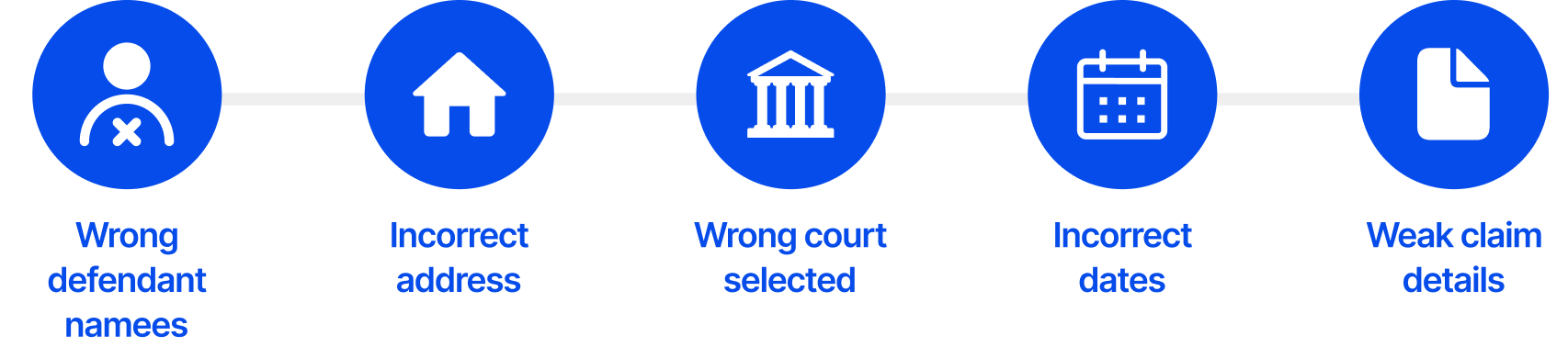
- Incorrect defendant name on claim form: using the wrong legal name, forgetting a trading name, misspelling or naming the wrong entity.
- Incorrect address on claim form: wrong or outdated address, missing postcode or incorrect service address.
- Claim form incorrect court: listing the wrong court or track (e.g., choosing the High Court when the claim should be in the County Court).
- Downloading claim form with incorrect dates: entering the wrong contract dates or event dates can mislead the court and defendant.
- Incorrect brief details on claim form: leaving out key facts or writing a narrative that doesn’t match the evidence.
A single mistake can lead to claim form errors that delay service, require re‑issue or even result in your claim being struck out. Knowing what you can correct yourself and how to fix the more complex errors is essential.
Quick Fixes vs. Changes Requiring Permission
Not every claim form mistake demands an application; some can be put right before the claim is served. Civil Procedure Rule (CPR) 17.1 states that a party may amend their statement of case (including the claim form) at any time before it has been served. Once the form has been served, amendments require either the written consent of all other parties or permission of the court.
Quick Corrections (No Application Needed)
These errors can usually be fixed before service:
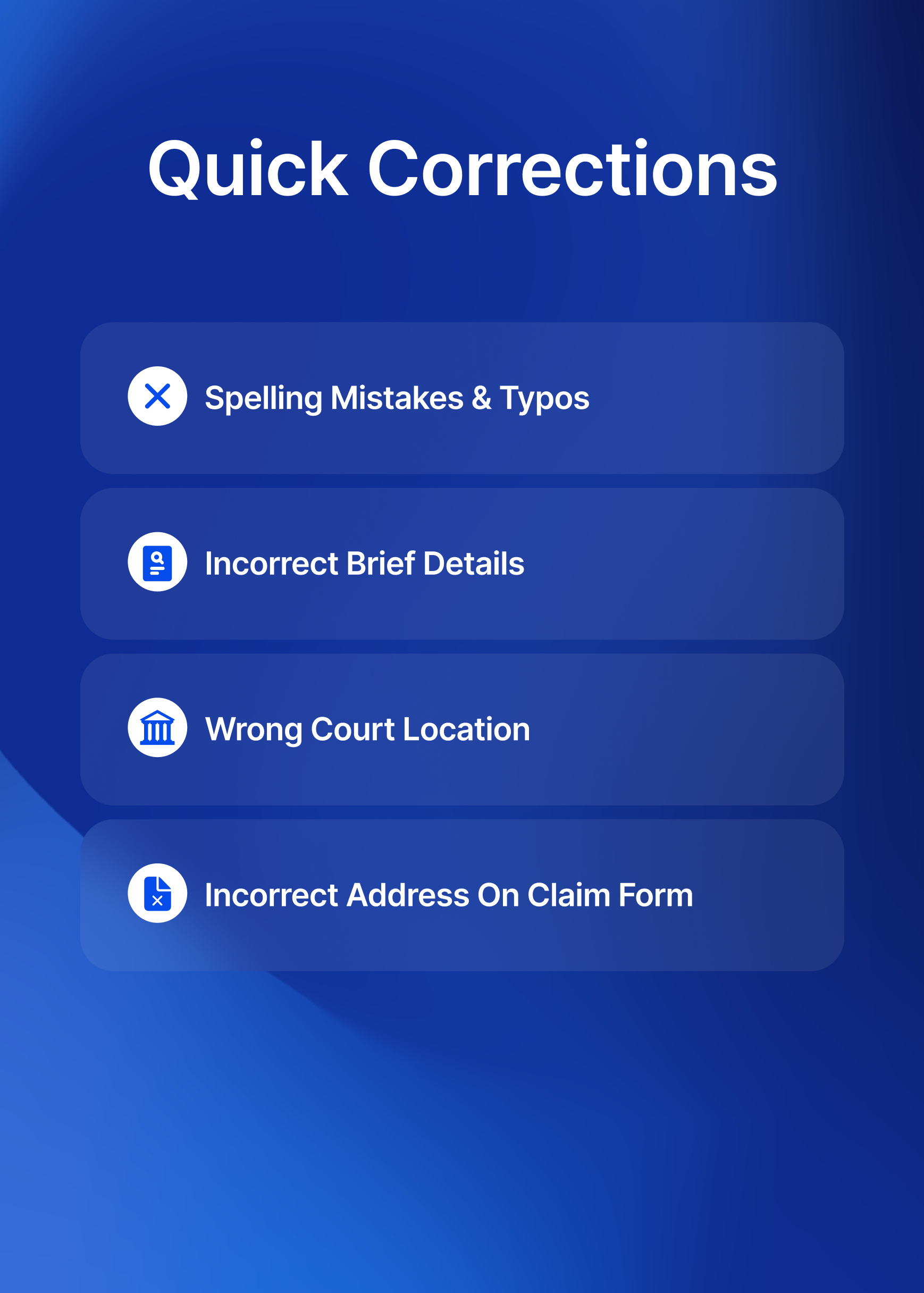
- Spelling mistakes and typos in names or addresses.
- Incorrect brief details that can be reworded before sending.
- Wrong court location if you realise before service; update the heading and re‑print the form.
- Incorrect address on claim form discovered before service; you may complete a new N1 marked “Amended” with the correct address.
Because the claim has not yet been served, you do not need court permission, and there is no fee. Simply correct the form, clearly mark it “Amended” in red (as the HMRC guidance suggests for wrong addresses), and serve the corrected version.
Changes that Need Consent or Court Permission
Once the claim form has been served on the defendant, CPR 17.1(2) requires written consent from all parties or a court order to amend. Some errors almost always need a formal application:
- Incorrect defendant name on the claim form, where the wrong legal entity was sued. Correcting the name may change the party and requires permission under CPR 17.4; the court will only allow an amendment after the limitation period if the mistake was genuine and there’s no doubt about identity.
- Adding or substituting a new party: allowed before service, but after service, it needs permission and may be refused if the limitation has expired.
- Amending particulars of the claim substantially; if you filed only brief details and want to add a detailed claim, you may need to file separate Particulars of the claim and get permission.
- Correcting the claim after judgment: e.g., to reflect interest or cost changes—requires a N244 application notice.
In these cases ,you must file Form N244 (application notice) and pay the relevant fee: the Senior Courts Costs Office lists the fee for a general application on notice (N244) at £313 and £123 for applications by consent or without notice (updated June 2025). Court permission orders may also require you to re‑serve the claim on the defendant.
Risks of Leaving an Incorrect Claim Form Uncorrected
Before you try to fix anything, you need to understand the risk. An incorrect claim form does not just cause admin friction. It can damage your case.
Service Problems
CPR 7.5 gives you four months from the date of issue to serve the claim form. Serving at the wrong address or on the wrong party can render service ineffective; the claimant may need to re‑serve, or the defendant can apply to strike out the claim. The HMRC guidance notes that if a claim sent by post is returned because the address on the N1 is wrong, you can file an amended form N1 marked “Amended” or arrange personal service. The time limit for service may need to be extended, so acting quickly is critical.
Delay and Cost Risk
Correcting mistakes after service often means filing a N244 application and paying the fee (up to £313). You might also have to pay the defendant’s costs if your mistake caused unnecessary expense. If the error involves naming the wrong party and the limitation period has expired, the court may refuse permission to amend, forcing you to discontinue and re‑issue the claim, losing the original issue fee.
Limitation Sensitivities
Small claims usually involve contract or consumer disputes, so the limitation period is typically six years from the breach of contract or debt. If you issue a claim just before the deadline and later discover a mistake, your ability to amend may be limited. CPR 17.4 allows amendments after expiry of the limitation period only where the new claim arises from the same facts or to correct a genuine mistake as to the party’s name.
Fix Paths by Scenario
Use the following paths (expandable sections) to deal with common small‑claims errors. Each scenario explains the risk, the usual fix and a soft call to action. Select the scenario to learn more.
Wrong Defendant Name
- What’s at stake: If you sue the wrong party, judgment may be unenforceable.
- Fix route: Before service, re‑issue the N1 with the correct name. After service, apply to amend under CPR 17.4 using Form N244. The court may allow the amendment if the mistake was genuine and doesn’t create doubt. You may need to re‑serve the claim on the correct defendant.
Wrong Address
- What’s at stake: Service may fail; the court may send you a Notice of non‑service (Form N216).
- Fix route: If discovered before service, file an amended N1 marked “Amended” with the correct address. If the defendant has moved, trace the new address and re‑serve. After service, apply to the court for permission to amend and extend the time for service
Claim Form Incorrect Court or Track
- What’s at stake: Filing in the wrong court can cause administrative delays or transfer orders.
- Fix route: If you identify the mistake before service, correct the heading to the appropriate court (e.g., County Court Money Claims Centre) and re‑serve. After service, you may need an N244 application to transfer or amend.
Downloading the Claim Form with Incorrect Dates
- What’s at stake: Wrong dates may undermine your credibility and confuse limitation calculations.
- Fix route: If the date error is in the “brief details of claim,” correct it before service and re‑issue. If it affects the Particulars of the claim, an amendment may be needed.
Incorrect Brief Details on Claim Form
- What’s at stake: The defendant and court rely on the brief details as a roadmap; unclear details can lead to requests for further information or strike‑out. The N1A notes require a concise statement of the nature of your claim and the remedy sought.
- Fix route: Rewrite the brief details before service. If served, apply for permission to amend and supply corrected particulars.
Proof and Evidence Checklist
|
Evidence item |
Why it matters |
|
Original claim form (drafts and issued versions) |
Helps spot a claim form mistake and track what changed. |
|
Contracts, invoices, letters before action |
Shows the basis of the dispute and supports the claim. |
|
Correct legal name and address of the defendant |
Prevents an incorrect defendant name on the claim form or an incorrect address on the claim form. |
|
Proof of address / legal entity details |
Confirms the party sued is the right one (e.g. Companies House records). |
|
Screenshots, timelines and correspondence |
Supports dates, facts and avoids downloading the claim form with incorrect dates. |
|
Receipts for court fees and postage |
Helps prove service and manage service issues if challenged. |
How CaseCraft.AI Helps You Fix Claim Form Mistakes?
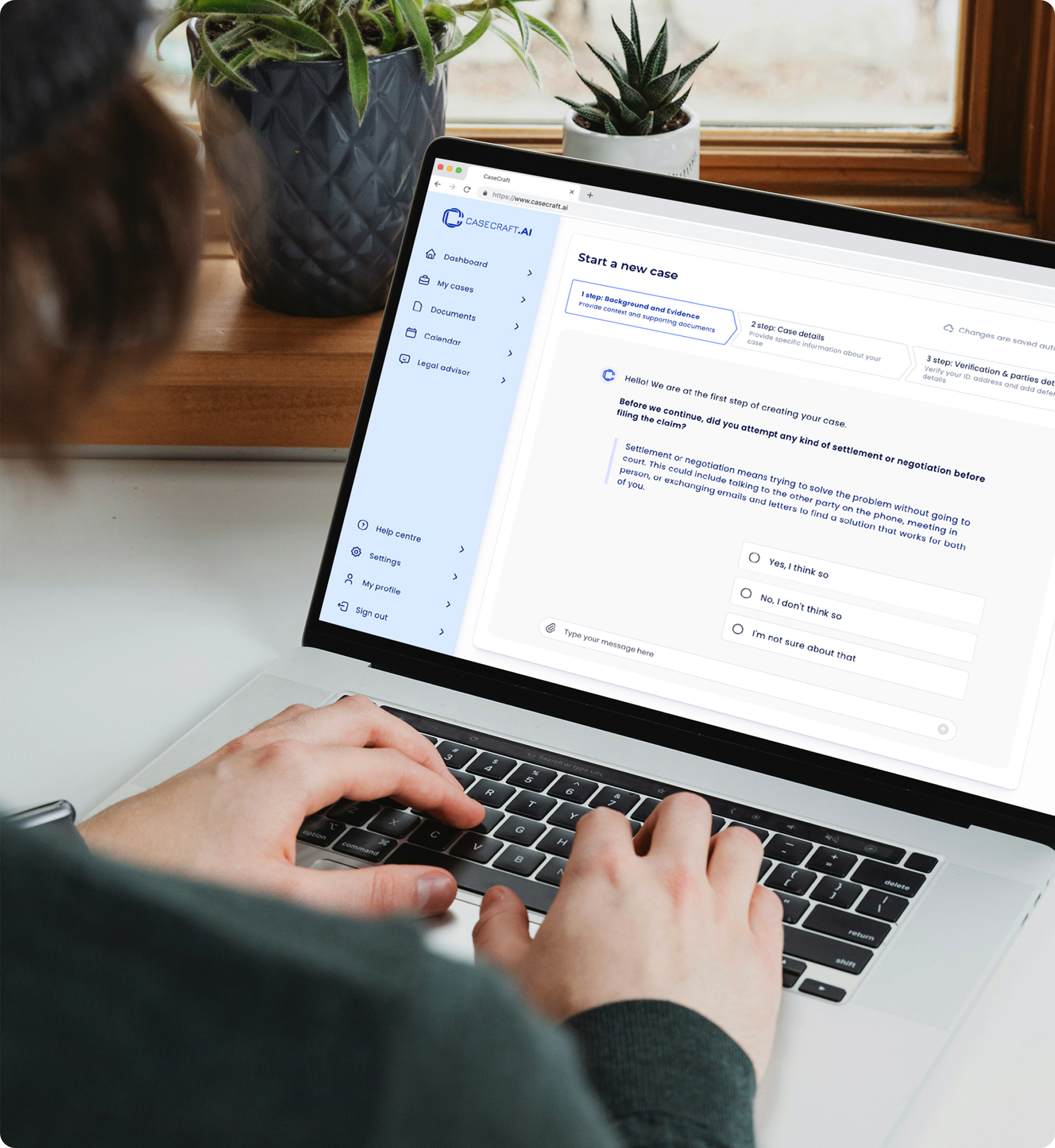
CaseCraft.AI is a UK‑based platform that makes small claims fast, affordable and stress‑free. Its AI automates key legal tasks, drafting court‑ready documents, checking compliance and tracking deadlines, so you can file or respond to a claim without legal expertise. Here’s how it specifically helps with claim form mistakes:
- Guided data entry: The step‑by‑step form guides you through the essentials and keeps everything organised on a personal dashboard. You upload evidence, view your case summary and stay on track.
- Instant court‑ready documents: CaseCraft.AI turns your information into a legally sound, court‑ready claim that meets HMCTS standards. Every detail is handled with precision, giving you a claim that’s accurate, complete and ready to file.
- File and track with ease: You can submit your claim through the platform with a few clicks and receive real‑time updates, reminders of deadlines and clear next‑step guidance.
- Privacy by design: CaseCraft.AI uses bank‑grade encryption and secure UK‑based servers. Your data is protected in transit and at rest, and the company never sells or shares your information.
- Success‑based pricing: The service is free to start, with no processing fee. A 15% success fee is only charged when your dispute is resolved.
- Guidance after judgment: If the defendant does not pay after you win, the platform’s enforcement guide explains how to use bailiffs, attachment of earnings or charging orders.
If you’ve spotted a claim form mistake or think something may be off, now is the time to fix it. Small errors can turn into delays, extra fees, or service problems later.
Friendly Asked Questions
Can I correct an incorrect defendant name on a claim form?
Yes. If the claim has not been served, simply issue a corrected N1 with the right name. After service, you must apply to amend via Form N244; the court will allow the amendment only if the mistake is genuine and there is no doubt about the defendant’s identity. A fee of £123 or £313 applies.
What if I entered the wrong address on the claim form?
The HMRC manual explains that if the defendant’s address on the N1 is wrong, you can file an amended claim form marked “Amended” with the new address. If the defendant has moved, trace their new address and either serve personally or apply to extend the service deadline.
How long do I have to correct an incorrect claim form?
There is no fixed deadline for correcting mistakes, but you must serve the claim form within four months of issue. It’s best to fix errors immediately and before service. After service, you must apply for permission to amend and risk extra costs.
Do I need a solicitor to use the small claims court or CaseCraft.AI?
No. Most small‑claims cases are designed for self‑representation. CaseCraft.AI automates document drafting and compliance checks so you can file or respond without legal expertise.
What happens if I request judgment and later spot an error?
If you have already obtained judgment and notice a claim form error, you must apply using N244 to vary or set aside the judgment and file the corrected claim form. The court may require you to re‑serve documents and pay additional fees.
Do I need consent from the defendant to amend the claim form?
If the claim has been served, you need either written consent from all parties or court permission under CPR 17.1. Amendments before service do not require consent.
Case Study: Claim for Breach of Contract

A client paid £5,000 for a one-month agreement to use commercial premises but was denied access after just five days. The provider refused to refund the unused period.nnThe claim was filed for fundamental breach of contract and unjust enrichment. When the defendant failed to respond, the court issued a default judgment, granting full recovery including fees and interest.

CaseCraft.AI supports all common types of small money claims
From misspelled names to wrong addresses, incorrect courts, or outdated details, errors on claim forms can delay proceedings, increase costs, and even jeopardise your case. CaseCraft.AI helps you correct claim form mistakes efficiently and confidently, guiding you through deadlines, amendments, and court requirements without unnecessary fees or procedural headaches.
Don’t Wait – Get Started Today!
Take the first step toward a faster, easier small claims process with CaseCraft.AI.