

Slip Fall in Public Place: Can I Claim for a Fall Under £1,000 in the UK?
Suffered a slip or fall in a public place worth under £1,000? Learn your rights under UK law and how our small claims service can help you claim compensation.


Slip and Fall in Public Places in the UK
If you slip or fall in a public place in the UK, you may be entitled to compensation for a fall in a public place even when the claim is worth under £1,000. The landowner or occupier must have breached their duty of care under the Occupiers’ Liability Act 1957 by failing to keep the premises reasonably safe.
For claims up to £1,500, the case will normally be heard in the small claims track.
You need clear evidence of the hazard (photos, witness details, medical report). Our small claims service in the UK prepares the paperwork and submits your claim for a low success fee. Read on for details.
What Counts as a Slip or Fall in a Public Place
Accidents in public places are surprisingly common. Non‑fatal workplace injuries reported to the Health and Safety Executive show that 31% of all injuries are caused by slips, trips and falls. In everyday life, hazards lurk in shops, supermarkets, restaurants, parks, pavements and even car parks. Under the Occupiers’ Liability Act 1957, those who control land or premises must take reasonable steps to keep visitors safe. They need to anticipate likely hazards, fix defects promptly and warn the public of risks. The duty applies whether the occupier is a private business, a public authority or a landlord.
Occupiers’ Duty of Care
The duty of care requires occupiers to:
- Regularly inspect their premises and repair hazards such as broken floor tiles or uneven paving.
- Clean spillages quickly and place warning signs if floors are wet, oily or slippery.
- Provide proper lighting and handrails on stairs or ramps.
- Consider children and vulnerable visitors, whose behaviour may be less predictable.
Failure to meet these obligations can make the occupier liable when someone is hurt. The Occupiers’ Liability Act 1984 extends this duty to trespassers, meaning that even those without permission to enter may be protected.
Common Locations of Slip or Fall Accidents
|
Location |
Typical hazard |
Legal responsibility |
|
Shops and supermarkets |
Spilt liquids, cluttered aisles, uneven tiles |
Store owners must clean spills promptly and maintain the flooring |
|
Restaurants and pubs |
Wet floors, loose mats, dim lighting |
Occupiers must warn patrons of slippery areas and provide handrails |
|
Pavements and roads |
Broken paving slabs, potholes, and ice |
Local councils are responsible for maintenance under the Highways Act 1980 |
|
Parks and playgrounds |
Mud, moss, damaged surfaces |
Councils must inspect and maintain equipment, especially for children |
|
Car parks |
Poor lighting, potholes, and oil spills |
Owners must ensure safe surfaces and adequate lighting |
The threshold for what counts as a hazard can be surprisingly low. For pavement claims, a height difference of around 2.5 cm (1 inch) is generally treated as a minimum trip hazard.
Your Legal Rights After a Slip or Fall
After an accident, your rights depend on proving the occupier owed a duty of care, breached that duty and caused your injury. For effective legal help with slips and falls in the UK, key legislation includes:
- Occupiers’ Liability Acts 1957 & 1984 – impose a duty on occupiers to ensure the reasonable safety of visitors and even trespassers.
- Health and Safety at Work Act 1974 – requires employers to protect employees and members of the public by providing safe premises, equipment and procedures. Failure can lead to enforcement action and fines.
- Highways Act 1980 – sets out the local authority’s responsibility to maintain highways and pavements in a safe condition
Small Claims vs Larger Personal Injury Claims
As of April 2025, there are now four court tracks, and personal injury small claims up to £1,500 are still handled in the small claims track. If you need to claim for a slip and fall injury under £1,000, this will ordinarily proceed on the small claims track. Additionally, an Intermediate Track was introduced for claims between £25,000 and £100,000. Claims over this limit are dealt with in the fast or multi-track and may require legal representation. In small claims:
- You can claim special damages for out‑of‑pocket expenses (medical bills, travel costs, lost earnings) and general damages for pain and suffering.
- The court expects parties to attempt to settle disputes early, often through negotiation or mediation, before a hearing.
Due to these restrictions, many people overlook legitimate claims. Yet even a modest compensation award can reimburse the costs of physiotherapy, medication and time off work.
Collecting Evidence to Support Your Claim
Evidence is critical in proving negligence. Immediately after a slip or fall, collect evidence for a slip and fall claim, such as:
- Take photographs of the hazard, such as the wet floor, uneven pavement or missing handrail, from multiple angles.
- Gather witness details: names and contact information of anyone who saw the accident.
- Seek medical attention and obtain a medical report, even for minor injuries. This demonstrates the injury and provides a diagnosis, prognosis and recommended treatment.
- Report the incident to the occupier or manager and ensure it is recorded in an accident book.
- Keep receipts for medical expenses, prescriptions, travel to the hospital, and any equipment you need (crutches, bandages).
The Limitation Act 1980 requires you to start legal action within three years of the accident, although earlier action is advisable while the evidence is fresh.
Can I Claim if the Value Is Under £1,000?
Yes. While modest accidents may not justify hiring a solicitor, you can still claim compensation through the small claims track. The limit for personal injury cases arising outside of motor accidents is currently £1,500, meaning claims under £1,000 certainly qualify. The claim process in the UK involves:
- Assessing the value of your claim by adding medical expenses, travel costs and lost earnings. General damages for pain and suffering in minor injuries are usually modest and may be difficult to prove in the small claims track.
- Sending a pre‑action letter (letter of claim) to the occupier, setting out details of your accident, injuries, and the compensation sought. Allow a reasonable time for a response.
- Filing a claim through the HM Courts & Tribunals Service if the occupier denies public liability or fails to respond. You pay a court fee (tiered based on claim value) and serve the claim on the defendant.
- Attending a hearing. Many small claims are decided on paper, but the judge may arrange a short hearing. You must present evidence clearly and concisely.
Because you cannot recover legal fees, using an affordable service to prepare your claim can save time and stress.
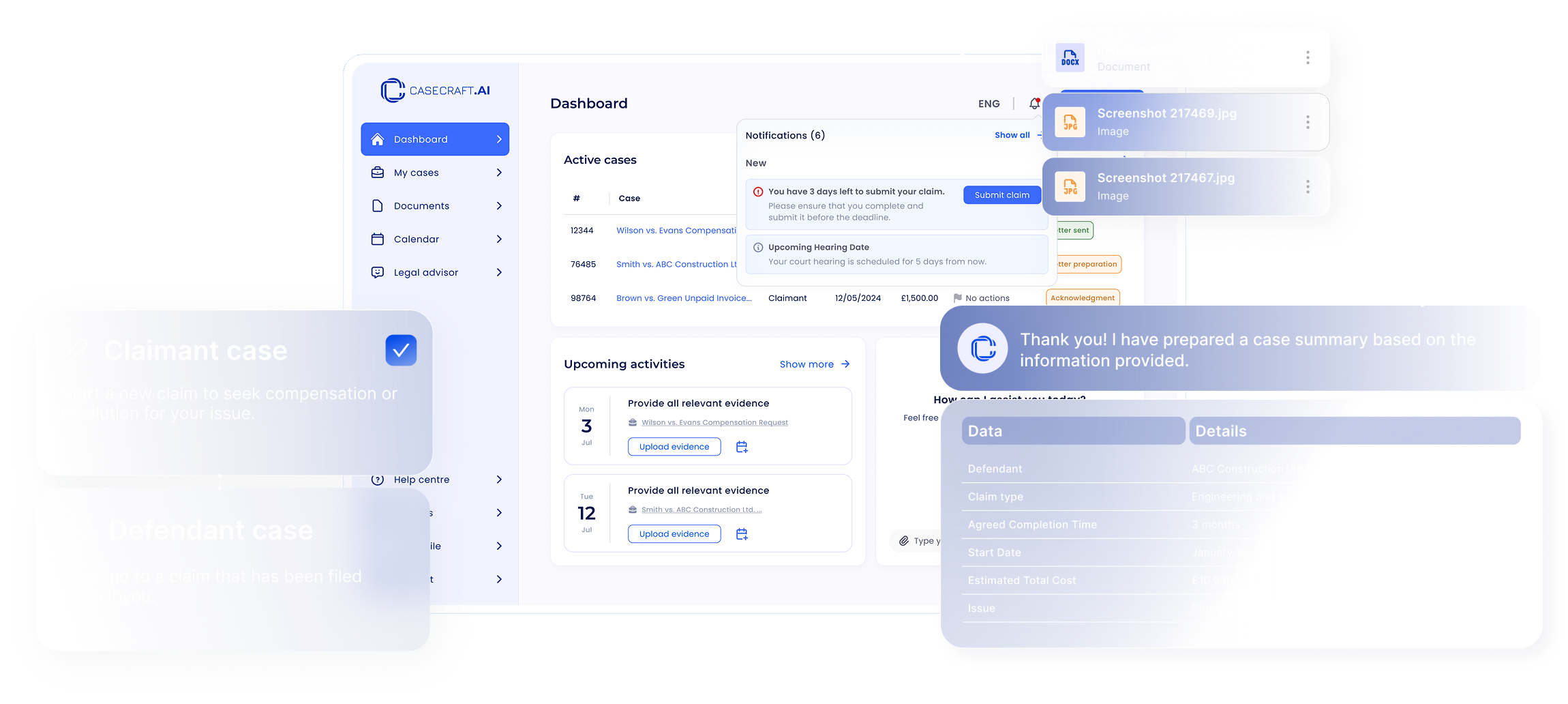
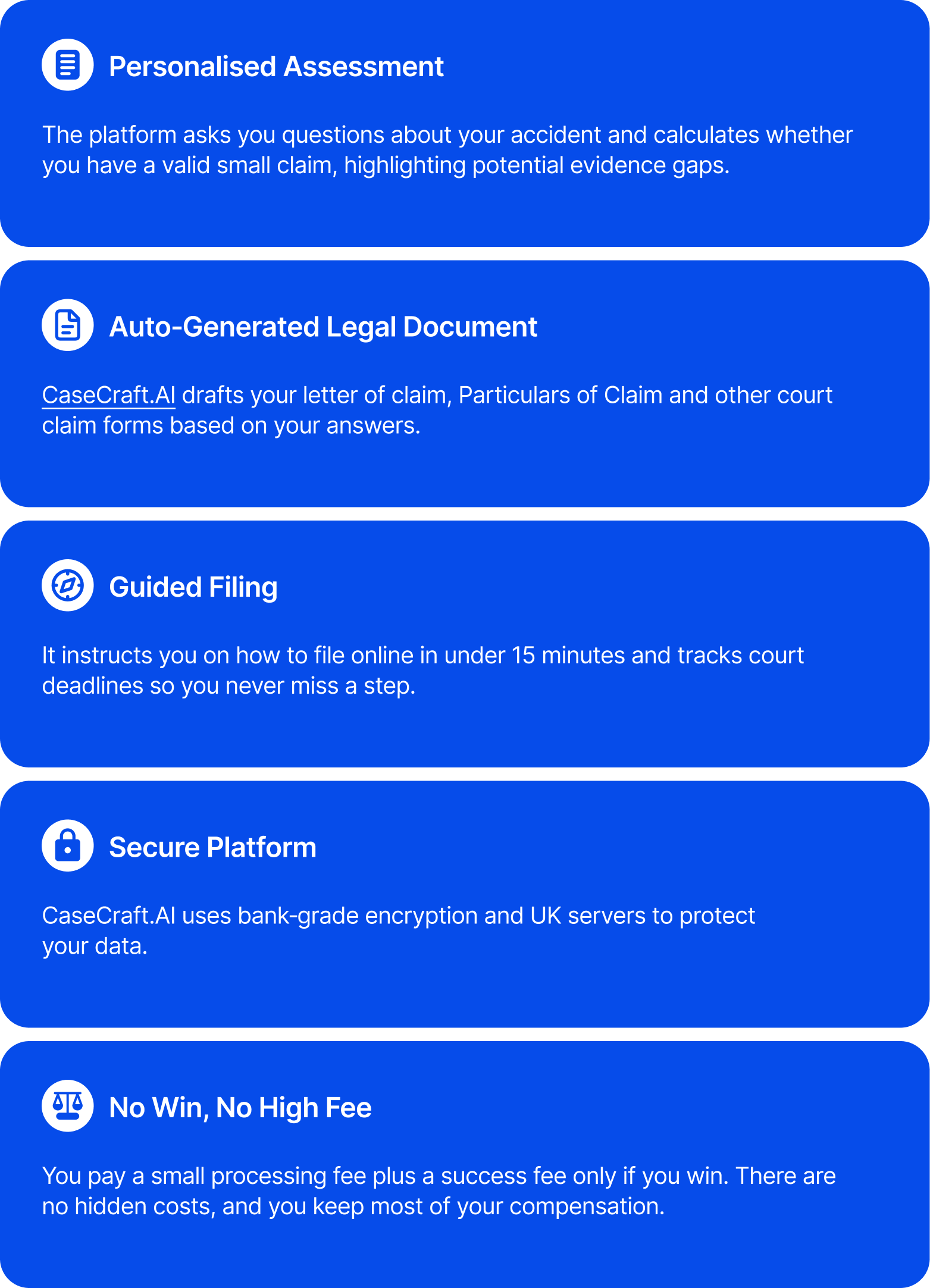
CaseCraft.AI is an AI‑powered platform built in partnership with UK law firm Sterling Law. It was launched to democratise access to justice and simplify the small claims process. CaseCraft.AI aims to reduce delays and errors by guiding users through each step.
What CaseCraft.AI Does
Benefits for Slip and Fall Victims
By using CaseCraft.AI, you:
- Save time and stress by letting the platform prepare complex paperwork.
Receive expert guidance based on UK personal injury damages law and court practice. - Avoid expensive solicitor fees, keeping your compensation intact.
- Gain confidence that your claim is presented clearly and professionally, increasing your chances of success.
Common Examples of Slip and Fall Claims Under £1,000
Many claimants worry that minor injury claims are not worth pursuing. Yet even a relatively modest accident can result in lost wages and medical costs. Common scenarios include:
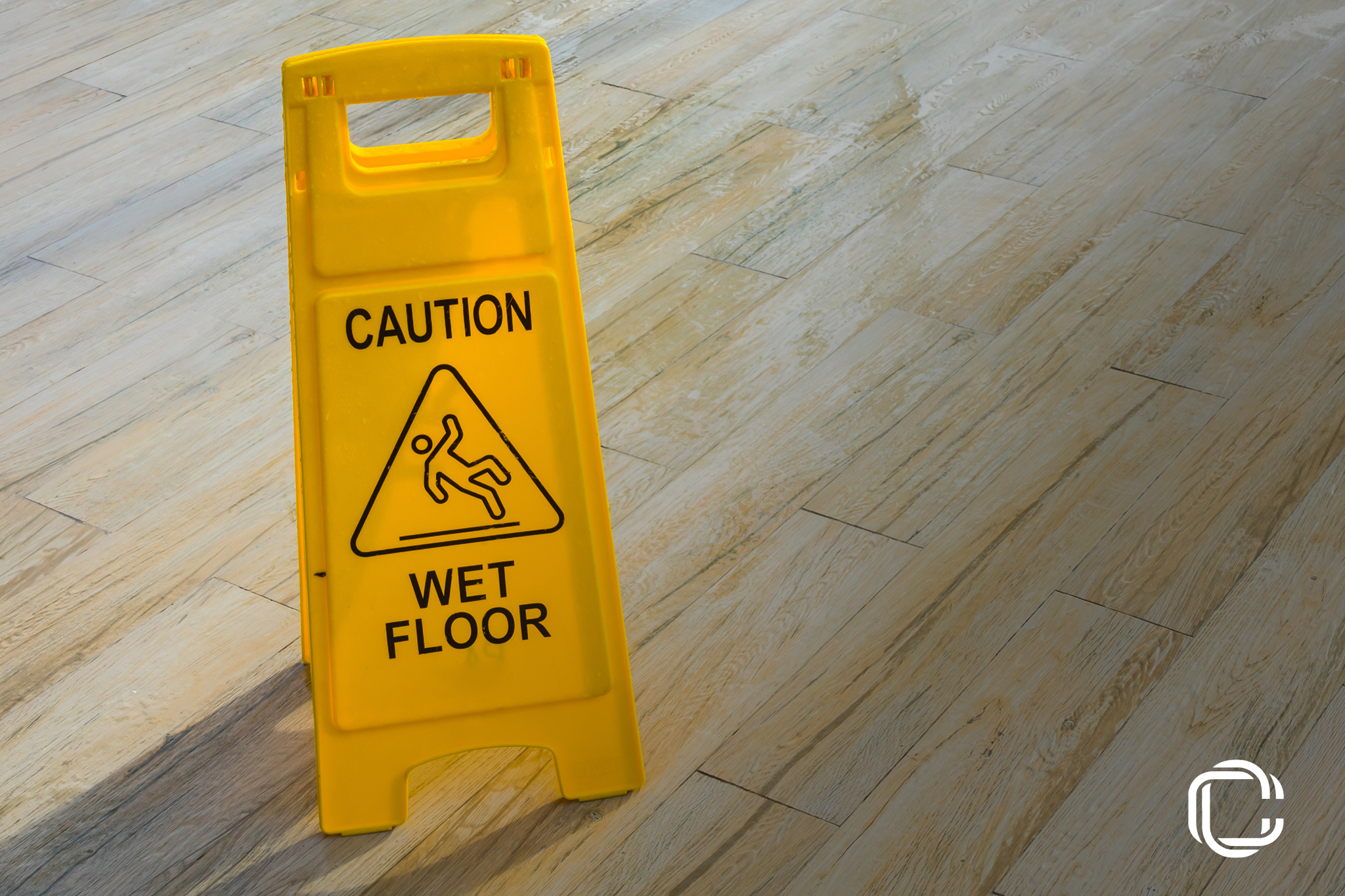
- Slipping on a wet floor in a supermarket because staff failed to display warning signs.
- Tripping on a broken paving slab on a high street maintained by the local council.
- Falling on a poorly lit stairwell without a handrail in a restaurant.
- Slipping on oil in a car park where the operator failed to clean up spillages.
In each case, the occupier may be liable if they failed to take reasonable steps to prevent the hazard. Even if the claim value is under £1,000, you deserve reimbursement for your losses and the inconvenience of the injury.
Steps to Start Your Small Claim
Making a claim may feel daunting, but following a structured process helps. Here are the steps to take after a slip or fall under £1,000:
Report the accident immediately to the manager, local authority or occupier and obtain a written record.
Collect evidence: photos, witness details, medical report, receipts for expenses.
Seek medical advice and follow treatment plans. Keep a diary of symptoms and recovery.
Estimate your losses (medical costs, travel, lost income). For small claims, focus on special damages as general damages may be modest.
Draft a letter of claim outlining the incident, evidence and compensation sought. Give the occupier a reasonable period (usually 21 days) to respond.
Use CaseCraft.AI to prepare and file your claim if negotiations fail. The platform will generate court forms, calculate fees and track deadlines.
Attend a court hearing if required. Present your evidence logically and be prepared to answer questions.
Preventing Future Incidents
While accidents happen, you can reduce the risk of slip and fall injuries by taking proactive steps:
- Always report hazards such as spills or broken paving to the occupier or local authority.
- Wear appropriate footwear with good grip, especially in wet or icy conditions.
- Take photos of hazards even if you don’t fall; they may be useful evidence if someone else is injured later.
- Stay alert: Avoid distractions such as mobile phones when walking in unfamiliar places.
- Seek advice: Never sign any waiver or settlement without understanding your rights. Consult an advisor or our service before accepting compensation.
Key Takeaways
|
Summary |
Implication for your claim |
|
Occupiers of public places owe visitors a duty of care under the Occupiers’ Liability Acts. |
If they fail to maintain safe conditions and you are injured, you may be entitled to compensation. |
|
Small claims limit raised to £1,500. |
Claims under £1,000 clearly qualify; general damages are modest, but special damages can cover expenses. |
|
Evidence matters. |
Photographs, witness statements and medical reports strengthen your claim. |
|
CaseCraft.AI simplifies the process. |
AI‑driven tools prepare documents and file your claim quickly, charging only if you win. |
Friendly Asked Questions
How long do I have to file a claim?
Under the Limitation Act 1980, you usually have three years from the date of the accident to start legal proceedings. If the injury involves a child, the three‑year period begins on their 18th birthday. It is best to act quickly while evidence and witness memories are fresh.
Can I claim pain and suffering in a small claim?
You can claim general damages for pain and suffering, but they may be modest in minor injuries. Judges in the small claims track expect straightforward evidence; without medical reports, it is difficult to justify high awards. Most compensation will come from special damages (medical expenses, travel, lost wages).
What if I were partly at fault for the fall?
If you were partly responsible (e.g., you were texting while walking), the court may reduce your compensation by a percentage to reflect contributory negligence. However, occupiers must still take reasonable care. The presence of a hazard is key.
Do I need a solicitor for a claim under £1,000?
No. In small claims, you cannot usually recover legal fees. Many people choose to represent themselves or use a low‑cost service like ours. CaseCraft.AI provides automated documents and guidance without the expense of hiring a lawyer.
How much does it cost to use CaseCraft.AI?
We charge a £15 processing fee and a small success fee only if you win. Court fees are payable to HMCTS. There are no hidden charges, and you keep the majority of any compensation awarded.
Case Study: Claim for Breach of Contract

A client paid £5,000 for a one-month agreement to use commercial premises but was denied access after just five days. The provider refused to refund the unused period.nnThe claim was filed for fundamental breach of contract and unjust enrichment. When the defendant failed to respond, the court issued a default judgment, granting full recovery including fees and interest.

CaseCraft.AI supports all common types of small money claims
From wet supermarket floors to uneven pavements and unsafe walkways — minor slip-and-fall accidents can still cause pain, inconvenience and financial loss. CaseCraft.AI helps you claim compensation for injuries under £1,000 quickly and affordably, without legal jargon or solicitor fees.
Don’t Wait – Get Started Today!
Take the first step toward a faster, easier small claims process with CaseCraft.AI.