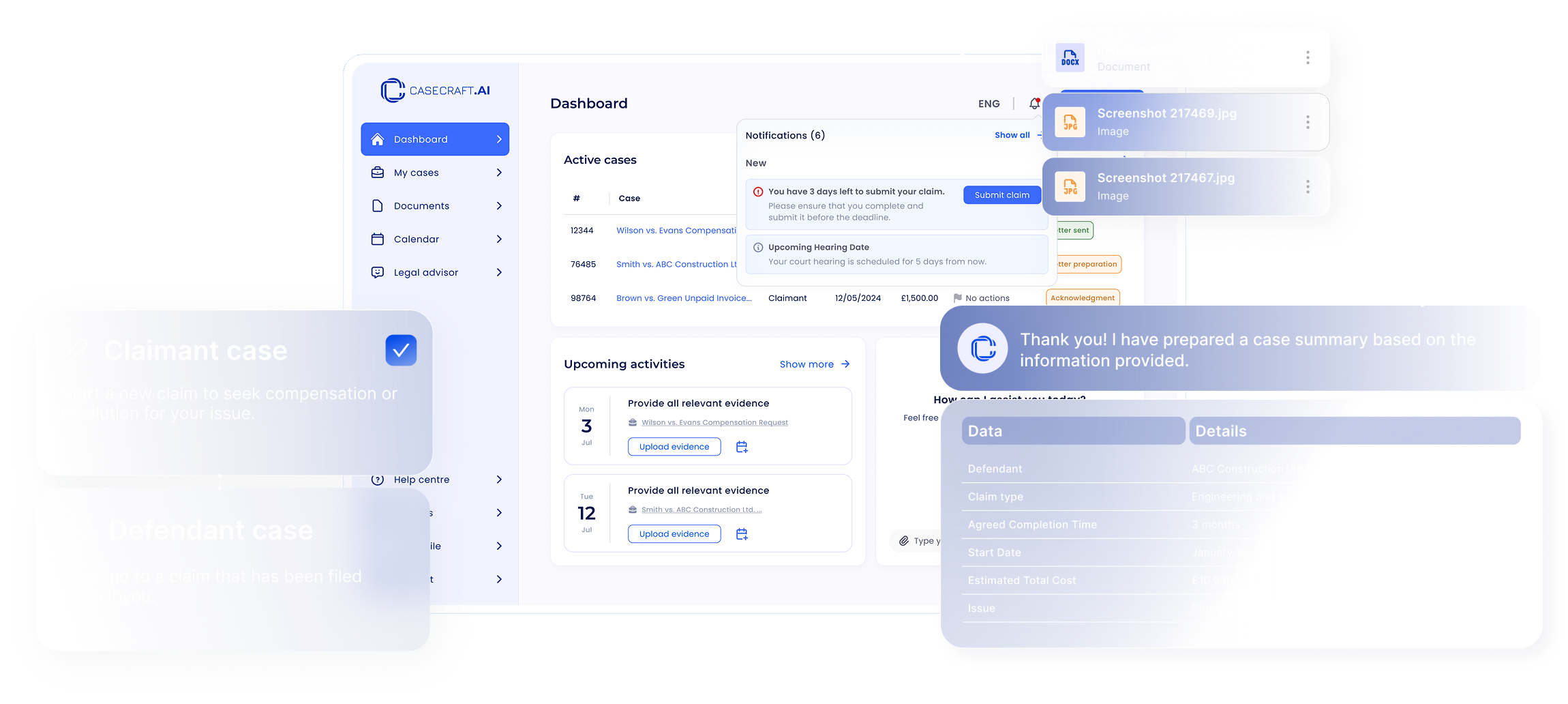


Start a Small Claim Against an Individual (UK)
Learn how to start a small claim against an individual in the UK. Step-by-step process, costs, evidence, deadlines, and how to file quickly with CaseCraft.AI.


When Can You Bring a Small Claim Against an Individual?
A small claim against a person can be brought when you suffer a financial loss or are owed money. Common examples include:
- Loan or debt not repaid. A friend or family member borrowed money and refuses to repay.
- Unpaid freelance or personal work. You completed work for an individual contractor and are still waiting for payment.
- Damage to property or belongings. A neighbour damaged your car, garden or belongings.
- Contractor disputes. Problems with a gardener, cleaner, builder or other tradesperson.
- Neighbour nuisance. Issues such as noise, blocked access or property damage.
- Deposit or rent owed by a private landlord. Landlord retains a deposit or fails to refund expenses.
Eligibility Requirements
To sue an individual in the UK through the small claims track, your case must meet these conditions:
- The amount claimed (including any interest) must be under £10,000.
- The claim relates to money owed, goods, services or property damage, not injury, defamation or complex legal matters.
- The defendant must be a private individual with a UK address.
- Both parties must be over 18 and mentally capable, and claims must generally be started within six years from the date the cause of action arises. Certain claims are subject to different statutory limitation periods, and specific exceptions may apply.
By sticking to these limits, you avoid the fast‑track or multi‑track court processes and keep your claim in the accessible small‑claims arena.
Step‑by‑Step: How to Start a Small Claim Against an Individual
Before you file, courts expect you to act reasonably. The following steps show how to sue someone personally and comply with the Civil Procedure Rules. Each step is described clearly so you know what to do and how to do it.

Request Payment or Resolution First
Contact the person informally and explain what you think they owe and why. Provide evidence (invoices, messages, photos) and suggest a deadline. The Practice Direction on Pre‑Action Conduct emphasises that claimants must set out the basis of the claim, the facts and what remedy they want. Keep records of all correspondence and give the other side at least 14 days to respond. Solving the dispute now could save you time and fees later.
Issue a Letter Before Action
If informal talks fail, you must send a letter before starting a small claim. This formal letter sets out what is owed, why it is owed, and gives a clear deadline, usually 14 days, to pay or respond. Skipping this step is a common mistake and can lead to reduced costs or the claim being dismissed. CaseCraft.AI generates a compliant letter before action for you, ensuring this requirement is met correctly.
Gather and Organise Evidence
Your evidence should clearly support your individual money claim in the UK and show exactly what happened. Courts expect clear proof, such as bank transfers, signed agreements, invoices, or other proof of debt, UK documents. Messages or emails confirming the debt, photos of damage, repair quotes, and receipts all help demonstrate loss. Witness statements can also support your case. Documents like receipts, letters, photos, and recordings strengthen small claims. Collect evidence early, keep digital copies backed up, and use CaseCraft.AI to organise everything into a clear evidence bundle, small claims pack.
File the Claim Online
After 14 days with no resolution, you can start a county court money claim in England and Wales. You’ll need the defendant’s full name, address, a description of your claim and the amount sought, including any interest. Fees for issuing a claim depend on the amount you seek: for example, claims up to £300 cost £35, claims of £3,000–£5,000 cost £205, and claims of £5,000–£10,000 cost £455. You can check full fee tables on GOV.UK. CaseCraft.AI guides you through the forms and automatically enters the right data.
Wait for the Individual’s Response
Once the claim is served, the defendant has 14 days to respond. They may admit the claim in full or in part and suggest payment, file a defence explaining why they dispute it, or make a counterclaim if they believe you owe them money. They can also acknowledge service, which gives them an extra 14 days to submit a defence. If the individual does not respond within the deadline, you can ask the court for a default judgment. CaseCraft.AI tracks these deadlines and alerts you when action is needed.
Mediation
Small claims courts encourage alternative dispute resolution. The Small Claims Mediation Service offers a free, telephone‑based mediation where a neutral mediator helps both parties negotiate. The practice direction encourages parties to consider mediation or other ADR and notes that refusing mediation without good reason can influence costs.
Court Hearing (If Required)
If mediation fails or the defendant disputes the claim, the court will list a hearing. Hearings are informal; you and the defendant present your arguments, show your evidence bundle and answer the judge’s questions. Uncontested cases are often decided on paper within 4–6 weeks, while disputed cases can take 3–9 months. According to the most recent civil justice statistics (Q3 2025), small claims take a median time of 39.0 weeks from issue to trial, though this varies by region, with longer delays in London and the South East. CaseCraft.AI prepares your case file and helps you rehearse your narrative so you feel confident on the day.
Enforce the Judgment
If the court orders the individual to pay and they still refuse, you must take enforcement action. This can include a warrant of control, where bailiffs visit the defendant to seize goods, or an attachment of earnings order, which takes payments directly from their wages. You may also apply for a charging order against property, meaning the debt is paid when the property is sold, or a third-party debt order that redirects money held by a bank or another person to you. Each option has different fees and is suitable in different situations, so choosing the right method matters.
Common Types of Individual Claims
Small claims cover a wide range of personal disputes related to small claims. These are among the most common:
- Personal loans are unpaid. Recover money owed by a friend in the UK after an informal loan.
- Unpaid work. Freelancers and tradespeople can claim wages or fees owed by private clients.
- Neighbour damage small claims. Seek compensation for broken fences, noise‑related losses or property damage.
- Contractor disputes small claims. When gardeners, cleaners or handymen deliver substandard work or fail to complete a job.
- Non‑return of belongings. Claim for items lent and never returned.
- Deposit disputes. Reclaim a tenancy deposit from a private landlord or claim for a withheld deposit on a car or service.
- Informal agreements. Verbal contracts (e.g., sharing bills) where there’s proof of debt in the UK.
- Lodger or flatmate disputes. Recover unpaid rent or household costs from a co‑tenant.
These examples show the breadth of the civil claim against a private party you can pursue.

How Much Does It Cost to Start a Claim Against an Individual?
Court fees are based on the amount you seek. The table below summarises approximate issuing and hearing fees for small claims costs in the UK (rounded and subject to change). Fees are recoverable from the defendant if you win.
|
Claim amount (including interest) |
Issuing fee (approx.) |
Hearing fee |
|
Up to £300 |
£35 |
£27 |
|
£300.01 – £500 |
£50 |
£59 |
|
£500.01 – £1,000 |
£70 |
£85 |
|
£1,000.01 – £1,500 |
£80 |
£123 |
|
£1,500.01 – £3,000 |
£115 |
£181 |
|
£3,000.01 – £5,000 |
£205 |
£346 |
|
£5,000.01 – £10,000 |
£455 |
£346 |
You don’t need a solicitor; CaseCraft.AI’s fixed £15 setup fee plus a 15% success fee keeps costs predictable. If you qualify for fee remission, HMCTS may reduce or waive fees.
How Long Does the Small Claim Process Take?
Timelines vary by case complexity and whether the defendant disputes the claim. This approximate timeline shows typical stages:
|
Stage |
Typical timeframe |
|
Pre‑action (letter before action & negotiation) |
14–30 days |
|
Defendant’s response period |
14 days (plus 14 more if acknowledgement filed) |
|
Mediation |
2–6 weeks |
|
Court hearing scheduled |
3–6 months for contested cases |
|
Enforcement (if needed) |
2–8 weeks, depending on method |
These times are approximate. According to 2025 statistics, small claims took a median of 39.0 weeks from issue to trial.
Note: Court delays have been falling steadily through 2025, with median wait times improving by approximately six weeks compared to 2024. The timelines below reflect current data but may continue to improve.
What You Can Claim For?
Under small claims rules, you can seek:
- Money owed. Recover the principal debt or unpaid wages.
- Repair costs. Claim the cost of fixing or replacing damaged goods.
- Replacement value. Seek compensation equal to the value of destroyed property.
- Out‑of‑pocket expenses. Travel, postage or extra costs caused by the breach.
- Court fees and interest. Statutory interest (currently 8% per year on simple contract debts) and the fees you paid to issue and hear the claim.
- Reasonable consequential losses. Additional costs caused by the defendant’s breach (e.g., lost income due to broken tools) are supported by evidence.
You cannot usually claim for stress or inconvenience alone, but clear financial losses may be recoverable.
Mistakes to Avoid
Avoid these pitfalls when pursuing a claim against a private individual:
- Not sending a letter before action. Courts may dismiss your claim or reduce costs if you skip this mandatory step.
- Suing the wrong person. Check the defendant’s legal name and address. Suing a trading name instead of the individual can delay or doom your case.
- Missing deadlines. There are strict time limits for filing claims, serving documents and submitting evidence. Missing them can get your case struck out.
- Poor evidence. Relying on hearsay or unsourced messages makes your claim weak. Courts expect contracts, receipts, messages and photos.
- Overclaiming. Inflating losses or adding unjustified fees undermines credibility and may lead to cost penalties.
- Delaying professional support. Use tools like CaseCraft.AI early to avoid procedural errors and organise your evidence bundle for small claims.
Why Use CaseCraft.AI?
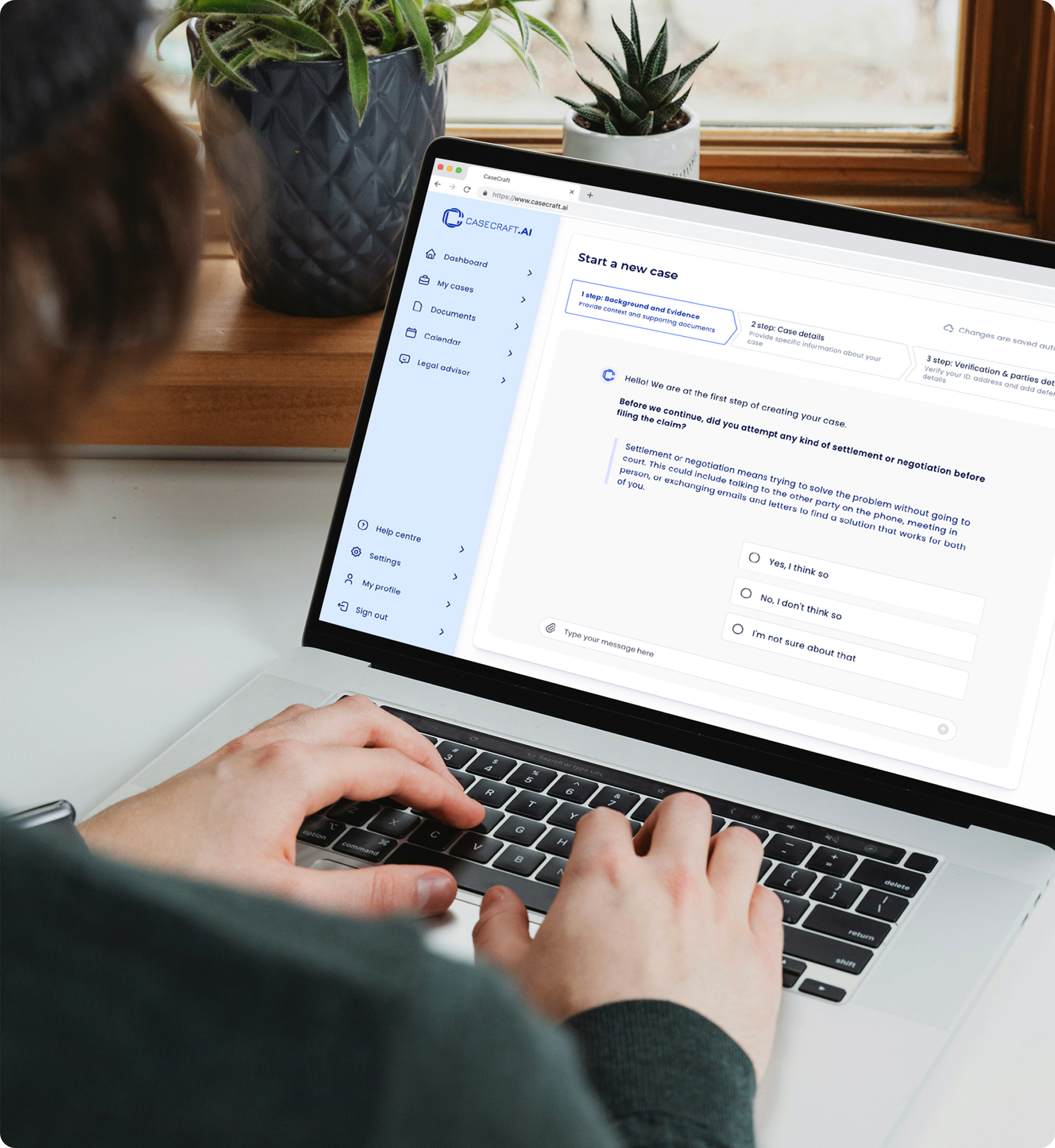
CaseCraft.AI is an end-to-end assistant built specifically for small claims. It automatically prepares key legal documents, including the claim form, defence form, and letter before action, so nothing is missed. Most users complete the filing process in under 15 minutes, with clear, step-by-step guidance that explains legal terms and prompts you to include the right evidence at each stage.
Your data is protected using secure UK-based servers, bank-grade encryption, and GDPR-compliant systems. CaseCraft.AI also supports settlement discussions and helps after judgment by guiding you through enforcement if payment is not made. By reducing complexity and handling the practical steps, CaseCraft.AI gives you the structure and support needed to start a small claim against an individual with confidence.
Conclusion: Your Next Step
Suing someone personally can feel daunting, but with the right preparation and support, you can recover money owed or repair costs. By following the pre‑action steps, gathering solid evidence and using online portals, you increase your chances of success. Remember to act quickly, stay within time limits and avoid common mistakes.
Ready to act? Use CaseCraft.AI to start your small claim against a person today. The platform’s guidance, low fees and secure system make the process smoother than going it alone.
Note: This information is provided for general guidance only and does not constitute legal advice. It is intended to help you understand the small claims process, not to replace advice from a qualified legal professional.
Friendly Asked Questions
Can I sue someone personally in small claims court?
Yes. You can start a small claim against an individual for debts, property damage, faulty services or unpaid wages when the value is under £10,000. The defendant must have a UK address, and you must send a letter before action prior to filing.
Do I need a solicitor to sue an individual?
No. Small claims courts are designed for self‑representation, and you do not need a solicitor. CaseCraft.AI provides templates, guidance and document automation so you can prepare a small claim against a person confidently. If your claim is complex or above £10,000, you may want to seek legal advice.
What if I don’t have a written agreement?
Verbal agreements are still enforceable. To prove your claim, you need evidence such as messages, bank transfers, photos and witness statements. Courts look for credible proof of debt in the UK, so collect and organise documents early. CaseCraft.AI helps you build a clear evidence bundle.
What if the person ignores my claim?
If the defendant does not respond within 14 days (or 28 days if they file an acknowledgement), you can request a default judgment. The court will order them to pay without a hearing.
Can I sue a friend or family member?
Yes. Money owed by a friend in the UK is one of the most common claims. Ensure you have proof of the loan, such as bank transfers or messages. It’s important to act quickly and send a clear letter before action.
How much can I claim against an individual?
You can claim up to £10,000 in the small claims court. Higher‑value claims go through the fast‑track or multi‑track procedures. You can also claim interest and court fees.
Case Study: Claim for Breach of Contract

A client paid £5,000 for a one-month agreement to use commercial premises but was denied access after just five days. The provider refused to refund the unused period.nnThe claim was filed for fundamental breach of contract and unjust enrichment. When the defendant failed to respond, the court issued a default judgment, granting full recovery including fees and interest.

CaseCraft.AI supports all common types of small money claims
From unpaid personal loans to damaged property or broken agreements, disputes with individuals can result in real financial loss. CaseCraft.AI helps you start a small claim against an individual in the UK quickly and affordably, guiding you through the process and helping you recover what you’re owed without legal complexity.
Don’t Wait – Get Started Today!
Take the first step toward a faster, easier small claims process with CaseCraft.AI.