

Undelivered Removal Goods: How to Make a Small Claim in the UK
Undelivered or missing belongings after a move? Learn how to complain, use ADR, send a letter before claim and file a UK small claim to recover your money.


Your Legal Footing
Together, these rules show when a removal company is responsible, what they must prove, and how long you have to take action.
Consumer Rights Act and “Reasonable Care and Skill”
Under the Consumer Rights Act 2015, services must be provided with reasonable care and skill. If a service is not performed properly, you can ask the trader to do it again or give you a price reduction. If you discover problems later, for example, after a move, you can ask for things to be put right for up to six years in England and Wales. A letter citing the Act may say: “The Consumer Rights Act 2015 says that services must be provided with reasonable care and skill”.
Bailment: the Presumption of Negligence
When you entrust your goods to a remover, a bailment relationship arises. In law, the bailee (the removals company) must return the goods in at least as good a condition as they received them. If goods are lost or damaged, there is a presumption that the bailee was negligent. In a bailment claim, the burden of proof shifts: once you show that the goods were lost while in the bailee’s custody, the company must prove it took reasonable care. Bailment can override exclusion clauses, so even if the contract limits liability per item, courts may still hold the company liable if the terms are unfair or not clearly highlighted.
Limitation Periods
Small claims are subject to the Limitation Act 1980. Section 5 states that an action founded on a simple contract (such as a removals contract) must be brought within six years of the cause of action. For most removal disputes, this means you should file your claim within six years of the move.
Limitation of Liability Clauses and Unfair Terms
Removal contracts often include limitation or exclusion clauses, such as limiting liability to a fixed amount per item. Courts scrutinise such clauses to see if they are reasonable and clearly communicated. Under consumer law, unfair terms may be challenged if they create a significant imbalance. Keep copies of the contract and pay attention to any “insurance” provisions; some movers require you to pay extra for full cover. If in doubt, mention the limitation clause in your letter and explain why you think it’s unfair.
Before Court: Build a Strong Evidence Pack
Your claim must be realistic, provable, and directly linked to the loss; this is how courts assess what you are actually owed.
What to Collect (Checklist)
To succeed with a small claim against a removal company (UK), you need to demonstrate what was agreed, what went wrong and what the loss is. Build a comprehensive evidence pack with:
- Signed inventory and delivery notes: Checkboxes or inventory lists showing each item loaded and unloaded. A signed document helps prove that the company accepted responsibility.
- Photos and videos: Take clear photos of your belongings before loading and after delivery, including serial numbers. Show the condition of undamaged items to help prove damage or undelivered belongings.
- Contracts and terms: Keep the removal contract, quotes, emails and messages. Highlight any liability or insurance clauses.
- Receipts and valuations: Keep purchase receipts, valuations or replacement quotes to show the value of each missing item.
- Communications log: Save all correspondence with the remover (emails, texts, phone notes) and any complaints to BAR or FHIO.
- Timeline: Write a simple chronology of events, including dates of booking, collection, expected delivery, when you noticed the loss and when you complained.
- Proof of payment: Bank statements showing payment to the remover or a deposit taken; this can also demonstrate the contract.
How to Value Your Claim?
When calculating the amount for your claim, include:
- Value of the undelivered goods: Use purchase receipts or valuation reports. If items are second‑hand, use a reasonable replacement cost. Courts expect realistic figures.
- Consequential costs: Storage fees, replacement rental costs or emergency purchases directly resulting from the loss. These must be reasonable and evidence.
- Court fees: The fee depends on the amount claimed; for example, claims up to £300 incur a £35 fee and claims between £5,000.01 and £10,000 cost £455. You can claim these fees back if you win.
- Interest: If you know the exact claim amount, you can claim statutory interest at 8% a year under the County Courts Act. Wording such as: “The claimant claims interest under Section 69 of the County Courts Act 1984 at the rate of 8 per cent a year” might be essential. Only claim interest up to the date you issue the claim; interest continues to run until judgment.
Avoid inflating your claim. Overstated or poorly evidenced amounts reduce credibility and may lead to cost penalties.
Complain Properly First and Why It Matters
Courts expect you to try to resolve the dispute before filing. The Civil Procedure Rules contain “pre‑action conduct” rules, and failing to comply can lead to cost sanctions. Here’s how to complain effectively:
- Write a formal letter before claim: Label the letter “Letter before claim” and include your name and address, a concise summary of events, what you want (delivery or compensation), the amount claimed and how you calculated it. Set a clear deadline – usually 14 days – for them to respond. State that if they do not respond, you will start proceedings and that both parties must follow the Practice Direction on pre‑action conduct. Offer to try mediation.
- Send it by recorded delivery or email: Keep a copy and proof of postage or delivery. This proves you met pre‑action requirements and may strengthen your case if the defendant ignores you.
- Use ADR: If the company is a member of the British Association of Removers, they must handle your complaint first. BAR suggests contacting the mover by email or recorded letter, explaining what they did wrong and your desired resolution. BAR members should respond within three working days and aim to resolve disputes within 15 days and provide a final viewpoint within eight weeks. If unresolved, you can refer the dispute to FHIO within 12 months. FHIO’s service is free; their decisions are binding once accepted and prevent further court claims.
Following these steps not only increases the chance of settlement but also shows the court you acted reasonably.
Try ADR If Available
Before you file a small claim against a removal company (UK), check whether you can resolve the dispute faster and at no cost through an approved ADR route.
BAR Conciliation and Arbitration
The British Association of Removers runs a two-stage complaints process. First, complain to your mover in writing and state what went wrong and what you want. BAR expects members to reply within three working days and aims to resolve disputes within 15 days.
If the issue is not resolved, you can escalate the complaint to the Furniture & Home Improvement Ombudsman (FHIO). FHIO is an approved ADR body. You can complain after receiving a final viewpoint letter or after eight weeks. The mover must have been a BAR member at the time, the complaint must be made within 12 months of the move, and claims over £10,000 or insurance matters are excluded.
FHIO Route for BAR Member Disputes
FHIO offers a free, impartial and legally binding service. Your claim will be assessed by qualified ADR professionals, and decisions are binding on the mover if you accept them. If you decline the decision, you can still pursue a small claim. However, once you accept the award, you cannot make any further claim regarding the dispute.
Using ADR can save you time and court fees, and judges often look favourably on parties who attempt mediation.
How to Make a Small Claim (UK Options)?
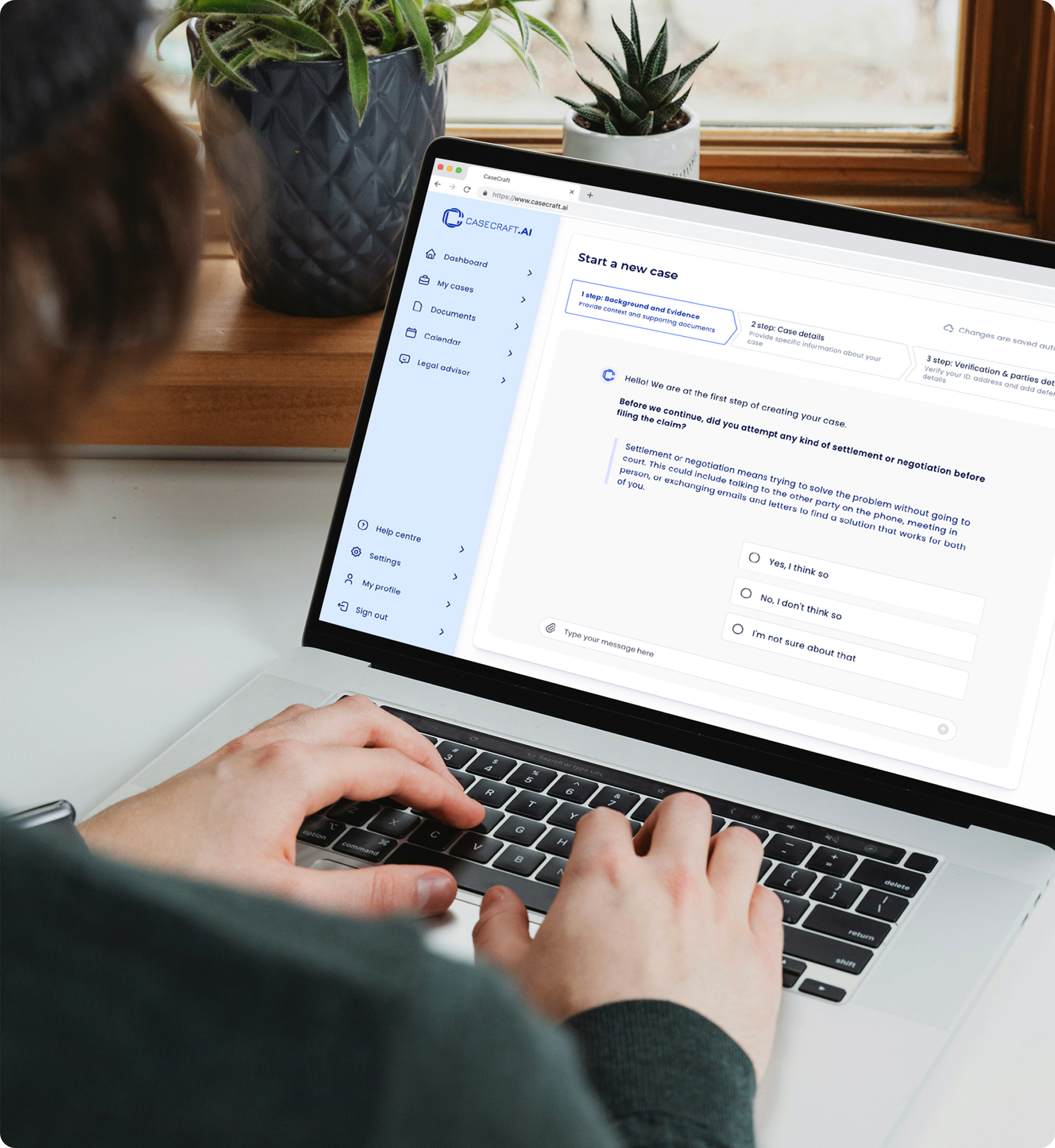
Once your letter before claim has expired and ADR has not resolved the dispute, you can move your case into the court system. At this stage, your evidence, timeline and figures become formal court documents. Choosing the correct claim route matters because each system has strict rules about fees, eligibility and how your case progresses. CaseCraft.AI helps you prepare the right forms, draft your claim summary, and organise your evidence so your claim can be issued cleanly and without delay.
Civil Money Claims (CMC)
Civil Money Claims is the online system for claims up to £10,000 in England and Wales. You can use this service if you’re over 18, you know the amount you’re claiming, you’re not making a claim under the Consumer Credit Act, and you’re not claiming a tenancy deposit. CMC automatically calculates and adds the court fee to your claim. After filing, your claim and your address are sent to the defendant, who must respond by a set date. For claims under £10,000, the court will require you to attend a free telephone mediation session. If mediation fails, you may have a remote or in‑person hearing; you can represent yourself or have someone speak on your behalf.
Note: Civil Money Claims is available for claims in England and Wales only.
Paper N1 Claim Form
Use the paper N1 claim form if you cannot use an online service (for example, if you qualify for reduced fees or you’re under 18). The N1 form must include your claim amount, details of the dispute and a statement of truth. Send the original and copies to the Civil National Business Centre in Northampton and pay the court fee by card, postal order or cheque. Keep copies for yourself and the defendant.
Fees: What It Costs to Issue a Claim?
When you issue a claim, you must pay a court fee based on the amount claimed. For known claim amounts, GOV.UK lists the following bands:
|
Claim amount (up to) |
Fee |
|
£300 |
£35 |
|
£500 |
£50 |
|
£1,000 |
£70 |
|
£1,500 |
£80 |
|
£3,000 |
£115 |
|
£5,000 |
£205 |
|
£10,000 |
£455 |
Claims between £10,000 attract a fee of 5% of the claim amount. If you do not know the exact amount, you must use the paper form and estimate; leaving the amount blank results in a £10,000 fee. Hearing fees (payable if mediation fails) range from £25 for claims up to £300 to £335 for claims over £3,000. You may be able to apply for help with fees if you have a low income.
If you win your case, the defendant may be ordered to reimburse your court fees.
Note: Court fees are subject to change. The fees below are correct as of January 2026. Always verify current fees at GOV.UK before filing your claim.
What Happens After You File?
Once you file your claim, the court sends the claim to the defendant. They must respond by the date in the notice. If you claim online, you can update your claim via the Civil Money Claims portal or by phone. If the defendant pays after receiving the claim, tell the court; otherwise, you may need to request judgment or proceed to a hearing.
If the defendant does not respond, you can request a “default judgment” using form N225 or N227, depending on whether your claim amount was fixed or unspecified. If they defend the claim, you may be asked to fill in a directions questionnaire and pay a hearing fee. The court will then set a hearing date; for claims under £10,000, hearings are often in a judge’s room or by video.
Mediation and Hearings
Mediation is usually free for claims under £10,000. HMCTS mediators speak to each side separately by phone for up to one hour. Both parties must agree to mediation; if you refuse or fail to attend, the judge can strike out your case or order you to pay costs. If mediation fails, the claim proceeds to a hearing, where you can represent yourself, hire a lawyer or ask someone else to speak for you. The judge usually gives a decision on the same day.
You have 21 days to seek permission to appeal. Small claims appeals are limited to cases where there was a serious procedural irregularity or the court made an error of law. Permission is required and may not be granted simply because you disagree with the decision.
Enforcement: Getting Your Money
Winning a judgment does not guarantee payment. You may need to enforce the judgment. Enforcement options include:
- Warrant of control: Ask the court to send bailiffs to collect payment. Bailiffs demand payment within seven days and may seize goods if the debt is not paid. Use form N323 for County Court warrants (up to £5,000) or form N293A for High Court enforcement (debts of at least £600).
- Attachment of earnings order: Ask the court to deduct money from the debtor’s wages. Use form N337.
- Third‑party debt order: Freeze money in the debtor’s bank or building society account. Use form N349.
- Charging order: Secure the debt against the debtor’s land or property. Use form N379. A charging order is useful if the debtor owns a home or other valuable property.
- Order to obtain information: Ask the court to order the debtor to attend court and provide details of their assets and income.
Each enforcement method has its own fee, which you may add to the debt. Enforcement actions are subject to their own risks and may not always result in full recovery. Consider talking to a legal adviser before choosing a method.
Time Limits and Common Mistakes
This section highlights when you must act and the errors that most often weaken otherwise valid small claims.
Limitation
The standard time limit for bringing a contract claim is six years. Start the claim promptly; waiting too long can lead to missing evidence and may encourage the court to doubt your diligence. In addition, claims must be brought against the correct legal entity (the remover’s trading name or limited company). Using the wrong name can invalidate the service.
Common pitfalls
- Weak evidence: Insufficient proof of what was entrusted, lost or damaged. Keep inventory lists, photos, receipts and communications.
- Wrong defendant or address: Check the company’s registered name and address via Companies House. Using a trading name or old address may result in returned documents and wasted fees.
- Skipping the letter before claim: Courts may penalise you even if you win if you did not follow pre‑action protocols.
- Overvaluing the claim: Exaggerated figures may undermine your credibility. Provide realistic valuations and evidence.
- Ignoring mediation: Claims under £10,000 require mediation; refusing can result in sanctions.
- Missing deadlines: Respond promptly to court notices and mediation appointments. Deadlines for appeals are strict (21 days).
How Can CaseCraft.AI Help?
CaseCraft.AI helps you prepare and manage a small claim without guesswork. It guides you through the correct steps, in the right order, and prompts you for the exact details the court expects. You can generate a compliant letter before claim, organise your evidence into a court-ready pack, and draft your claim summary and particulars in minutes. Deadlines, responses, and enforcement options are tracked in one place, so nothing is missed and your claim stays clean, complete, and ready to file.
Ready to move forward?
If a removal company lost, damaged, or failed to deliver your belongings, you can take control of the outcome.
CaseCraft.AI helps you prepare a compliant letter before a claim, organise your evidence, and build a court-ready small claim, without delays, confusion, or missed steps.
Friendly Asked Questions
Can I use small claims for a removals dispute under £10,000?
Yes. If your claim is for £10,000 or less and meets the criteria (you’re over 18, the defendant is in the UK, it’s not a personal injury or Consumer Credit Act claim), you can use the Civil Money Claims service. The process requires sending a letter before claim, paying court fees and attending mediation.
Do I need a solicitor for small claims?
Not necessarily. For most small claims court UK cases, you can represent yourself. GOV.UK states that in a hearing, you can represent yourself, hire a solicitor or have someone else speak on your behalf. Using a service like CaseCraft.AI can guide you through forms and timelines without the cost of a lawyer. However, if the case is complex (e.g., high value, disputed facts or unclear law), consider obtaining legal advice.
What evidence matters most if items were undelivered?
Focus on proving what was entrusted and its value. Gather signed inventory lists or delivery notes, photos before and after the move, receipts and valuations. Keep all communications with the remover. A clear timeline showing when goods were supposed to arrive and when you complained helps the judge assess liability.
What if the removal company says liability is limited per item?
Many contracts include limitation clauses, but courts only enforce them if they are reasonable and clearly communicated. The common‑law doctrine of bailment imposes a duty to take proper care and reverses the burden of proof. If the company fails to return your goods, they must show they took reasonable care. You can challenge unfair limitation terms under the Consumer Rights Act. Highlight any clause that seems unreasonable in your letter before the claim and seek advice if needed.
What if the business ignores me after I win?
If the defendant does not pay after judgment, you can enforce the judgment. Options include a warrant of control (sending bailiffs), an attachment of earnings order, a third‑party debt order to freeze bank accounts or a charging order against property. Each method requires an additional court form and fee, but the fee is usually added to the debt.
How long do I have to bring a claim?
Under the Limitation Act 1980, you must bring a contract claim within six years of the date the cause of action accrued. However, it’s best to act promptly; evidence fades, and ADR routes have shorter deadlines (BAR and FHIO require complaints within 12 months).
Case Study: Claim for Breach of Contract

A client paid £5,000 for a one-month agreement to use commercial premises but was denied access after just five days. The provider refused to refund the unused period.nnThe claim was filed for fundamental breach of contract and unjust enrichment. When the defendant failed to respond, the court issued a default judgment, granting full recovery including fees and interest.

CaseCraft.AI supports all common types of small money claims
From loose floorboards to broken banisters or leaking roofs unsafe rental properties can cause serious injury. CaseCraft.AI helps you claim fair compensation quickly and affordably, ensuring landlords are held accountable without legal complexity.
Don’t Wait – Get Started Today!
Take the first step toward a faster, easier small claims process with CaseCraft.AI.