




1. Millions may be owed money. The FCA car finance investigation shows that about 12.1 million PCP and hire purchase agreements taken out between 2007 and 2024 were mis‑sold, with average payouts of around £830 per agreement.
2. Check eligibility in minutes. CaseCraft.AI’s car finance checker quickly tells you whether you have valid
3. PCP or motor finance claims. You don’t need paperwork, and there’s no obligation to pursue the claim.
Risk‑free, no win, no fee. CaseCraft.AI operates on a no win, no fee basis, meaning there is no upfront cost and you only pay if your case succeeds.
The FCA car finance investigation has uncovered widespread mis‑selling. Hidden commissions allowed dealers and brokers to inflate interest rates, and millions of consumers paid more than they should have. The regulator’s redress scheme estimates that about 12.1 million motor finance agreements are eligible for compensation, with an average payout of around £830. If you took out a PCP or hire purchase deal between 6 April 2007 and 1 November 2024 and were never told about the commission, you may be eligible to make a car finance claim. These cases sit at the heart of the FCA’s motor finance redress scheme. These PCP car finance claims are types of car finance commission claims at the heart of the FCA car finance redress scheme.
This guide explains what motor finance claims are, who qualifies for uk pcp claims, and how much car finance compensation you could receive.
What are car finance commission claims?
A mis-sold car finance claim, sometimes called motor finance claims or car finance commission claims, arises when your agreement was unfair because of undisclosed commission. Before 2021, many lenders used discretionary commission arrangements (DCAs) that let dealers set higher interest rates to earn bigger commissions.
Customers were rarely told, so they unknowingly overpaid. The FCA banned DCAs in January 2021 and later found that some lenders broke consumer law. Mis‑sold PCP deals have led to thousands of pcp finance claims and pcp car finance claims. A successful claim refunds the hidden commission and overcharged interest; average payouts are about £830. The mis‑selling was industry‑wide and affects PCP and hire purchase agreements.
Who is eligible to make a PCP or motor finance claim?
Eligibility criteria are strict. You may have a valid PCP finance claim or a motor finance claim, effectively a mis-sold car finance claim, if:
- You took out a PCP or hire purchase between April 2007 and November 2024. Both new and used vehicles count.
- A dealer or broker arranged the loan rather than a direct bank loan; business finance is excluded.
- You weren’t told about the commission, and the deal was for personal use.
- You can still claim if the agreement is paid off or the vehicle was repossessed.
- Very small commissions or cases where no loss occurred may be excluded.
The lender doesn’t matter; hidden commissions were widespread.
See our small claims limit guide for more context.
Why are so many drivers making pcp finance claims and motor finance claims?
The term “mis‑sold car finance claim” might sound technical, but at heart it reflects a simple truth: many drivers were persuaded to take on finance deals that were unfair. Discretionary commission arrangements encouraged dealers to inflate interest rates. As a result, personal contract purchase and hire‑purchase loans often cost hundreds more than they should have. PCPs’ finance claims and motor finance claims are the legal paths drivers use to recover those extra costs.
When thousands of drivers complain about being mis‑sold PCP deals, the collective pressure forces lenders to change their practices. The FCA car finance investigation revealed that hidden commissions were widespread. Those individual claims add up to industry‑wide car finance commission claims, ensuring lenders repay money across their entire portfolio.
PCP vs HP: understanding the types of claims
You might wonder why some articles talk about PCP car finance claims while others refer to hire‑purchase. Both types of motor finance claims can be mis‑sold, but the structures differ:
- PCP finance requires a deposit (often around 10 per cent), monthly payments based on the car’s depreciation and an optional balloon payment if you want to own the car at the end. Interest is charged on the entire car value, not just the finance portion. PCPs usually run three to five years.
- Hire‑purchase spreads the entire cost (minus any deposit) across monthly payments, so you own the vehicle at the end. Interest may be lower, but because HP deals are simpler, unscrupulous brokers sometimes push drivers into PCP instead, where they can earn higher commission.
Both PCP and HP can be subject to hidden commission. That’s why mis-sold PCP and PCP finance claims are just as valid as HP claims. The FCA car finance rules do not distinguish between these products when it comes to mis‑selling; instead, they focus on whether a broker earned undisclosed commission or inflated the rate.
Does it matter which lender I used?
No. The FCA investigation revealed that mis‑selling was industry‑wide. Any mainstream lender, banks, captive finance arms or independent finance companies could be included. The key is that the financing was arranged through a dealer or broker, and the commission was not disclosed. Even premium brands with in‑house finance arms can be liable if they use DCAs or high commissions.
How much compensation could you receive?
The FCA estimates that the average payout is about £830 per agreement. For most customers, compensation is calculated using a hybrid remedy, the average of two figures:
- The commission the dealer or broker was paid on your agreement, and
- An estimated loss figure, calculated by reducing your APR by 17% (for agreements from April 2014) or 21% (for earlier agreements, to reflect greater losses in that period).
You do not receive both figures added together, you receive the average of the two, plus compensatory interest on top.
Interest is added to compensate for being deprived of money: lenders must pay the annual average Bank of England base rate plus 1 per cent, with a minimum of 3 per cent. High‑value loans, those in the top 0.5 per cent for their year, are excluded from the scheme; these borrowers can still complain directly.
If you had multiple agreements, you can claim for each one. For example, a driver with three mis‑sold PCP contracts could receive roughly £2,490 (3 × £830), though the actual amount depends on the commission and interest paid. The FCA calculates that if 75 per cent of eligible consumers claim, total compensation will reach £7.5 billion. That estimate covers 12.1 million agreements.
There are free car finance calculator UK tools online that help you estimate what you pay under your agreement. They won’t tell you if you were mis‑sold, but they can help you understand the cost of your loan and potential overpayments.
Car finance compensation: how it works
While the headline figure of £830 captures attention, it’s important to know how car finance compensation is calculated and why it exists. Compensation is not a random payout; it is a refund of real money you should not have paid. Car finance commission claims aim to recover two things: the hidden commission itself and a proportion of the interest you paid because the commission inflated your rate. The FCA’s calculations show that people who were mis‑sold paid roughly 17–21 per cent too much interest. That’s why the compensation includes both the commission and that estimated loss.
If your loan is older, the interest refund percentage is higher, reflecting the higher cost of credit before 2014. There’s also statutory interest on top to compensate for being out of pocket. When you submit motor finance claims or PCP finance claims through CaseCraft.AI, the platform automatically includes these components. Understanding the mechanics of car finance compensation helps you see why claims matter: they return money you were deprived of by unfair practices. Put simply, car finance compensation is the outcome of successful car finance commission claims; it’s what you receive once the lender accepts that your interest rate was artificially high.
Claiming for car finance: your rights and options
Many drivers hesitate to bring a mis-sold car finance claim because they worry it will be complicated or expensive. Yet the FCA car finance rules empower you to reclaim money you overpaid. Mis-sold PCP and HP customers have the same rights. You have two main routes when claiming for car finance:
- Complain directly to your lender. Write to the finance company explaining that you believe you were mis‑sold under the FCA’s criteria (DCA, high commission, or tied arrangement). Provide any evidence you have, but it’s not essential because lenders must check their own records. If the lender rejects your complaint or doesn’t respond within eight weeks, you can refer it to the Financial Ombudsman Service for free.
- Use a claims management platform. Services like CaseCraft.AI handle all the paperwork, deadlines and correspondence on your behalf. They check your agreements, prepare the complaint and negotiate with the lender. This route is particularly helpful if you’re uncertain about the process or have multiple agreements. Because CaseCraft is designed for small claims, its costs are low, a flat 10 per cent of any compensation, with no hidden fees. Traditional claims companies often charge 25–30 per cent and may require expensive insurance.
Whichever route you choose, it’s worth acting soon. The FCA has set deadlines: 30 June 2026 for most agreements and 31 August 2026 for older loans. Waiting could reduce your payout or make your claim more complex. If you need car finance help to understand these options, CaseCraft.AI’s support team can guide you. Their advice is clear and free from legal jargon, making claiming for car finance less daunting. Their goal is to turn complicated car finance commission claims into straightforward tasks you can complete in minutes.
How to use CaseCraft.AI’s car finance claim checker
CaseCraft.AI is designed to make claiming for car finance simple. You can check your eligibility in minutes without needing to find old documents. Here’s how it works:
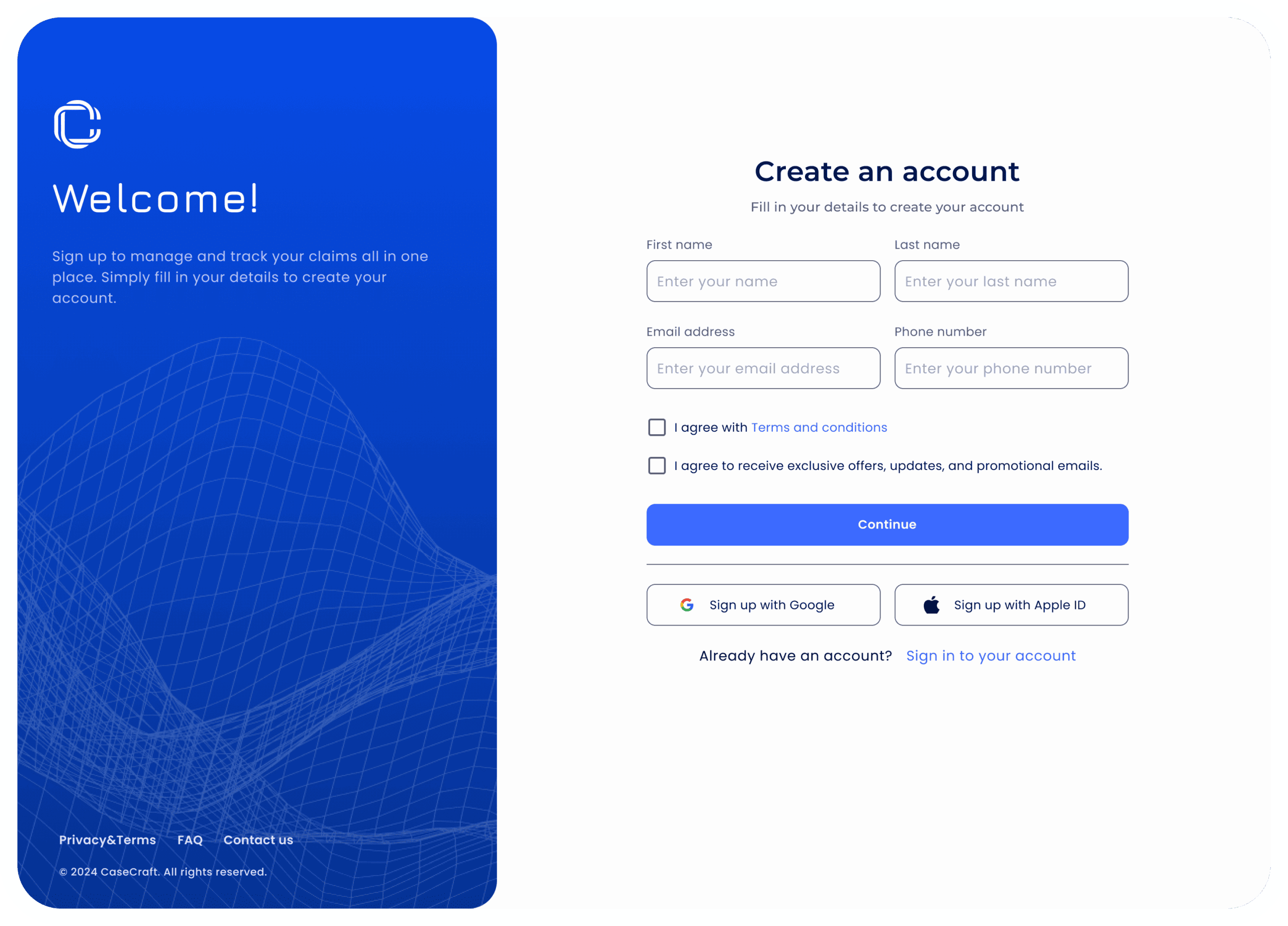
Enter basic details. Provide your name, contact information and a few facts about your PCP or HP agreements — rough dates, the type of finance and the dealership name. You do not need original paperwork.
CaseCraft.ai submits your claim. If you’re eligible, the platform prepares the complaint and sends it to the correct lender. CaseCraft.AI generates the necessary forms, tracks deadlines and organises evidence.
Receive compensation. Your lender reviews the claim, and either makes an offer or rejects it. CaseCraft.AI notifies you of updates and helps you accept or challenge offers. When successful, you receive your payout, minus CaseCraft.AI’s flat 15% success fee.
No win, no fee: what that means for you
Traditional claims management companies and solicitors often advertise “no win, no fee,” but many charge success fees of 25 per cent or more and require you to pay court fees, disbursements and after‑the‑event insurance. In small claims, these costs may exceed your compensation. CaseCraft.AI charges no upfront fee and takes a flat 15% of the recovered amount only if your claim succeeds. There are no extra court or insurance costs to recover; the platform is built specifically for claims under the small‑claims court limit of £10,000, which covers typical car finance payouts.
Car finance help without paperwork
Many drivers worry about lost paperwork. Under the FCA scheme, lenders must keep records of finance agreements and commission. So you don’t need original documents to start a claim. CaseCraf.AI’s tool simplifies this: it relies on basic data and works even when you don’t remember every detail.
Next steps
The FCA car finance scandal is one of the UK’s biggest consumer redress schemes. Millions of drivers unknowingly paid more because dealers earned hidden commissions. The FCA has acted to compensate affected customers, and the average payout of £830 per agreement could make a real difference.
Whether you have a simple HP agreement or were mis‑sold a PCP, these motor finance and PCP claims can help you recover what you lost.
Ready to find out if you’re owed money? Get started with CaseCraft AI.
FAQ
What is a car finance claim checker?
A car finance claim checker is a free tool that uses your basic details, such as when you took out finance and which dealership you used, to assess whether you may have been mis‑sold.
How do I know if I am eligible to make a PCP or motor finance claim?
You’re likely eligible if you took out a PCP or HP agreement between 6 April 2007 and 1 November 2024 via a dealership or broker and weren’t clearly told about commission arrangements. It doesn’t matter if the car is now sold or repossessed. Agreements used for personal transport, including commuting, qualify.
How much could I get from a car finance compensation claim?
The FCA estimates an average compensation of about £830 per agreement. Compensation combines repayment of undisclosed commission and a refund of around 17–21 per cent of the interest you paid. Multiple eligible agreements mean multiple payouts.
Do I need my original finance documents to start a claim?
No. Lenders must retain records, and you can start a claim with basic details. Equifax’s free app can help identify past agreements if you’ve lost your paperwork. CaseCraft’s platform does not require original documents.
Do I need a solicitor or claims company to make a car finance claim?
No. You can complain directly to your lender or through the FCA scheme. However, specialist services like CaseCraft.AI manage correspondence, deadlines and evidence on your behalf.
Is there a deadline to make a car finance commission claim?
Yes. If your agreement started between 6 April 2007 and 31 March 2014, you must complain by 31 August 2026 to ensure your lender responds by 30 November 2026. For agreements from 1 April 2014 to 1 November 2024, you must complain by 30 June 2026 to hear back by 30 September 2026. If you don’t complain, lenders have until February 2027 to contact you, and you have until 31 August 2027 to submit a claim.