





1. Poor workmanship and overcharging are common, but you can fight back: The Consumer Rights Act 2015 says repairs must be done with reasonable care, skill and at a fair price. When garages fail, you can claim compensation through the small claims court.
2. Success hinges on evidence, not luck: Keep all invoices, quotes, photos and messages to prove what went wrong. Courts and mediators decide cases on the strength of your evidence.
3. You can self‑represent and use tools like CaseCraft.AI: Most car disputes fall under small claims (under £10,000). The system is designed for people without solicitors. Platforms like CaseCraft.AI help organise your case and often charge only if you win
Garage repairs sometimes go badly. You drop your car off, pay the invoice and drive away, only to find the same fault returning or new issues emerging. Worse, you might feel overcharged or pressured into work you didn’t agree to. Millions of drivers each year face these frustrations. The law offers a clear remedy: you can pursue a garage car repair dispute claim to recover costs and seek compensation.
Under the Consumer Rights Act 2015, repairs must be completed with “reasonable care and skill” and at a reasonable price when no price was agreed. If the garage fails to repair your car properly or charges you unfairly, you can demand a refund, a price reduction or a further repair. Most disputes fall under the small claims court threshold of £10,000, meaning the process is designed to be user‑friendly and cost‑effective.
This guide is a practical roadmap. It explains what counts as a valid claim, how to gather and present evidence, and how to make your case to the garage, mediator or court. You will learn the costs and timeframes involved, when an auto repair lawyer may help, and why a tool like CaseCraft.AI can make a difference. Whether you’re dealing with a problem car or simply want to get your car fixed, this article provides actionable steps to assert your rights.
What counts as a garage or car repair dispute claim?
Not every disappointing experience with a mechanic rises to the level of a dispute. A garage car repair dispute claim typically involves one or more of the following problems:
- Poor workmanship: The original fault is not fixed, or new problems appear. For example, you may have paid to repair your car after an oil leak, but find the leak persists or the engine now has additional issues.
- Overcharging or unexpected invoices: You receive a bill far higher than the quote or what you expected. Under the Consumer Rights Act 2015, if no price is agreed, the garage must charge a “reasonable price”.
- Failure to fix the issue: The garage attempts to get my car fixed, but the problem remains unresolved after repeated visits.
- Delays or incomplete work: The car sits in the shop for weeks without progress, or parts are missing or incorrectly installed.
The law says traders must perform services with “reasonable care and skill”, provide information that is binding, do the work within a reasonable time, and charge a reasonable price. If a garage breaches any of these, you have grounds to pursue a claim. Keep a log of the key events: the agreed work, the price, the promised timeframes and what actually happened. Document each problem car incident with photos or videos.
When you have a strong claim against a garage
Having a valid grievance is not enough; you also need a strong case. You have a strong garage car repair dispute claim when:
- There is a clear invoice mismatch: The final bill differs from the written quote, without your consent or explanation. This is a red flag that the garage overcharged you.
- Repair attempts fail repeatedly: After multiple visits, the same fault recurs. This shows the garage failed to repair your car with reasonable care, a breach of the Consumer Rights Act.
- Independent mechanic evidence: Another mechanic’s report or an inspection from a motoring organisation confirms that the work was below standard. People who fix car problems professionally can attest that parts were installed incorrectly or that repairs were incomplete.
- Written agreements are breached: There is a contract or email specifying the work, timeframe and cost, and the garage fails to meet those terms.
If you have lost money or suffered further damage because of poor repairs, you can claim for the cost of re‑repair, a refund of what you paid and any additional losses. For example, if you spend £450 fixing your car elsewhere because the original garage botched the job, you can claim that amount plus the initial fee as compensation. In small claims court, this amount must not exceed £10,000.
What weakens your case (and why people lose)
Some claims fail because the claimant cannot prove the garage is at fault. Avoid these pitfalls:
- No written agreement: If you never received a written quote or job sheet, it’s hard to prove the garage agreed to a particular price or work. Always get confirmation in writing or by email before authorising repairs.
- Lack of evidence: Without photos, videos, messages or expert reports, a judge may see your story as hearsay. Courts rely on documents and records.
- Emotional, not factual, arguments: Judges want facts, not complaints. Focus on the dates, work performed, price differences and the state of the car before and after.
- Failure to send a letter before action: A formal “letter before action” is required under the pre‑action protocol. It gives the garage a final chance to settle and shows the court you tried to resolve the matter.
When you skip these steps, even a valid problem car issue can result in a lost case. A brief note from your auto repair lawyer can help you draft a compliant letter. Here’s a letter before action template you can adapt to your situation.
The evidence you need to win a car repair dispute
Evidence is the backbone of any garage car repair dispute claim. The court or mediator will ask for proof that the garage failed to fix the issue, overcharged you or caused further damage. Essential evidence includes:
- Quotes and invoices: Keep copies of written quotes or estimates and the final invoice. Comparing them shows overcharging.
- Photos/videos of the fault: Take photos before and after the repair to show that the problem car remained unfixed or new issues appeared.
- Independent mechanic report: A report from another professional (people who fix car problems or an inspection service) is powerful evidence that the original repair was poor.
- Emails and messages: Keep all correspondence with the garage – quotes, approval of work, complaints and responses. These documents prove what was agreed and how the garage responded.
- Timeline of events: Record each date: when you authorised the work, when the car was returned, when faults appeared, and any further contact.
Organise this material chronologically. You don’t need a solicitor to present it, but an auto repair lawyer or the CaseCraft.AI platform can help you ensure it meets court standards. In court, the judge will ask for factual proof, not opinions.
Step-by-step: how to file a garage dispute claim
Filing a claim follows a structured path. Follow these steps to increase your chances of success:
- Complain to the garage: Raise the issue immediately. Explain what went wrong, provide evidence and ask them to re‑repair or reduce the bill. Many disputes are resolved at this stage.
- Send a letter before action: If the garage refuses or ignores you, send a formal letter setting out your claim, evidence and a reasonable deadline (e.g., 14 days) before you take legal action.
- Gather and organise your evidence: Compile all invoices, photos, reports and communications. Record your financial losses.
- File the claim: Since 28 July 2025, eligible claims must be filed online using the Online Civil Money Claims (OCMC) or Money Claim Online (MCOL) system; paper submissions are no longer accepted for most cases. You will pay a fee based on the claim amount
- Defendant response: The garage has 14 days to acknowledge and 28 days to respond. They can admit the claim, dispute it or file a counterclaim.
- Mediation or hearing: For claims under £10,000, compulsory mediation via the Small Claims Mediation Service is required from 22 May 2024. About half of the cases settle at this stage. If mediation fails, a judge will hear the case.
- Judgment and enforcement: If you win, the court orders the garage to pay. They must usually pay within 14 days. If they don’t, you can apply for enforcement methods like bailiffs, attachment of earnings or charging orders.
Court fees
Small claims fees vary with the claim amount. These are the current fees (recoverable from the defendant if you win):
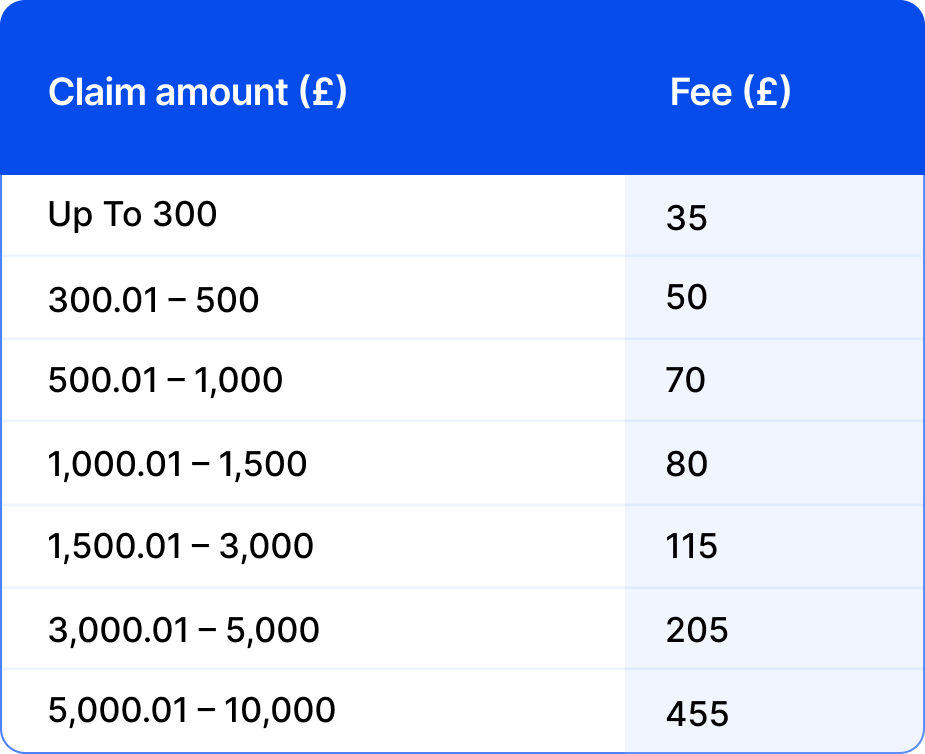
Use these figures to decide whether the claim is worthwhile. For example, if you paid £1,200 for a botched repair and spent another £500 to get your car fixed elsewhere, you would claim £1,700. The fee would be £115. If you win, the garage repays both the claim and the fee.
How long does a car repair dispute claim take?
Patience is essential. A garage car repair dispute claim can take weeks or months. According to the most recent government civil justice statistics, small claims cases take a median of around 36.1 weeks to reach trial, though many settle sooner through mediation. Simpler disputes settle quicker. Factors influencing the timeframe include:
- Case complexity: Straightforward disputes with clear evidence often settle during mediation. Complex cases with multiple issues may require a full hearing.
- Court workloads: Some courts have backlogs, so hearing dates can be several months away.
- Defendant behaviour: If the garage responds quickly and engages in mediation, the case can be resolved within a few weeks. If they ignore correspondence, there can be delays.
- Mediation success: Compulsory mediation is free and often efficient. Roughly half of claims under £10,000 settle at this stage.
Plan for several months but hope for a quicker settlement. Keep communication prompt and organised to avoid unnecessary delays.
Is it worth making a claim against a garage?
Whether to file a garage repair car claim depends on the financial stakes and the strength of your case. It is usually worthwhile when:
- Clear financial loss: Your outlay for repairs or further work is substantial relative to the claim fee. Claims up to £10,000 are common and can cover re‑repair costs, refunds and additional losses.
- Strong documentation: You have a written contract, quotes, invoices and photographic evidence.
- Reasonable enforcement prospects: The garage is solvent and can pay if you win.
However, it may not be worth pursuing if:
- Weak or missing evidence: Without records, it’s difficult to prove the garage’s fault.
- Low value: If the disputed amount is small, the cost and time may outweigh the benefit.
- Enforcement concerns: If the garage is insolvent or has closed down, winning a judgment may not lead to payment.
An alternative is negotiation or mediation without formal court proceedings. Weigh the pros and cons before issuing a claim.
Can you win without a solicitor?
Yes. The small claims court is designed for individuals to represent themselves. Many drivers handle their own garage car repair dispute claims and win. Here’s why:
- No compulsory legal representation: You don’t need an auto repair lawyer or auto dealer fraud attorneys. The procedures are simplified, and the judge will guide both parties through the process.
- Cost savings: Solicitors charge hourly rates; the court doesn’t award legal fees in small claims (except fixed costs). Representing yourself keeps costs down.
- Access to guidance: Free resources and official court guides explain how to prepare a claim. Tools like CaseCraft.AI help you organise evidence and draft submissions.
There are situations where an auto repair lawyer or auto dealer fraud attorneys may help: complex claims involving substantial sums, cross‑claims or serious allegations like fraud. But for most everyday disputes, self‑representation is practical and cost‑effective.
How CaseCraft.AI helps you win your claim
After learning how to build a strong case, you might wonder how to put it all together. This is where CaseCraft.AI shines. This platform is designed specifically for the small claims court process and can help you succeed in a garage car repair dispute claim by:
- Validating your claim strength: The system asks questions about your case and uses AI to assess whether your claim is legally sound based on the Consumer Rights Act 2015 and other laws.
- Organising your evidence: It collects your invoices, photos and reports, places them in order and produces a chronological timeline, critical when presenting to a judge or mediator.
- Preparing court‑ready documents: CaseCraft.AI drafts your claim form, including the particulars of the claim, and helps you prepare your “letter before action”. It ensures you satisfy pre‑action requirements.
- Tracking deadlines and progress: The platform reminds you of key dates (e.g., when the garage must respond, mediation appointments) so you don’t miss any procedural steps.
- Success‑based pricing and accessibility: It charges 15% of the recovered amount only if you win, so there’s no up‑front cost. It’s built for laypeople, so you can avoid paying expensive auto repair lawyer fees.
CaseCraft.AI does not replace a solicitor; it’s a digital assistant for dispute resolution. It uses bank‑grade encryption and works with UK‑licensed solicitors when needed. It’s particularly useful for those who want to repair their car claims quickly without legal jargon.
Remember, success depends on your evidence and preparation, not luck. Use CaseCraft.AI to build a strong case and stand up for your rights. Set a deadline, gather your documents and act now. Your problem car deserves a proper solution, and you deserve fair treatment. Get started now.
Note: This article is intended for general informational purposes only and does not constitute legal advice. You should seek professional advice tailored to your specific circumstances.
FAQ
How do I sue a mechanic shop?
To sue a mechanic shop, follow the step‑by‑step guide above. Start by complaining directly to the garage and sending a letter before action. File a claim through the County Court Money Claims Centre, pay the fee (based on your claim value) and attend mediation. If mediation fails, the court will schedule a hearing. You don’t need an auto repair lawyer; the small claims process is designed to be accessible.
What to do when a car dealer rips you off?
When you feel a dealer has misled you, for example, by selling a faulty vehicle or failing to honour a warranty, you may wonder what to do when a car dealer rips you off. First, contact the dealer and request a remedy under the Consumer Rights Act 2015. If they refuse, gather evidence (sales contract, repair records) and send a formal complaint. Many disputes with dealers are resolved via negotiation or mediation. If not, you can bring a garage car repair dispute claim in the small claims court for up to £10,000.
Can I claim for bad car repairs?
Yes. If the repair work was not done with reasonable care and skill and your problem car remains faulty or new issues arise, you can make a claim. Keep all invoices and gather proof that the repair failed. Claims under £10,000 go through the small claims track.
Do I need a lawyer?
No. While an auto repair lawyer can provide specialist advice, the small claims system is designed for self‑representation. The court will not award lawyers’ fees in small claims, so hiring one may not be cost‑effective. Instead, use free resources and platforms like CaseCraft.AI to guide you.