




1. No guarantee of funding: Some unfair dismissal solicitors offer no win no fee, but it depends on strong evidence, the value of compensation and meeting strict eligibility rules. Many claims will not qualify for this funding model.
2. Deadlines are short: Before a funding conversation even starts, claimants usually need to appeal internally, notify Acas for early conciliation and issue a tribunal claim within three months minus one day of dismissal. Missing these steps can end the case.
3. Alternatives exist: If no win no fee isn’t available, claimants can use Acas conciliation, trade union support, law centres or self‑representation. Some disputes about unpaid wages, loans or deposits may belong in civil court or small claims; CaseCraft.AI can help with these money‑claim disputes.
Unfair dismissal is a serious allegation against an employer. For most people, two practical questions come first: do I qualify to bring a claim, and how will I pay for legal help? Employment disputes follow strict rules on fairness, procedures, and time limits. Funding can also be a barrier. Some unfair dismissal solicitors offer no win no fee arrangements, but this is never guaranteed. In fact, the Solicitors Regulation Authority (SRA) issued a warning notice in January 2026 after identifying poor practices in some claims firms, reminding lawyers to clearly explain costs, risks, and funding terms to clients.
This guide explains whether an unfair dismissal no win no fee claim is actually possible, what factors influence a solicitor’s decision, and which tribunal deadlines matter most. It also clarifies the difference between unfair dismissal, wrongful dismissal, and constructive dismissal, outlines realistic compensation expectations, and explains why some disputes are better resolved as small claims. The goal is simple: provide clear, up-to-date guidance based on reliable sources for unfair dismissal UK claims in 2026.
What counts as unfair dismissal?
Unfair dismissal is a statutory claim under the Employment Rights Act. Currently, an employee needs two years’ continuous service to bring an ordinary unfair dismissal claim, but this will be reduced to six months from 1 January 2027. A dismissal is potentially unfair if:
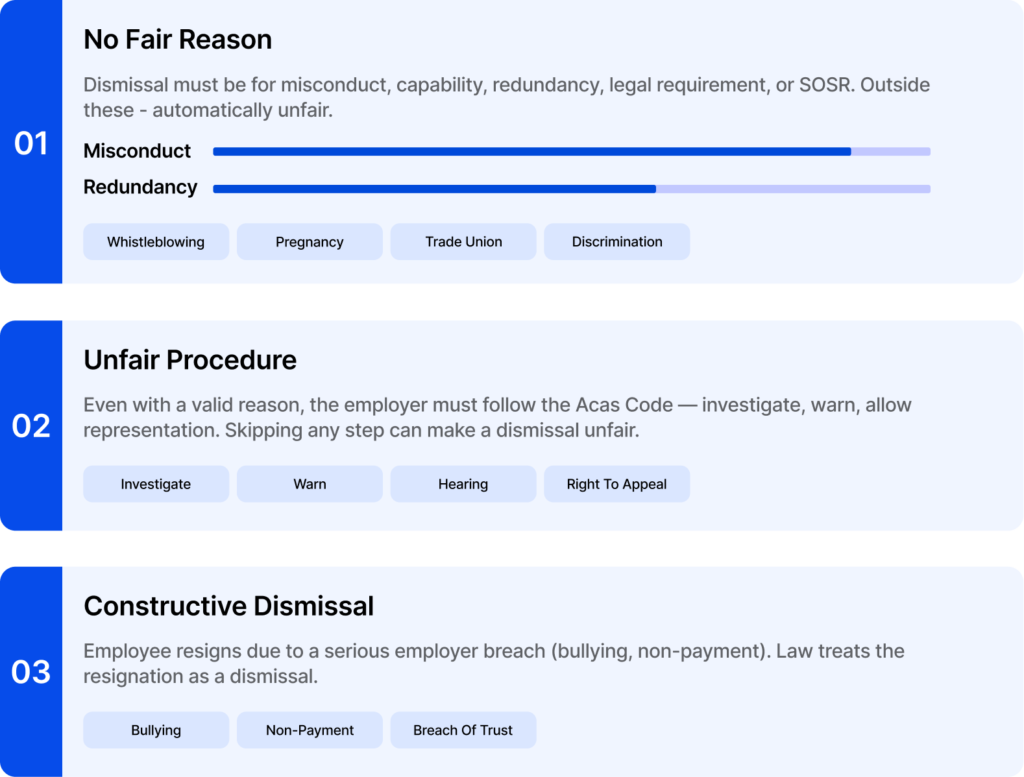
- No fair reason: The employer lacked a fair reason such as misconduct, capability, redundancy, a legal requirement or “some other substantial reason”. Automatically unfair reasons include whistleblowing, flexible working requests, pregnancy, trade union activity, discrimination, harassment and health‑and‑safety actions.
- Unfair procedure: Even with a fair reason, the employer must follow a fair process, usually the Acas Code of Practice on disciplinary and grievance procedures. Failure to investigate, warn or allow representation can render a dismissal unfair.
- Constructive unfair dismissal: If an employee resigns because of a serious breach by the employer (e.g., bullying, non‑payment), the law treats it as a dismissal.
The fairness test examines whether the employer’s decision was within the range of reasonable responses and whether the procedure was reasonable. Automatically unfair dismissal laws do not require any qualifying service; discrimination claims also have no qualifying period. From 2027, ordinary unfair dismissal will become a right after six months.
Fair vs unfair reasons at a glance
| Reason | Fair/Unfair | Qualifying period | Example |
| Misconduct | Potentially fair if a proper process is followed; may become unfair if summary dismissal is disproportionate. | 2 years until 2027, six months thereafter | Theft after warnings vs. minor lateness dismissed summarily |
| Capability | Potentially fair if the employer supports the worker and follows performance procedures. | 2 years until 2027 | Failing to meet sales targets after warnings |
| Redundancy | Fair if genuine and proper selection/consultation are used. | 2 years until 2027 | Closure of a department vs. “sham” redundancy |
| Automatically unfair reasons | Always unfair, regardless of service. | None | Dismissal for pregnancy or whistleblowing |
| Wrongful dismissal | Not about fairness; it’s a breach of contract when the employer fails to give notice. | No service requirement | Termination without notice, non‑payment of notice pay |
Can unfair dismissal claims be done on a no win no fee basis?
Yes, but not always. Several employment law firms market no win no fee unfair dismissal services, particularly those specialising in high‑volume claims. A no win no fee arrangement allows a claimant to defer legal fees until the case concludes. However, it is not automatic and can be misleading; the SRA’s 2026 warning highlighted that some firms lack transparency about fees, prioritise commercial interests over client interests and fail to check whether clients understand the arrangement.
Many searchers look for no win no fee solicitors unfair dismissal, thinking it is a standard funding route. In practice, each firm assesses cases individually and may decline if prospects of success or compensation are low.
It is natural to type no win no fee unfair dismissal into a search engine, but you must still meet eligibility rules and evidence thresholds before any solicitor will consider this arrangement.
Two main funding structures are common:
Conditional Fee Agreement (CFA): Often called “no win no fee.” Clients agree that if they win, they will pay the solicitor’s base fee plus a success fee (a percentage uplift to reflect risk). If they lose, they pay either nothing or a reduced fee. Clients are still liable for disbursements such as expert reports and may be liable for the opponent’s costs if ordered.
Damages‑Based Agreement (DBA): The solicitor takes an agreed percentage of the damages recovered and nothing if the case is lost.
An employment lawyer for unfair dismissal can explain which of these funding models is appropriate for your case. They will look at the facts, evidence and likely compensation before recommending a funding route.
The Law Society advises potential claimants to ask the following before signing a no win no fee contract:
- How the success fee is calculated and whether it is capped.
- Whether any costs are payable if the claim fails or if you end the agreement.
- The estimated value of the claim and the likely costs.
- Whether insurance is needed to cover the opponent’s costs.
Solicitors must explain these points clearly and check that clients understand them. Consumers should not assume “no fee” means “no cost”.
What no win no fee means in employment cases
A Conditional Fee Agreement in employment disputes works differently from other areas, like personal injury. Employment tribunals rarely award the winner their legal costs, so solicitors need to be confident that the award will justify their time and risk. Under a CFA:
- Success fee: The solicitor adds a success fee to their base costs if the claim succeeds. The fee is paid from the claimant’s damages or, sometimes, separately.
- Disbursements: The claimant may have to pay expenses such as medical reports or barrister’s fees. Some firms ask for payment of disbursements upfront; others defer them but recover them if the case succeeds.
- Other costs: If the case is lost, the claimant might not owe the solicitor’s fees but could still be liable for tribunal fees (currently none) or the opponent’s costs if the tribunal orders costs (rare).
A Damages‑Based Agreement means the solicitor takes a percentage of the compensation recovered and receives nothing if the claim fails. DBAs are subject to a statutory cap of 35% for employment matters. Clients should compare the projected recovery with the solicitor’s percentage and other deductions.
Why do solicitors offer no win no fee only in some unfair dismissal cases
Solicitors consider several factors before accepting an unfair dismissal no win no fee claim:
- Evidence strength: Clear proof of unfairness (e.g., documented procedural failures, discriminatory remarks, contemporaneous emails).
- Potential compensation: The claim must be worth enough to cover legal time and the success fee. Typical awards remain modest; the median unfair dismissal award in 2023/24 was £6,746, though the average can be higher.
- Recoverability: Many employers facing unfair dismissal claims are small businesses or insolvent. Solicitors will assess whether the employer can pay.
- Eligibility: Claimants must satisfy service and time‑limit requirements. From 2027, the qualifying period will fall to six months; currently, it is two years.
- Prospects of settlement: A strong case with prospects of early settlement may be attractive because the solicitor’s risk and cost are lower.
- Complexity: Cases involving discrimination or whistleblowing may be of higher value but also more complex and resource‑intensive.
If these elements are weak, firms may refuse no win no fee funding. Some may offer an initial fixed‑fee consultation to assess merits.
The same logic applies if the claim is for constructive dismissal, no win no fee or no win no fee constructive dismissal. A resignation due to the employer’s breach can be classed as constructive unfair dismissal, but a lawyer will still look at evidence, compensation and recoverability before agreeing to fund the case.
When no win no fee may not be offered
A solicitor may decline a no win no fee unfair dismissal case when:
- Time limits have been missed: The claimant must notify Acas within the three‑month time limit minus one day and start a tribunal claim on time. Delay can make the case hopeless.
- Lack of service: Claimants with under two years’ service (until 2027) cannot bring ordinary unfair dismissal claims except for automatically unfair reasons.
- Low‑value claim: Dismissal with short notice, where lost earnings are small, may not generate enough compensation.
- Wrongful dismissal rather than unfair dismissal: If the dispute is about notice pay or contract breach, the claim is wrongful dismissal (a contract claim) rather than unfair dismissal. Such claims can be brought in civil courts and may yield limited compensation; solicitors might advise a self‑help or small‑claims route.
- Misclassification: Some claimants call their termination unfair, but the legal issue is redundancy, resignation or capability. A solicitor may direct them to other remedies.
Tribunal deadlines and steps you cannot ignore
Unfair dismissal claims follow a strict procedural path. Missing a step can destroy the claim, regardless of whether funding is available.
Internal appeal: Employees should appeal a dismissal through the employer’s procedure. Following the Acas Code may increase or decrease compensation by up to 25%.
Acas early conciliation: Before lodging an employment tribunal claim, claimants must notify Acas for early conciliation. The usual early conciliation period is now up to 12 weeks (extended from six weeks in December 2025). Notifying Acas stops the limitation clock, but claimants should still act quickly.
Time limit to file: Most unfair dismissal claims must be lodged with the unfair dismissal tribunal within three months minus one day of the effective date of dismissal. The tribunal can extend time only in exceptional circumstances.
Service of claim and response: Once the claim is filed, the employer must respond within 28 days. The tribunal will set a timetable for disclosure, witness statements and a hearing.
Tribunal hearing and remedy: Hearings are usually held within nine to 12 months. Remedies may include reinstatement, re‑engagement, a basic award and a compensatory award.
Unfair dismissal vs wrongful dismissal vs constructive dismissal
These terms are often confused. Understanding the differences helps decide the right route and funding option.
- Unfair dismissal: A statutory claim assessing whether the employer had a fair reason and followed a fair process. Qualifying service is currently two years (falling to six months in 2027). Compensation consists of a basic award (capped) and a compensatory award (capped until 2027).
- Wrongful dismissal: A breach‑of‑contract claim for failure to give notice or pay salary in lieu. It is a day‑one right; no qualifying service is required. Wrongful dismissal claims may be brought in an employment tribunal or in the civil courts. Tribunal claims must be filed within three months minus one day.
- Constructive dismissal: Occurs when an employee resigns due to the employer’s fundamental breach (e.g., bullying, pay withholding). It is treated as unfair dismissal if the breach is proven. Claimants still need qualifying service unless the reason is automatically unfair.
| Factor | Unfair dismissal | Wrongful dismissal | Constructive dismissal |
| Basis of claim | Statutory fairness | Contractual notice/pay | Employer’s breach leading to resignation |
| Qualifying service (until 2027) | 2 years (dropping to 6 months) | None | 2 years (unless automatically unfair) |
| Venue | Employment tribunal | Tribunal or civil court | Employment tribunal |
| Time limit | 3 months minus 1 day | 3 months in tribunal, 6 years in civil court | 3 months minus 1 day |
Alternatives if no win no fee is not available
Some claimants will not secure a no win no fee unfair dismissal arrangement. All is not lost. Several alternatives exist:
- Acas support and conciliation: Acas offers free early conciliation and mediation services. Many disputes are settled here, avoiding legal costs.
- Trade union assistance: Members of trade unions often have access to free legal representation for employment claims. This may include funding or representation at tribunal hearings.
- Legal expenses insurance: Some home or motor insurance policies include legal expenses cover, which may fund an unfair dismissal claim.
- Law centres and free advice clinics: Local law centres and charities provide free advice and representation for low‑income claimants. Organisations like the Citizens Advice Bureau and Working Families can signpost resources.
- Self‑representation: Employment tribunals are designed to be accessible. Claimants can represent themselves with support from Acas guidance and legal clinics. The tribunal can order reimbursement of up to £500 for preparation time, but only in limited circumstances.
- Small‑claims route for contract disputes: If the dispute is about unpaid wages, unpaid loans, deposit disputes, damages for defective work or other money claims rather than fairness of dismissal, it may be better suited to the civil courts. For claims under £10,000 in England and Wales, the small‑claims track is available. The civil courts have six years to bring a claim and unlimited damages, but the small‑claims track has fixed costs and is designed for self‑representation.
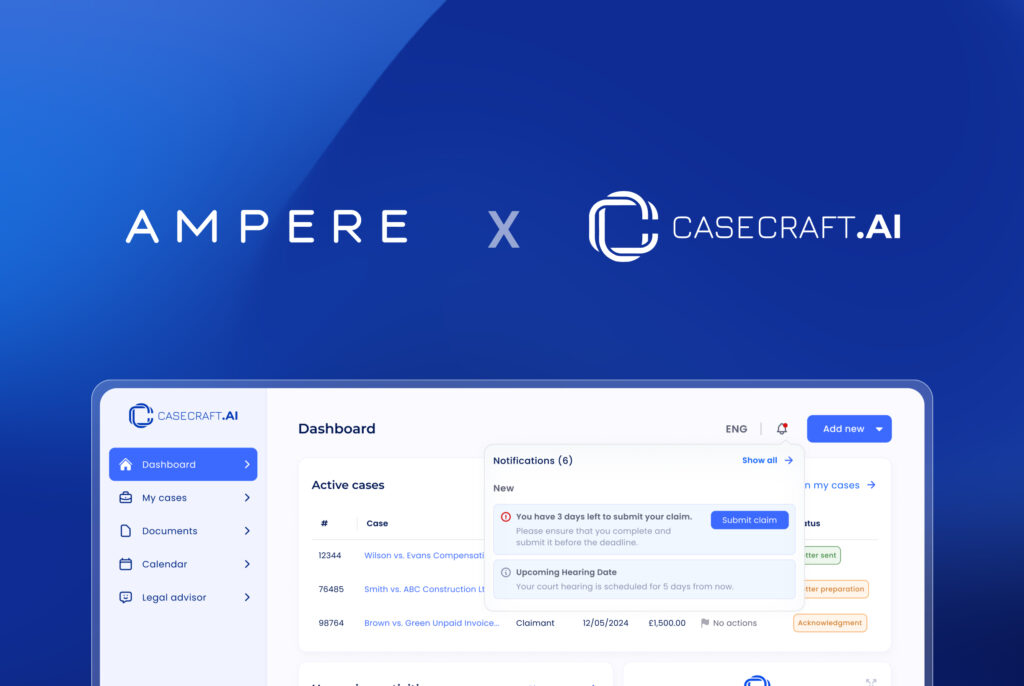
CaseCraft.AI is a specialised small claims platform that guides users through civil money claims. It automates legal forms, organises evidence, taking a 10% success fee only if the claim is successful. The platform supports a range of claims and confirms whether a dispute qualifies for the small‑claims track. Claimants who believe their dismissal involved unpaid wages or other money owed could consider these routes.
How does this fit with CaseCraft.AI?
CaseCraft.AI is built for small claims, not employment tribunals. The platform automates tasks for claims up to £10,000 and offers a simplified online process. Unfair dismissal claims almost always belong in the employment tribunal because the employment tribunal has exclusive jurisdiction over statutory unfair dismissal. Misleading users into thinking unfair dismissal is a small‑claims issue would harm credibility.
Users can file claims online without needing a lawyer and track progress easily.
Visit CaseCraft.AI’s money claims page to learn whether your issue belongs in the civil courts or explore breach of contract claims to see how the platform can help. Take the time to assess your situation, understand your rights and choose the route that maximises your chances of success.
Disclaimer: This article is for general informational purposes only and does not constitute legal advice. Employment law issues can vary based on individual circumstances. If you need advice about an unfair dismissal or related claim, you should consult a qualified unfair dismissal solicitor or employment lawyer.
FAQ
Can I get no win no fee solicitors for unfair dismissal?
Yes, some firms offer no win no fee unfair dismissal services, but acceptance depends on evidence, claim value and eligibility. Always check what costs you might still pay.
Do all unfair dismissal solicitors offer no win no fee?
No. Many employment solicitors charge hourly rates or fixed fees. High‑volume claims firms may use CFAs or DBAs, but their availability is limited by the economics of the case.
What is the time limit for an unfair dismissal claim?
You must notify Acas within three months minus one day of the dismissal. After early conciliation, you must file the claim within the extended deadline.
Do I need two years’ service to claim unfair dismissal?
Yes, for ordinary unfair dismissal until 31 December 2026. From 1 January 2027, the qualifying period drops to six months. Automatically unfair and discriminatory dismissals do not require service.
What is the difference between unfair dismissal and wrongful dismissal?
Unfair dismissal is about fairness and requires service; wrongful dismissal is a breach of contract for lack of notice or pay. Wrongful dismissal can be heard in the civil court or tribunal.
Can I bring an unfair dismissal claim without a solicitor?
Yes. Many claimants represent themselves in the employment tribunal. Free support from Acas, trade unions and law centres can help. Self‑representation is common because employment tribunals rarely award costs.