




1. Small claims are built for self-representation. The small claims track, claims up to £10,000, limits costs recovery under CPR 27.14. Even if you win, you cannot recover most solicitor fees from the other side, so paying a solicitor for a small claim is rarely economic.
2. Solicitor fees often exceed the claim itself. Typical UK rates of £150 to £300 plus VAT per hour mean a £2,000 claim can cost more in legal fees than the claim is worth. Most law firms decline small claims work for this reason.
3. CaseCraft.AI gives structured help without legal advice. No upfront fee, 10% success fee on resolution, full document preparation, mediation and enforcement guidance. You can still instruct a solicitor at any point if your case becomes complex.
If someone owes you money in England or Wales or has failed to deliver on a contract, you might assume that hiring a solicitor is the natural first step. For most claims under £10,000, that assumption is wrong. The small claims track is deliberately designed for self-representation, and the costs rules make solicitor representation uneconomic in most cases. This article explains how solicitors approach small claims, when you genuinely need one, what CaseCraft.AI does instead, and how the two compare on cost, scope and outcome.
Can a solicitor handle a small claim?
Yes, technically. A solicitor can act for you on any claim, regardless of value. In practice, very few solicitors will take a small claim, and the reason is straightforward: the costs rules in the small claims track make it uneconomic for both the solicitor and the client.
Solicitor hourly rates in the UK typically fall between £150 and £300 plus VAT, depending on seniority and location. For a £2,000 unpaid invoice, ten hours of solicitor time would cost more than the claim itself. Even if you win, you cannot recover most of that from the losing party.
Why solicitors avoid the small claims track
The key rule is CPR 27.14, which restricts costs recovery in the small claims track. The court will not order one party to pay the other’s costs except for a limited list:
- Court fees that have been paid
- Travel expenses to the hearing for parties and witnesses
- A loss of earnings allowance for parties or witnesses attending the hearing, capped at a daily maximum
- Experts’ fees, capped at a low limit per expert, where the court has given permission
- Court-ordered costs where a party has behaved unreasonably
Solicitor fees, beyond a fixed sum for issuing the claim itself, are not generally recoverable. So if you win a £5,000 claim and your solicitor has billed you £3,000, you will not recover that £3,000 from the defendant. You either absorb the cost or your “win” is a net loss. This is the structural reason most firms decline small claims unless the client is paying privately and is comfortable with the economics.
When you might still need a solicitor
There are genuine cases where instructing a solicitor is the right call, even within the small claims limit:
- Complex legal questions. Disputes turning on novel points of law, ambiguous drafting or unsettled case law often benefit from legal advice.
- Professional negligence with technical content. Claims requiring expert evidence on professional standards may need legal support to frame the claim properly.
- Personal injury. Most personal injury claims fall outside the small claims track and require specialist support.
- Cross-border disputes. Claims involving defendants outside England and Wales raise jurisdiction and service questions that benefit from legal input.
- Claims close to or above £10,000. If the claim is at the threshold and may be reallocated to the fast track, a solicitor becomes more useful because costs are recoverable in higher tracks.
For most everyday disputes, such as unpaid invoices, refused refunds, unpaid wages, mis-sold finance, and breach of contract under £10,000, a solicitor is rarely the right starting point.
Cost comparison
| Solicitor | CaseCraft.AI | |
| Upfront fee | Usually yes, retainer or invoice | None |
| Hourly billing | £150 to £300 plus VAT | None |
| Success fee | Sometimes via a CFA | 15% of recovered amount |
| Court fee | Same, £35 to £455 for claims up to £10,000 | Same |
| Recoverable from the defendant in small claims | Limited under CPR 27.14 | Limited under CPR 27.14 |
| If you lose | You pay the solicitor anyway | Nothing owed beyond the court fee |
| When you pay | Each invoice or on retainer | Only on successful resolution |
The economics matter because the small claims track is built to keep legal costs out. If you are paying a solicitor by the hour, professional fees regularly exceed the value of the claim.
What CaseCraft.AI does
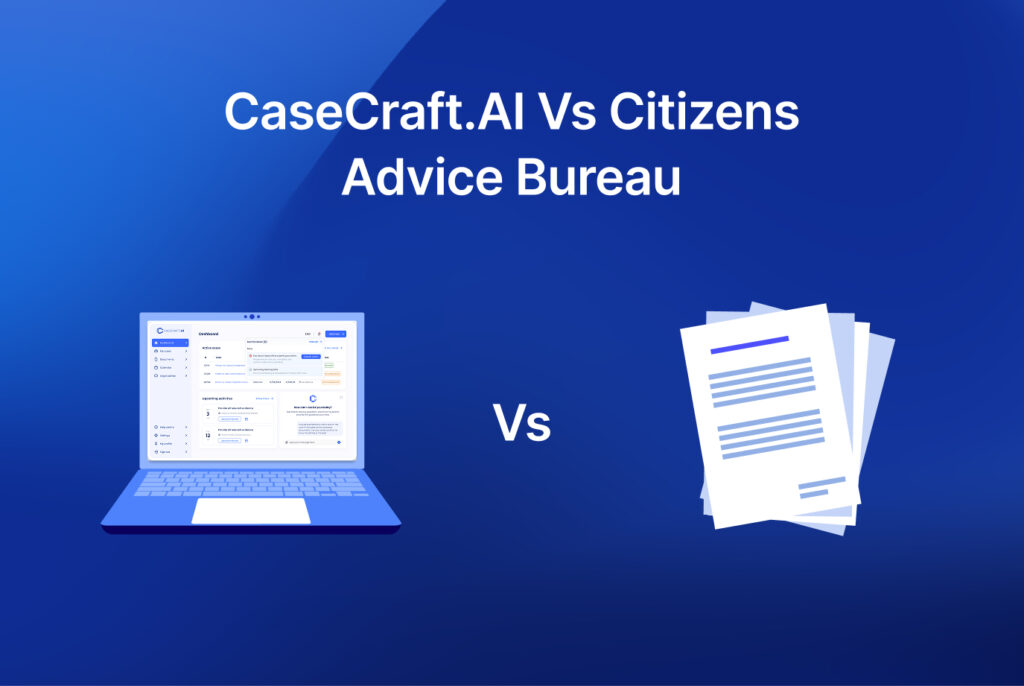
CaseCraft.AI is not a solicitor and does not provide legal advice. It is a platform that prepares the documents, organises the evidence, and walks you through the procedural stages of a small claim or financial redress matter under £10,000 in England and Wales.
- Pre-action protocol compliance. Letter before action drafted with the correct content and deadlines for the relevant protocol, including debt, professional negligence, and general money claims.
- Claim form (N1) preparation. Particulars of claim drafted from the facts you provide, with the correct legal causes of action stated.
- Evidence organisation. Upload documents, arrange them chronologically and generate a court bundle. Smart reminders track filing deadlines.
- Directions questionnaire (N180). Prepared and explained, including allocation requests and any special directions.
- Compulsory mediation support. Settlement positions and mediation letters prepared. Mediation has been compulsory for money claims under £10,000 since 22 May 2024.
- Hearing preparation. Witness statements and hearing bundles prepared. You can attend yourself or instruct a barrister via Direct Access.
- Enforcement guidance. If the defendant does not pay, CaseCraft.AI guides you through warrant of control, attachment of earnings, charging order and third-party debt order.
- Success-based pricing. No platform fee. A 15% success fee applies only when the claim resolves with payment or a settlement.
Side-by-side comparison
| Solicitor | CaseCraft.AI | |
| Upfront cost | Monthly invoices or retainer | None |
| Legal advice | Yes | No, general information only |
| Document preparation | Yes | Yes |
| Recoverable fees in small claims | Usually no | No |
| Time to first action | Days to weeks | Minutes |
| End-to-end coverage through enforcement | Yes, if instructed | Yes |
| Suitable for claims under £10,000 | Rarely economic | Designed for this band |
| Switch to a solicitor mid-case | Not relevant | Yes, at any stage |
When CaseCraft.AI fits and when it does not
It works well when:
- The amount owed is straightforward to evidence.
- The legal basis is contract, debt, refund, mis-sold finance, professional service or similar.
- You want to resolve the dispute without paying a solicitor upfront.
- You are willing to engage with mediation and the procedural steps.
It is not the right route when:
- Your claim involves complex legal questions or expert evidence that needs legal advice.
- The dispute is personal injury, family law or criminal in nature.
- The amount in dispute is significantly above £10,000, meaning fast track or multi-track.
- You need full legal advice and representation throughout.
How to decide
A simple rule of thumb. For straightforward money disputes under £10,000 where the facts are clear and the evidence is documentary, the small claims track is designed for self-representation, and CaseCraft.AI is built for exactly this band. For complex legal questions, expert evidence, or claims significantly above the threshold, instruct a solicitor. The two are not mutually exclusive: you can start with CaseCraft.AI and instruct a solicitor later if the case grows in complexity.
Disclaimer: CaseCraft.AI is not a law firm and does not provide legal advice. This content is general information for England and Wales only. Every claim depends on its own facts. If your case is complex or high-value, consider seeking independent legal advice.
No upfront fee or processing fee. A 15% success fee is charged on the amount recovered when your claim resolves successfully. The court fee is paid separately to HM Courts & Tribunals Service.
Friendly Asked Questions
Do I need a solicitor for a small claim in the UK?
For most claims under £10,000 in England and Wales, no. The small claims track is designed for self-representation, and you cannot recover most solicitor fees even if you win.
Can I recover solicitor fees if I win in small claims?
Generally no. CPR 27.14 limits recoverable costs to court fees, travel, witness expenses, capped expert fees with court permission, and court-ordered costs for unreasonable behaviour.
Is CaseCraft.AI a substitute for a solicitor?
No. CaseCraft.AI prepares documents and guides the procedure. It does not provide legal advice. For complex matters needing legal advice, instruct a solicitor.
How much does a solicitor cost for a small claim?
Hourly rates of £150 to £300 plus VAT are typical. For a claim under £5,000, professional fees can easily exceed the value of the claim itself.
What does CaseCraft.AI charge?
No upfront fee or processing fee. A 15% success fee is charged on the amount recovered when your claim resolves successfully. The court fee is paid separately to HM Courts & Tribunals Service.
Can I switch to a solicitor later if my case becomes complex?
Yes. CaseCraft.AI is not exclusive. You can instruct a solicitor at any point in the process.
Will the court treat me differently for not having a solicitor?
No. The small claims track is designed for litigants in person. Judges are used to seeing self-represented partiesб and the procedure is more flexible than in higher tracks.
Does CaseCraft.AI work for businesses as well as individuals?
Yes. CaseCraft.AI handles claims for individuals and small businesses, including unpaid invoices and B2B debt recovery up to £10,000.