



1. Two very different services: Resolver is a free tool for complaints; it helps you draft emails, record communications, and, if necessary, refer your dispute to an Ombudsman. CaseCraft.AI is an AI‑powered platform for small claims: it prepares HMCTS‑compliant documents, guides you through evidence and deadlines and files claims on your behalf for a modest success fee.
2. Where each excels and where each stops: Resolver works best for customer‑service issues with regulated companies (telecoms, airlines, energy) and stops after the company or ombudsman responds; it does not provide legal representation. CaseCraft.AI is for unpaid invoices, withheld deposits, defective goods and contract breaches; it’s designed for disputes under £10,000 and keeps going to court if settlement fails.
3. A step‑by‑step journey: The smart way to handle a dispute is to start with Resolver’s free complaint tool and, if that does not produce a satisfactory outcome, switch to CaseCraft.AI. Combining both tools gives you a clear path from informal complaint to formal small claim.
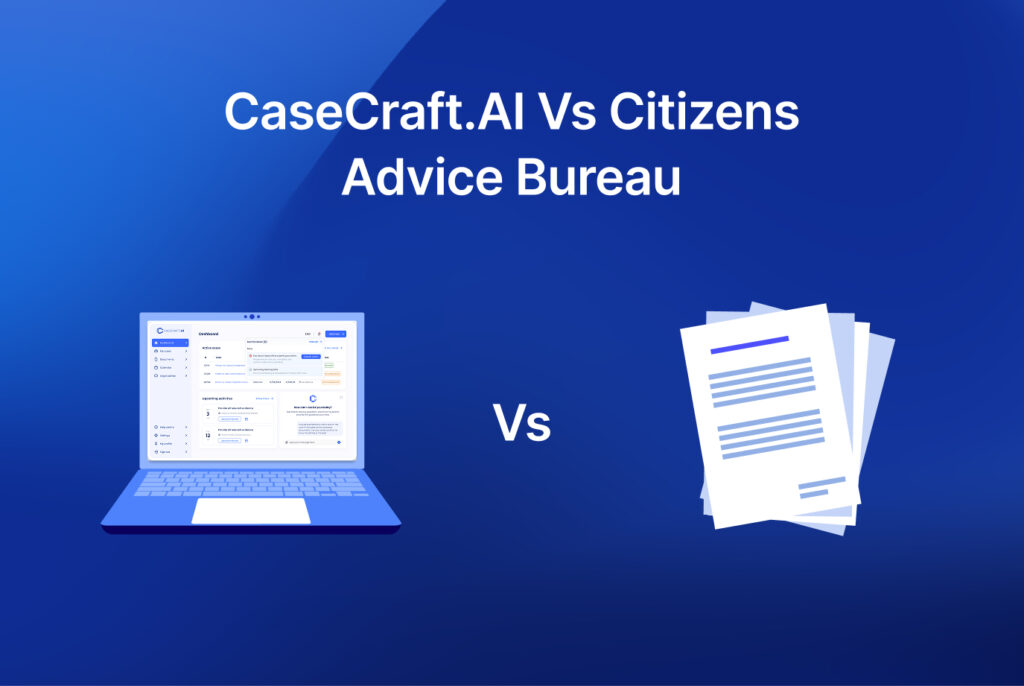
If you’re comparing CaseCraft.AI and Resolver, the most important thing to understand is that they solve different problems. Resolver is a free complaints tool that helps consumers contact companies, track responses, and escalate issues to an ombudsman. CaseCraft.AI is a small claims platform designed to help people and businesses pursue legal claims when a complaint has failed. In other words, Resolver helps you complain, while CaseCraft.AI helps you claim.
For many people, the best approach is to use Resolver as a first step and then move to CaseCraft.AI if the dispute remains unresolved. Understanding this distinction can save time, reduce frustration and help you choose the right path to recover money, enforce your rights or resolve a dispute efficiently.
What is Resolver and What Does It Actually Do?
Resolver is often described as a dispute resolver, but in practice, it is a complaints tool, not a law firm. The company positions itself as a free, independent service that helps consumers complain effectively. Over five million registered users have created more than 8.1 million cases and collectively saved more than £2.5 billion.
Resolver’s core features include:
- Structured complaints: You write your issue and what resolution you want; Resolver prompts you to include dates, details and evidence. It sends the complaint via a unique email address and stores the conversation so you can see every reply.
- Communication tracking: The platform keeps copies of all emails and attachments. This makes it easy to show what you said and when if you need to prove a timeline later.
- Escalation guidance: If a company ignores your complaint or rejects it, Resolver provides template letters to refer the matter to a senior team or an ombudsman and explains each regulator’s process.
- Free and independent: Resolver is funded by advertising and optional referral fees. It explicitly states that it is not a regulated claims management company and only signposts external specialists if you choose to contact them.
Limitations of Resolver
Resolver does not file legal claims or act as your representative. Resolver is a free tool that helps draft complaint emails, but is not an intermediary and will not act on behalf of the consumer. In other words, when a company refuses to resolve your complaint or an ombudsman rules against you, Resolver’s role ends. Many user reviews praise the ease of use but also note frustration when companies ignore the platform; there is no enforcement mechanism.
Resolver is best for:
- Complaints to large, regulated companies like banks, telecoms, airlines, energy providers, insurers and retailers.
- Situations where you want to keep things informal and free: Resolver costs nothing and is simple to use.
- If a case falls under a regulator’s jurisdiction, for example, a billing error, you can refer to the Energy Ombudsman if the supplier does not respond.
Resolver is less suitable when you need to recover money, enforce a contract or take someone to court. In those situations, you need a legal claim rather than a complaint.
What is CaseCraft.AI and What Does It Do?
CaseCraft.AI is an AI‑powered UK small claims platform built with Sterling Law. Its purpose is to make the small‑claims process fast, affordable and accessible. The platform addresses many pain points of traditional litigation, complex paperwork, long waits and high legal fees, by automating much of the process.
Key features include:
- Auto‑generated legal forms: The software turns your information into court‑ready claims that meet HM Courts & Tribunals Service (HMCTS) requirements.
- Fast filing in minutes: Most users complete the process in under 15 minutes. Once submitted, the platform tracks the case and sends reminders.
- Step‑by‑step AI guidance: The tool guides you through evidence gathering, deadlines and pre‑court settlement. It helps you organise documents and invites the other side to settle before court.
- Success‑based pricing: Unlike typical no‑win‑no‑fee solicitors who take 25‑50% of your award, CaseCraft.AI charges 15%, and only if you win. There are no upfront fees.
- Fully online: You can file or defend a claim from any device, at any time. The platform uses bank‑grade encryption and UK‑based servers, so your data stays secure.
- Built for claimants and defendants: You can use CaseCraft.AI to pursue a debt or to respond to a claim. It provides template defences and helps you negotiate a settlement.
- Legal partnership: CaseCraft.AI has been developed in partnership with Sterling Law and is supported by legal professionals.
Because CaseCraft.AI files the claim on your behalf and monitors deadlines, you don’t need to learn court procedures. You simply provide the facts and evidence, and the platform handles the rest.
CaseCraft.AI vs Resolver: Key Differences at a Glance
| Feature | Resolver | CaseCraft.AI |
| Cost | Free | No upfront cost; 15% success fee if you win |
| Acts on your behalf? | No, it only helps you write complaint emails | Yes, prepares and files HMCTS‑compliant legal documents and can lodge the claim for you |
| Files court claims? | No | Yes, handles the entire small‑claims filing process |
| Legal document preparation | None provides complaint templates | Yes, auto‑generates forms and guides evidence gathering |
| Ombudsman escalation | Yes, refers to regulators and ombudsmen | No, encourages settlement, then files a claim; does not work with ombudsmen |
| Best for | Consumer complaints to regulated firms | Legal disputes: unpaid invoices, withheld deposits, faulty goods, contract breaches |
| Outcome if ignored | Limited recourse; you can only complain further | Generates a court claim and proceeds to enforcement |
This table illustrates the fundamental distinction: Resolver helps you complain for free; CaseCraft.AI helps you claim when a dispute becomes legal.
When Should You Use Resolver?
Use Resolver in these situations:
- Large, regulated companies: Telecoms, energy suppliers, banks, airlines and insurers must respond to complaints under sector rules. Resolver makes it easy to contact them.
- Low‑stakes consumer issues: Billing errors, delayed flights, poor customer service and refund problems are often resolved through a structured complaint.
- Ombudsman‑eligible disputes: If your issue falls within a statutory ombudsman’s remit (for example, the Energy Ombudsman), Resolver guides you through the referral process.
- When you want to try informal resolution first: Resolver costs nothing, and many companies respond to a well‑structured complaint. Starting here can save time and preserve relationships.
Remember that Resolver’s role ends if the firm ignores your complaint or if you need to enforce your rights. It has no legal teeth and cannot compel payment.
When Should You Use CaseCraft.AI?
Choose CaseCraft.AI when:
- You need to recover money or enforce a contract: Unpaid invoices, faulty goods, and breaches of contract often require a court claim. CaseCraft.AI prepares a legally sound claim for you.
- Your complaint has been ignored or rejected: If the company refuses to settle through Resolver or direct negotiation, CaseCraft.AI gives you an effective next step.
- Your dispute is under £10,000: The small‑claims limit in England and Wales is £10,000; claims between £10,000 and £25,000 go to the fast track. CaseCraft.AI is designed for cases under the small‑claims threshold.
- You want legal‑standard documents without a solicitor: Solicitors on “no win, no fee” deals can take 25-50 % of your award. CaseCraft.AI charges 15% only if you win, with no hourly rates.
- You are short on time: The platform generates documents and files the claim in minutes. It also tracks deadlines so you don’t miss critical dates.
CaseCraft.AI is not only for claimants; if you have been sued in small claims court, the platform can help you file a defence and negotiate a settlement.
Can You Use Resolver First, then CaseCraft.AI?
Yes, and in many situations this is the smart approach. Start by sending a complaint through Resolver. It’s free, quick and often triggers a response. Keep copies of your messages and the company’s responses.
If the firm fails to resolve the issue, you can take two steps:
- Send a letter before action: Before making a claim, you must write to the defendant, summarising what they owe, the basis of your claim and giving them a final deadline. The letter before action must include key details such as the parties’ names, the amount owed (including statutory interest) and a request for payment. For debt claims, it must also include relevant documents and invite the other side to negotiate.
- File a claim via CaseCraft.AI: When the deadline passes, CaseCraft.AI generates the court forms and files them. You pay nothing up front and only pay a success fee if you win.
Using Resolver first ensures you have proof that you attempted an informal resolution, which courts expect. Switching to CaseCraft.AI gives you legal leverage when informal complaints fail.
Which Is Better for a Small Business?
Small businesses face different challenges from individual consumers. Resolver is largely designed for consumer complaints and is less effective for business‑to‑business disputes. Ombudsmen generally handle household services and regulated sectors; there is no ombudsman for unpaid invoices or contract breaches between two companies.
CaseCraft.AI, by contrast, is built for both individuals and small businesses. The platform covers unpaid loans, professional services disputes, breach of contract and subscription disputes. It helps SMEs recover debts without expensive solicitors and manages the claim process from start to finish. Because each party in a small claim usually pays their own legal costs, using a low‑cost platform can significantly improve recovery rates.
Legal Dispute? Here’s What Each Tool Can Actually Help With
It is important to distinguish between a complaint and a legal dispute:
- Complaint (customer service issue): When you receive poor service, an incorrect bill or a delay, you are primarily seeking an apology, a refund or service improvement. Resolver is designed for these situations.
- Legal dispute (breach of rights): When someone owes you money, fails to honour a contract or damages your property, you may need to enforce your rights through the courts. CaseCraft.AI prepares legal documents and files your claim.
Use the following guide:
- Resolver: Suitable for customer service complaints, product issues, refunds, flight delays and utilities problems. Offers escalation to ombudsmen but no legal action.
- CaseCraft.AI: Designed for legal disputes: unpaid invoices, withheld deposits, faulty goods, breach of contract, property damage and other claims under £10,000. Generates court documents and pursues the claim until judgment.
Key Trends in the UK Small‑Claims Landscape
Understanding the context of small claims helps you decide when to pursue legal action.
- Increasing caseload: In the first quarter of 2026, there were 527,000 county court claims, up 7% on the same period in 2025, and 85% were money claims. The number of claims defended rose 13% while trials fell 6%.
- Waiting times improving but still long: The median time from issuing a small claim to the hearing was 37.6 weeks in early 2026, 5.1 weeks faster than a year earlier. Fast and multi‑track cases (claims above £10,000) took a median of 54.3 weeks.
- Mandatory mediation: Since 22 May 2024, parties to most small claims under £10,000 must attend a free one‑hour mediation through the Small Claims Mediation Service. A pilot launched in July 2025 requires certain online road‑traffic claims to undergo mediation. Mediation resolves around half of cases and encourages settlement.
- Online filing mandatory: From 28 July 2025, eligible money claims must be filed online via the Online Civil Money Claims (OCMC) or Money Claims Online (MCOL) services; paper forms will be returned. CaseCraft.AI’s digital process aligns with this shift.
- Court backlogs remain: The Justice Committee has described the county court system as dysfunctional, with earlier data showing small claims taking nearly 50 weeks to reach trial and over 1.73 million county court claims in 2024. This context highlights the need for efficient resolution tools.
Next Steps
Choosing between Resolver and CaseCraft.AI comes down to the nature of your dispute. Use Resolver for straightforward consumer complaints when you want a quick, no‑cost way to reach a company and, if necessary, an ombudsman. Use CaseCraft.AI when your dispute involves money owed or a broken contract, and informal complaints have failed. Its AI‑driven system prepares court documents, files the claim and guides you through each stage, all on a no‑win‑no‑fee basis.
The smart strategy is to see them as complementary. Start with a free complaint via Resolver. If you’re ignored or the ombudsman cannot help, send a letter before action and switch to CaseCraft.AI to enforce your rights. In a legal landscape where court backlogs persist, and mediation is now mandatory, having both tools at your disposal can save time, reduce stress and improve your chances of success.
Disclaimer: This article provides general information and does not constitute legal advice. Always consult a qualified professional for guidance on your specific situation.
FAQ
Is Resolver free to use, and is it worth it?
Yes. Resolver is completely free for consumers. It helps you submit complaints, track responses and escalate issues to the relevant ombudsman. It is worth using if you have a problem with a company and want to try resolving it before taking legal action. Many disputes are settled at this stage.
Can Resolver force a company to pay me?
No. Resolver cannot force a company to pay compensation, issue a refund or accept liability. It provides tools and guidance to help you complain effectively, but it has no legal enforcement powers. If a company refuses to cooperate, you may need to escalate the matter to an ombudsman or court.
What happens when Resolver doesn’t work?
If Resolver does not lead to a resolution, you can escalate the complaint to an ombudsman if one has jurisdiction. If the issue involves money owed, a contract breach or another legal dispute, you may need to send a letter before action and consider filing a small claim.
Is CaseCraft.AI better than Resolver for unpaid invoices?
Yes. Resolver is designed for consumer complaints, while unpaid invoices are usually a legal debt recovery issue. CaseCraft.AI is built for small claims and can help prepare legal documents, organise evidence and pursue a claim through the small claims process when payment remains outstanding.
Can I use both Resolver and CaseCraft.AI for the same dispute?
Yes. Many people start with Resolver because it is free and can help resolve issues quickly. If the complaint is ignored or rejected, you can then use CaseCraft.AI to escalate the matter into a formal small claim. The two tools can complement each other.
Does Resolver work for business-to-business disputes?
Not particularly well. Resolver is primarily focused on consumer complaints against companies and regulated organisations. Business-to-business disputes, such as unpaid invoices, contract disputes or service disagreements, usually fall outside its main use case and are often better handled through formal legal processes.